
More bicycling means safer streets



In July we published an on a surprising trend in New York City — as bicycle use skyrockets, bicycle accidents are dropping. When many bicyclists are on the road, cycling safety improves substantially. This observation is consistent with data from other countries. Cycling is far safer in countries where bicycles are used more often — such as the Netherlands, Germany, and Denmark (see graph at bottom right).
Now comes data from Portland, Oregon, that suggests encouraging bicycle use leads to greater traffic safety in general. Check out the attached graphs. The one at top right shows the trend in bicycle use versus crashes in Portland. The bicycle use is counted across four major bridges connecting to downtown (these increases have also been documented in other parts of the city). Bicycle trips have more than tripled since 1991.
Bicycle crashes citywide have risen little since 1991 — despite the dramatic increase in cycling. There was a noticable rise in reported crashes in 2008 and 2009, but that was mostly due to changes in policy that have required even minor bicycle accidents to be recorded.
The cycling increase has largely resulted from Portland’s aggressive policy to increase bicycle use. The city has installed 300 miles of bicycle trails, lanes, boulevards (bicycle-friendly streets), and other facilities in that time period. This 300-mile network cost approximately the same as the construction of a mile of urban freeway, according to Mia Birk, a planning consultant and the former director of Portland’s bicycle program.
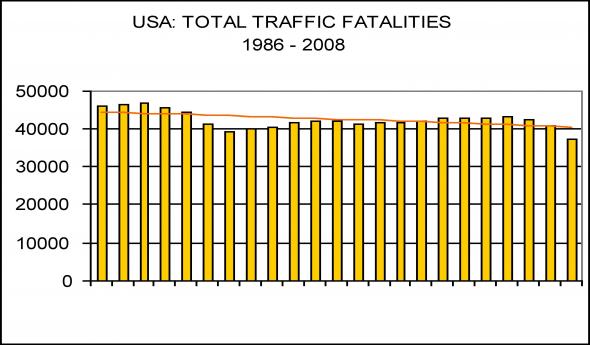
Now comes the payoff. Portland’s overall crash mortality rate for all traffic accidents plunged during this period (see "Portland traffic fatalities" graph). Compare that graph to the US overall crash mortality figures (immediately below the graph on Portland traffic fatalities), and you see how well the city performs.
Of course, this can’t all be attributed to Portland’s bicycle policies. The city and the Metro area have invested heavily in mass transit, encouraged transit-oriented development, limited the availability of parking downtown, and have taken other measures that have likely reduced automobile use. But the bicycle program has been unusual and significant. It has slowed down traffic on many streets and generally taken asphalt away from the exclusive use of fast-moving cars. When drivers are aware of many bicyclists on the road, they drive with more care. That tendency benefits everyone on the road.
Comments