
Placemaking begins and ends with the people
The secret of success for urbanists is to listen more and strive to connect with the folks that we serve.
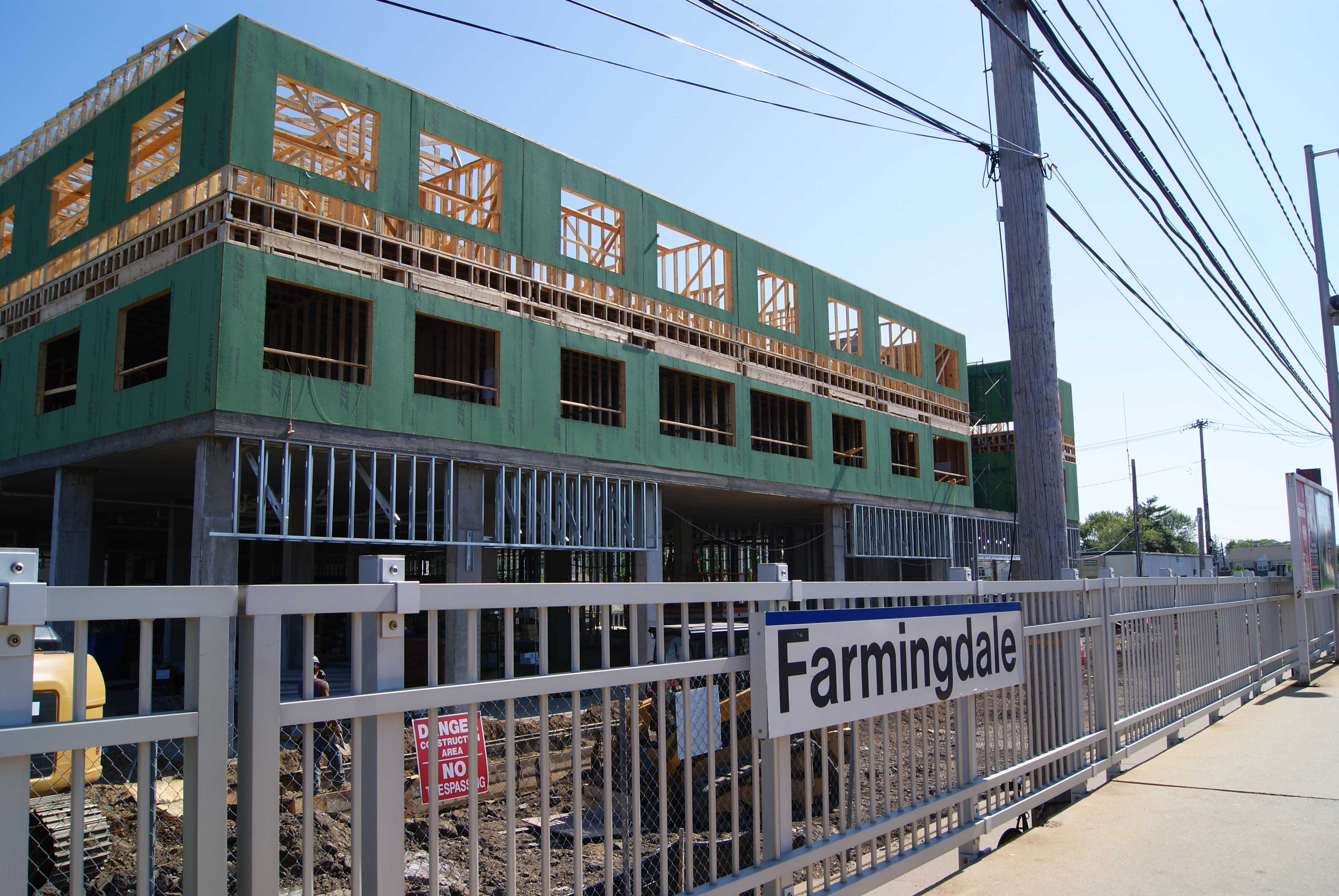
Jefferson Plaza, a transit-oriented development at Farmingdale Station on the Long Island Rail Road. Photo courtesy of Vision Long Island.
The question needs to be asked: Even if a strong minority or majority of people across the country believe in our fundamental principles, do we, as a movement, have a strong connection to these folks?
We run an organization on Long Island that has spent nearly 20 years working with the public to advance smart growth, New Urbanism, and infrastructure that supports those trends. We have sponsored 1,900 presentations in 75 communities, 20 visioning processes/charrettes, and a news service that reaches 25,000 engaged folks each week. One of many results: More than 7,500 units of transit-oriented housing has been approved with more on the way. Dan Burden, our local Congress for the New Urbanism chapter, and many others in the movement have championed this approach and helped us along the way.
So the good news is that now you can shop, eat, recreate, live, and invest in our region’s many downtowns. A plethora of laws, public funds, and revised regulations on the village, town, city, county, state, and federal levels have assisted this transition to downtown renewal.
The journey has been long, but the result has been a local smart growth movement made up of civic organizations, chambers of commerce, and a healthy segment of the building industry — some of whom were former skeptics. A local businessman who was a huge critic now is the co-chair of our board and a passionate supporter.
It is worth noting that the successes we have achieved in our suburban region of Long Island were derived without one big project, federal or state grant, or plan or directive from a regional body or higher level of government. The progress has simply been a series of strategic interventions over a long period by community, government, and business leadership.
Our journey helps us identify pitfalls, like the four horseman of the apocalypse, that make engaging regular people difficult. Here are a few:
1) Excess regional planning
Our region has over 15 regional plans with more on the way. The HUD Sustainability Partnership came by four years ago and we assembled 500 community, business leaders, and developers. The 20 municipalities in the room presented their existing downtown plans and identified three needs: 1) Infrastructure dollars, 2) Regulatory relief, 3) Technical assistance managing federal grants. A year later the Feds came back and said we hear you and but need to do more planning. It’s no surprise that the remaining meetings had 20 to 50 participants, not 500, with little tangible investments to date.
2) Over-reliance on design criteria
Our movement has focused more on academic activity but less about working with local folks who make decisions. We have seen charrettes where architects focus on design criteria but ignored the public and the regulatory processes needed to actually build any of the potential projects.
3) An attitude that more regulation is better
We have folks in planning circles adding regulation piecemeal in the hopes that it all fits together, or comprehensive codes that don’t interact with existing ones. In our region, the best placemaking examples are simple variances to existing codes delivered by local villages.
4) A disconnect with the public
We often go to academic conferences with well-attended sessions teaching us how to connect with people. Comedian Chris Rock ridiculed a lady who was proud to say "I take care of my kids" saying "you're supposed to take care of your kids." Similarly, to every designer who says "I talk to the people" we should say "You're supposed to talk to people!" The people make our market. Who are we planning, designing, and building for if not the public? Rule number one is to avoid insulting them by calling them idiots, NIMBYs, crackpots, crazies, or the like, in any public forum.
When we stumble into these pitfalls, we risk diluting the substantive gains that we have made over the last 20 years.
In order to create great places, we must gain the trust of the people by stepping into their shoes.
What are folks dealing with right now? In our region here is what they tell us – “my health care costs are up 200-plus dollars a month, energy costs are up 20 to 30 percent even after our state promised freezes with a new operator, wages lag behind tax increases, bureaucrats are messing with our schools due to common core curriculum and it is harder to access credit for my home or business.” In a nutshell people say “I love the work that you guys do for our downtowns, please design our streets safely and we want our fair share of infrastructure funds for sewers and transit — but tell the people in charge to stop hurting us.”
We are a movement that enjoys ideas and placemaking excellence and are proud of our progress. We shouldn't stop developing the big ideas but also listen to local people who make the decisions for the future of our communities. Take a moment and talk to ten random people in your downtown: Buy them a cup of coffee and ask them how they are doing and what should we be doing to advance placemaking in their community?
We will print responses in a future column.
Eric Alexander is executive director of .
For more in-depth coverage:
• to Better! Cities & Towns to read all of the articles (print+online) on implementation of healthier, stronger, cities and towns.
• Get , packed with more than 800 informative photos, plans, tables, and other illustrations, this book is the best single guide to implementing better cities and towns.
Comments