Andorra: What Makes This Vacation Destination Special?
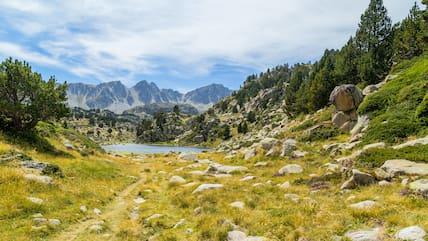
Nestled between Spain and France lies a vacation destination often overlooked by travelers: the microstate of Andorra. This article reveals why a trip to this Pyrenean nation is worth your time.
Finding Andorra on a map might require a bit more attention. This independent microstate, with an area of 181 square miles (about the size of the city of Toledo, Ohio) and a population similar to Trenton, New Jersey (around 80,000), is located in a high valley in the south of the Pyrenees, between the borders of Spain and France.
Remarkably, as small as this independent state is, its unique characteristics are also noteworthy. For instance, Andorra has its own Prime Minister but two heads of state (the President of France and the Bishop of Urgell). The country is not a member of the European Union, yet it uses the Euro as its standard currency. Apart from exporting energy from hydroelectric power plants, the country generates minimal tax revenue due to a lack of economic power, yet it imposes minimal taxes on its citizens.
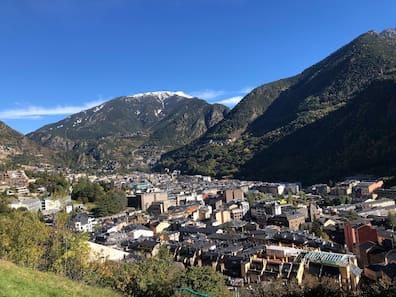
This makes Andorra an attractive residence for many wealthy individuals. Travelers enjoy the low prices for duty-free goods, including tobacco, spirits, and cosmetics. Andorra is considered a shopping paradise, with its many shopping centers and streets attracting day-trippers from both France and Spain. However, labeling Andorra solely as a tax haven does not do the principality justice. The beautiful nature of the country offers many appealing attractions for tourists.
Winter Sports and Hiking Joys
Andorra is especially popular among winter sports fans. In its four ski and cross-country areas-Grandvalira (124 miles of slopes, up to 8,661 feet elevation), Ordino Arcalís (18.6 miles, 8,612 feet), Pal Arinsal (39 miles, 8,399 feet), and Naturland (9.3 miles, 6,562 feet)-you'll find slopes for all difficulty levels, totaling around 186 miles. The service offerings and lift facilities meet the standards found in the Alps.
Contact Information:
ski and cross-country areas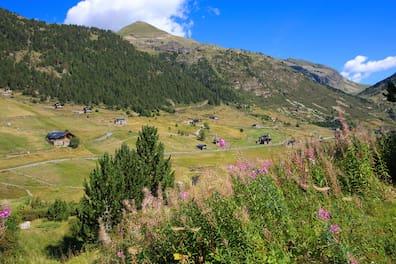
In the summer, this snowy Pyrenean paradise transforms into a lush green hiking world, as about 90% of Andorra's area is undeveloped. In the rugged mountainous idyll, 65 peaks rise, some reaching up to 9,842 feet. Rare flowers thrive on its slopes, beside large lakes and wild river courses, alongside forests of pine, oak, and fir. Ancient barns with thick stone walls blend into the alpine scenery, converted into accommodations for travelers. A total of 24 huts allow for extended hiking tours and challenging peak ascents.
Contact Information:
hiking worldFor those who wish to avoid the many shopping temples and new hotel constructions, a holiday in Andorra can be spent entirely in nature. There are also idyllic routes for mountain bikes and racing bikes. Those with limited time should focus their hiking efforts on the Vall del Madriu-Perafita-Claror. This scenic valley, with more than 30 lakes and numerous mountain peaks, is a UNESCO World Heritage Site.
Romanesque Architectural Heritage
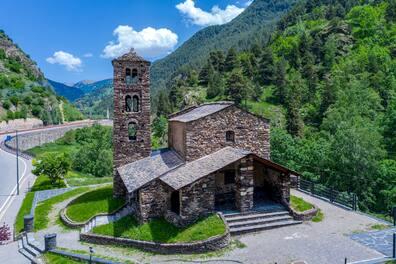
Unfortunately, the view of the capital Andorra la Vella is marred by many new hotel constructions. However, Europe's highest capital (3,320 feet) houses some beautiful medieval buildings, including the 'Casa de la Vall' from the 16th century and the beautiful Sant Esteve Church in the old town.
About 1.2 miles west of Andorra la Vella is the picturesque village of Santa Coloma, featuring a rustic church from the 6th to 8th century. A nearly identical and equally beautiful church is found in the village of Sant Vicenç d'Enclar. The natural stone facades in the old town of Escaldet are also lovely to behold.
In the village of Meritxell, a district of Canillo, there is also a beautiful basilica that is particularly protected as a cultural monument. Andorra is also known for its Romanesque pedestrian bridges. The most famous bridge structure is the Margineda Bridge in southern Andorra.
Contact Information:
bridge structureGetting to Andorra
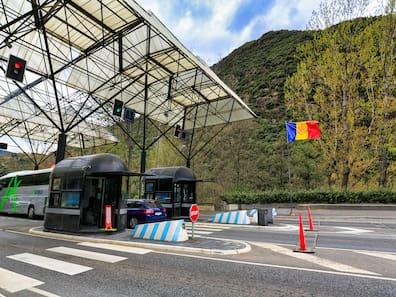
The shortest route to Andorra from the Spanish side is via the N-145 from Seu d'Urgell. From France, the N-22 and N-20 lead to Andorra-the last section of the journey can be shortened through a toll tunnel on the N-320. The nearest airports are Girona and Barcelona in Spain, as well as Toulouse in France. The small private airport Andorra-La Seu is currently being expanded for commercial traffic.
Andorra can also be reached via long-distance bus-the network is connected to 20 cities in Spain and France. You cannot reach Andorra directly by train-at the nearest train stations in L'Hospitalet-près-l'Andorre (France) and Lleida-Pirineus (Spain), travelers must transfer to buses.
Travel Writer
Contact Information:
long-distance bus