Pyrenees: Tips for an Outdoor Vacation
Pyrenees: Rafting & Hiking in the Outdoor Paradise
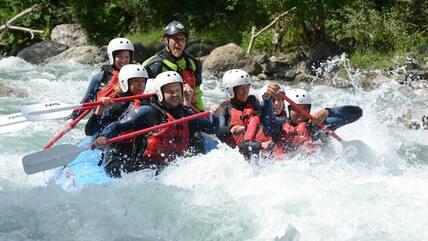
In the Catalonian Pyrenees in northeastern Spain, nature lovers and outdoor enthusiasts can find plenty to enjoy.
The morning view from the bedroom window is almost majestic. The sky is blue, and the sun casts a warm glow on the mountain peak. The snow that fell overnight looks like powdered sugar. Where exactly are we again? Austria? Or Switzerland? No, this is Spain. More specifically, the Catalonian part of the Pyrenees. The place is Vielha, a town with around 5,000 residents, some quaint hotels and restaurants, and in the morning, it is still shrouded in a pale shadow. Vielha is at an elevation of 3,215 feet and is completely surrounded by hills. Even during summer, it can therefore be a bit chilly in the mornings.
Francisco Comas from Copos Skicenter, which offers complete packages for skiers in winter and has shifted to mountain biking tours in the summer, is truly energetic and lively. 'Uphill, downhill - we have hundreds of cycling miles, even for beginners,' he says with a mischievous grin, showcasing his latest achievements: the electric mountain bikes. They're painted black and green, blending perfectly into the lush landscape and dense forests.
'Here in Val d'Aran, it's much greener than in the neighboring provinces. You can enjoy nature year-round,' Francisco explains while looking at the Garonne River, which originates here in the valley. His weather-beaten face gives the impression he only enters a house to sleep. It's no wonder hikers and road cyclists rave about the beauty and challenges of the area.
Through the Pyrenees: Mountain E-Bike or Horseback
Agnes from the Catalonia Tourism Agency had previously explained that Val d'Aran in the far northwest of Catalonia, on the border with Aragon, is a very special place in many respects. 'The locals consider themselves unique and independent, belonging nowhere in particular.' For example, they speak Aranese, their own language, and culturally and economically, they feel more connected to the neighboring French province of Gascony. 'Due to its unique location practically behind the Pyrenees, the climate here is Atlantic, offering a different flora and fauna than in the other parts of the Catalonian Pyrenees,' says Agnes, who is cycling with us and easily handling some smaller climbs.
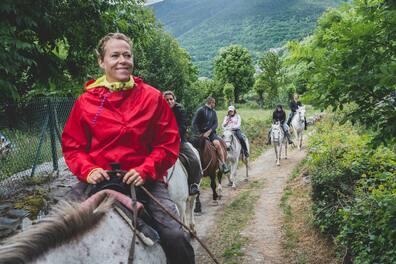
If cycling - despite possible e-bike assistance - is too strenuous, you can get a ride up the mountain on a horseback just a few yards away. Those who hold the reins tightly in their hands are rewarded with wonderful views of the ever-shrinking village of Vielha.
Sliding Down a Torrent in a Wetsuit
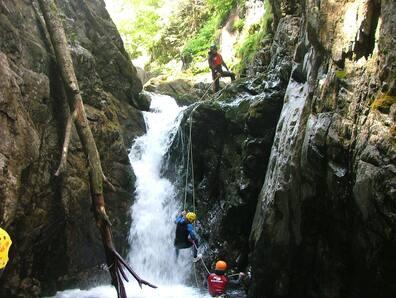
We travel further north and are now just before the French border in Bausen. There, outdoor enthusiasts can try canyoning. It's basically mountain climbing turned upside down through a cold torrent. Why would anyone do that? Good question. We're going to try it ourselves.
Before the fun with water and climbing, the guides from the Adventure Park insist that you squeeze into a full-body wetsuit. Important: Put the suit over the water shoes later at the legs. Gloves are optional but wearing a helmet is mandatory.
The first few meters still take you over forest ground and through dense greenery until you hit the water for the first time and go over slippery stones. 'Trust no rock': This sentence will stay in our heads the entire way down. Fortunately, tour guide Juan demonstrates some support techniques and how to skillfully slide down on our behinds. The best comes at the end: the two waterfalls. A lot of fun to jump down.
Hiking in Catalonia's Only National Park
There are impressive waterfalls in the Parc Nacional d'Aigüestortes i Estany de Sant Maurici, south of Val d'Aran, Catalonia's only national park. This area offers vast spaces for hiking enthusiasts, much like the nearby Mont-Rebei area. Multi-day hut-to-hut tours are available, and it's quite possible to encounter a mountain spirit. The residents of the town of Espot have many legends to tell about these.
The dry yet impressive facts are: more than 200 mountain lakes and four peaks over 9,842 feet. If you're lucky, you might even spot marmots. At least one awaits as a mascot in the tourism center in Espot. Right next door, active tourists can grab a bite at Restaurant Juquim. Be sure to try the shepherd's soup with garlic and cheese bread.
White-water Rafting like Olympians
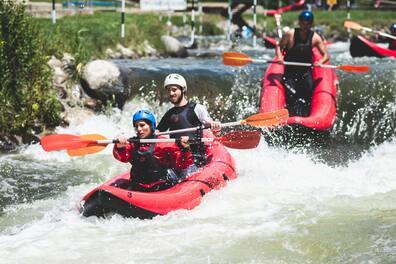
If you were thrilled by canyoning, you can dive into more water activities. In La Seu d'Urgell, near Andorra, there's the white-water canoe racecourse from the 1992 Barcelona Summer Olympics. It's open for everyone today. But be careful: It's fast-paced, and even the large rafts don't guarantee you won't capsize.
And in Sort, a few kilometers further west, several adventurous yet otherwise very entertaining guys have banded together to create the La Rafting Company for special outdoor events. For us, it's back into the wetsuit, this time into the big rafting inflatable and onto the Noguera Pallaresa.
Our guide not only knows exactly what he's doing and is funny about it, but he also knows when to be silent. For instance, when we paddle into the breathtaking Congost de Collegats gorge after some rather extreme waves. It's a sight you'll never forget. Steep cliffs rise on both sides, often conquered by free climbers, and above all, the bearded vultures circle.
However, we don't become prey for the black-brown-feathered birds but disembark and hike to an almost untouched valley. There, the agency, with special permission, has set up a camp with four-man tents and is preparing a local dish with rice and native mushrooms from the forest in a large pan. The evening under the full moon becomes an unforgettable experience, especially when Montse sets up her telescope and explains the night sky to each person individually. 'However,' says the meteorologist, 'you have to have a drink of Ratafia first.' Black herbal liqueur under a deep blue sky - a magical night begins in one of the darkest places in the Pyrenees...
Tips for the Journey
Direct flights (from $100) to Barcelona are available from all major U.S. airports such as New York, Los Angeles, or Chicago with American Airlines, Delta, United, Southwest, JetBlue, Spirit, or Frontier. From regional airports, Ryanair offers flights to Girona. Travel is also possible by bus and train.
Climate:
In July and August, the warmest months, temperatures can reach up to 95 degrees Fahrenheit in the lower regions. The nights are still pleasantly cool. The best time for visiting the mountains is June, when it hasn't become too hot yet. In August, many tourists especially come.
Accommodations:
In Vielha there are several hotels: Nou Vielha, Aran La Abuela, Delavall, Ribaeta, and Pirene.
Activities:
The Escuela de Equitacion riding school in Vielha offers rides from one to three hours or even several days. Various providers offer canyoning, rafting, and white-water adventures, as well as mountain bike tours.