Occitania: Let's discover together why this French region is worth discovering.
Occitania
Occitania is a region of France nestled in the south-western corner of the country between the Mediterranean to the east and the Pyrenees to the south.
Formed only in 2016 with the merger of the Languedoc-Roussillon and Midi-Pyrénées regions, Occitanie holds together the best features of southern France: land, sea, medieval castles, culture, exceptional wines, enchanting villages, colourful markets and a lively, welcoming atmosphere where time flows without the stresses and standards of the French Riviera.
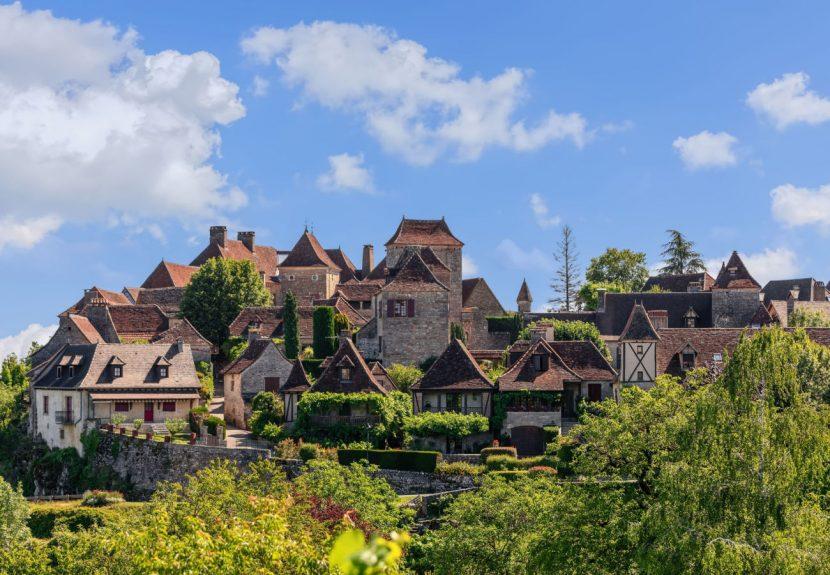
The region is divided internally into thirteen different departments, including Ariège, Aude, Aveyron, Gard, Haute-Garonne, Gers, Hérault, Lot, Lozère, Hautes-Pyrénées, Pyrénnées-Orientales, Tarn and Tarn-et-Garonne, all of which are rich in an incredible variety of landscapes and towns kissed by many sunny days.
Of great appeal to holidaymakers and tourists are its magnificent stretch of coastline overlooking the Mediterranean Sea, Toulouse its most populous and renowned city and the lively, student-oriented Montpellier not far from the sea and full of attractions such as the Peyrou promenade to the gazebo and aqueduct of Saint-Clément.
With a wide variety of landscapes and a remarkable architectural heritage, the Occitanie region boasts natural, architectural and gastronomic wonders offering visitors an infinite variety of sights to see.
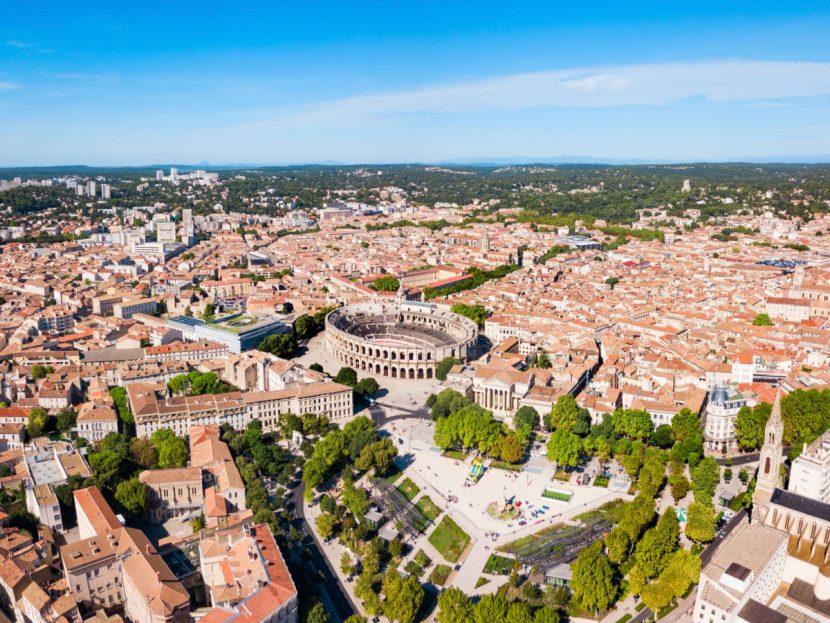
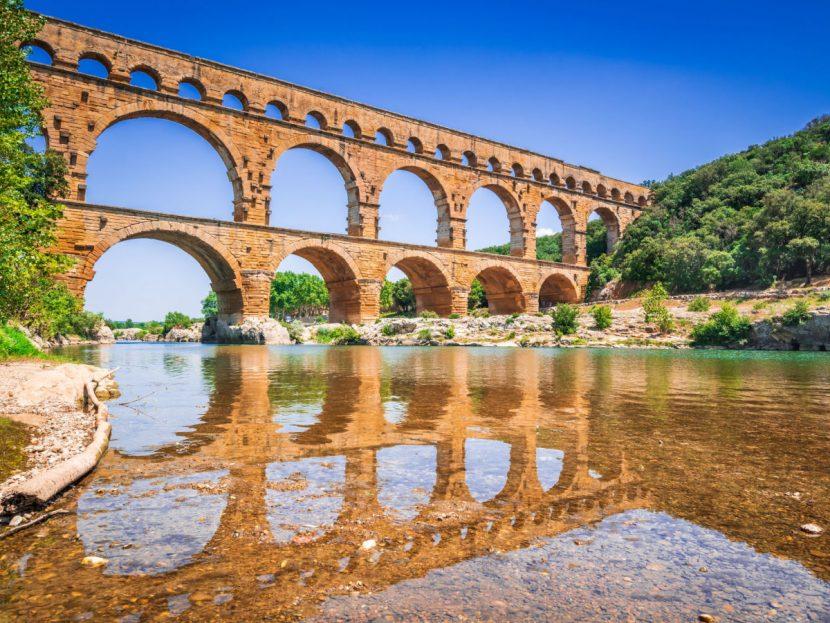
Occitania is also a land of traditions with an ancient history still witnessed by important Roman sites such as theArena of Nîmes or the scenic Pont du Gard with its 49 metres in height and three rows of overlapping arches or by medieval sites such as Carcassonne, the gateway to the fascinating Cathar country a collection of medieval castles, villages and Romanesque abbeys the scene of the ancient conflict between the Catholic Church and the Cathar movement.
When to go to Occitania
Before planning a trip to Occitania, it is good to take into account not only the climate but also the rich calendar of events that enliven the region at different times of the year.
In general, average summer temperatures do not differ too much from the climate on the Italian coast with long, warm, sunny days that make it pleasant to explore its countryside and especially to relax on the beach.
Summer, particularly July, is also a good time to visit the Roman city of Nîmes where an interesting music festival is held every year, while waiting until October to attend the Toulouse les Orgues Festival, an organ festival organised in Toulouse as well as a historic music festival in the streets of Perpignan called Jazzèbre.
Every summer for 15 days in August, the village of Marciac becomes the Mecca of Jazz, a festival that attracts the best musicians and singers.
What to see in Occitania
Toulouse
Carcassone
Nimes
Montpellier
Lourdes
Pont du Gard
Belcastel
Bruniquel
Castelnou
Canal du Midi
Eus
La Couvertoirade
La Garde-Guérin
Lagrasse
Larressingle
Najac
Lastours
Peyrepertuse
Caves of Niaux
Pyrenees Park
Towns and villages
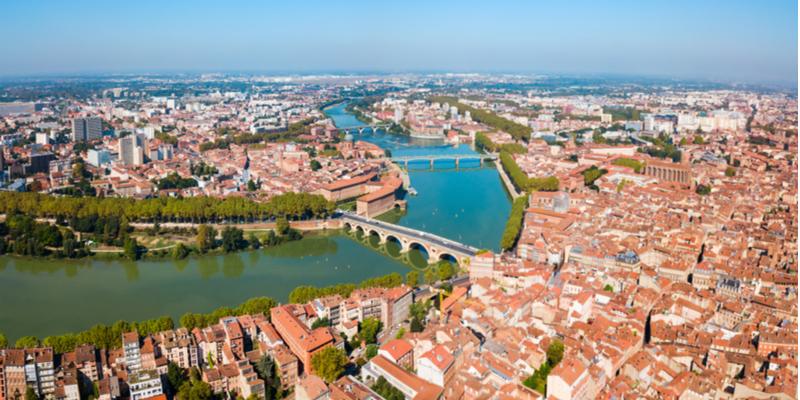
The tour of the Occitania region starts in Toulouse, its iconic city located on the banks of the Garonne River.
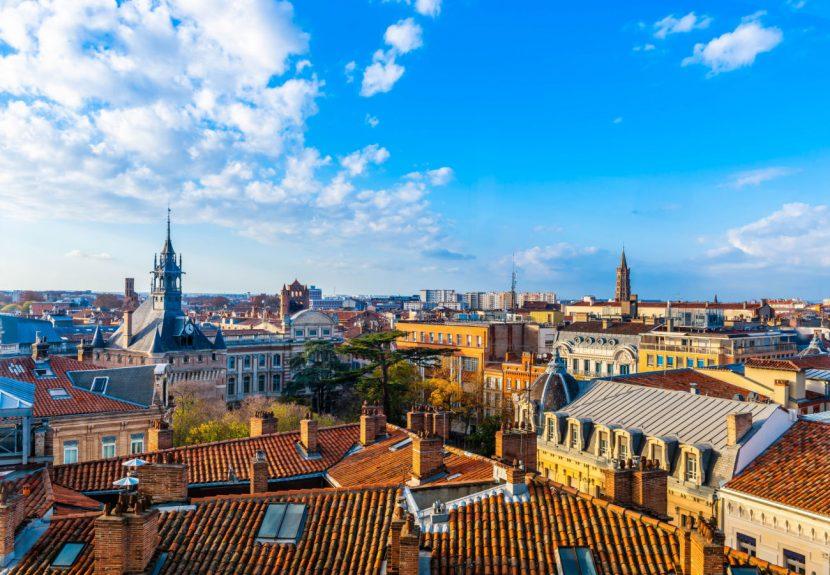
Also known by the nickname of the Pink City due to its brick architecture, with all shades of pink giving the cityscape a truly unique appearance, Toulouse is a pleasant and passionate city with a high quality of life, easy to explore on foot and full of attractions, fascinating sights, elegant buildings, extraordinary architecture and a rich cultural heritage.
Its beating heart is Place du Capitole, from where narrow streets radiate out into the heart of the old town, past small squares, palaces and museums.
A walk or bike ride will take you to places of great importance such as the Basilica of Saint-Sernin, one of the largest Roman buildings in the West, and the Hôtel-Dieu Saint-Jacques, both UNESCO World Heritage Sites, the Bernardine Convent with its palm-shaped vault, the banks of the Garonne, the Renaissance-style building of the Hôtel d'Assézat, one of its 20 museums and one of the city's green parks.
Toulouse is also the aeronautical capital of Europe, with the largest space centre on the continent: the Cité de l'Espace.
This magnificent region is also rich in an impressive architectural and cultural heritage that includes cities of great charm such as Albi , home to the famous Toulouse-Lautrec Museum, Auch with its picturesque streets, Cahors with its Valentré Bridge, Carcassonne and its imposing fortifications, Cordes-sur-Ciel and its Gothic mansions, Foix and its medieval castle, Lourdes and its sanctuaries, Millau and its famous viaduct, Montauban and its Place Nationale, Narbonne and its archbishop's palace, Nîmes and its Roman ruins, Perpignan and its palace of the Majorcan kings and Rodez and its Gothic cathedral.
Along the roads that criss-cross Occitania, it is also easy to come across a series of pretty little human-sized villages such as those of Belcastel, Bruniquel , Castelnou , Eus, La Couvertoirade , La Garde-Guérin , Lagrasse , Larressingle , Najac , Penne and Sainte-Enimie, fascinating mediaeval fortified towns such as Beaumont-de-Lomagne , Castelnau-de-Montmiral , Lauzerte and Saint-Clar , majestic Cathar castles such as those of Lastours, Peyrepertuse, Puilaurense Quéribus, as well as important rock art sites such as the Niaux caves and Le Pech-Merle.
The entire coastal area facing the Mediterranean is dotted with pretty seaside towns perfect for relaxation and water sports on some of the most beautiful beaches in France, lively fishing villages and thriving market towns including Collioure, centre of the Fauvist movement; Gruissan - characterised by its typical seaside houses built on stilts, or Sète raised from nothing to connect the Canal du Midi to the Mediterranean Sea.
Natural wonders in Occitania
The region is also rich in numerous natural treasures that make it ideal for hiking or outdoor sports.
One of the most fascinating places is the Pyrenees National Park , home to more than 2,500 plant species and 70 different types of mammals scattered among alpine lakes, scenic trails and an unspoilt atmosphere.
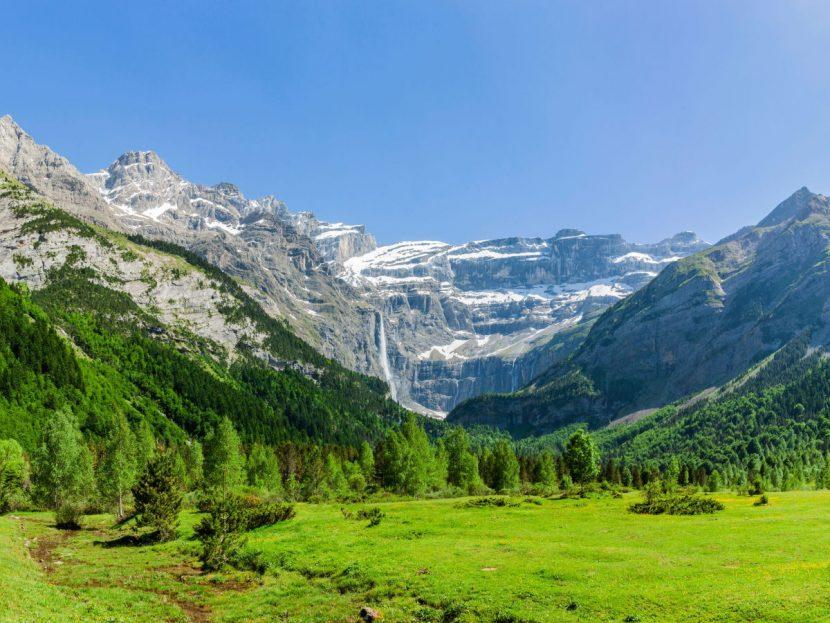
Not far from the city of Lourdes is another scenic wonder of France, the Cirque de Gavarnie, a lush hilly valley surrounded by snow-capped mountains. The highest of these peaks is Mont Perdu, 3,352 m with lakes, forests, meadows and caves.
Le Cévennes, on the other hand, should be regarded as one of the most remote and wild areas in France thanks to its stone houses and the preservation of old rural traditions.
Mountain lovers will enjoy the majestic peaks of the Pyrenees, the astonishing Montpellier-le-Vieux massif or the peaceful Aubrac plateau.
While on the coast, wide sandy Mediterranean beaches offer beautiful seascapes to bathers and nature lovers.
The Cirque de Gavarnie is part of the'Pyrenees - Mont Perdu' complex, classified by UNESCO as one of the few in the world, and the only one in France, to have the double classification (natural and cultural).
The Cirque de Gavarnie and its surroundings are within the protected perimeter of the Pyrenees National Park, with a great variety of flora and fauna.
Among the river landscapes, on the other hand, the Canal du Midi, a Unesco World Heritage site, connects the ancient Midi-Pyrenees and Languedoc-Roussillon regions with a fascinating 240 km tourist route.
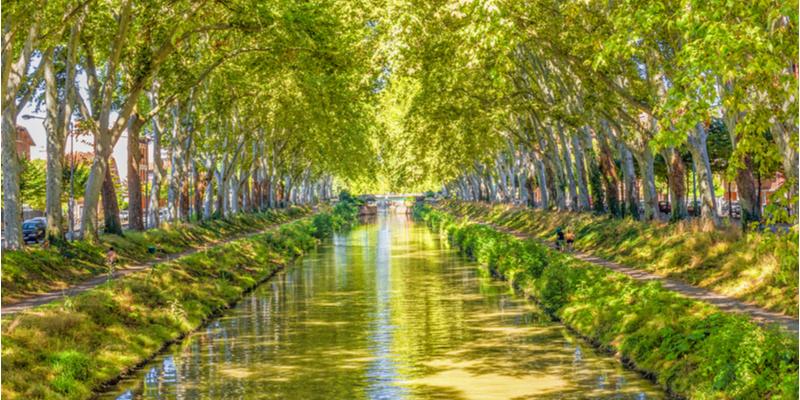
The canal is a major tourist attraction with more than 1.5 million visitors walking, cycling and boating along its banks every year, past fields, forests, villages and lush natural environments from Toulouse to Sète, via Carcassonne and Béziers, through the landscapes of Haute Garonne, Aude and Hérault.
Spas in Occitania
The thermal waters in the region are rich in minerals and have restorative properties for health and certain psychosomatic disorders.
In addition to enjoying the benefits of the thermal waters, one can admire splendid 19th-century architectural structures in attractive locations such as Luz-Saint-Sauveur in the Pyrenees or Balaruc-les-Bains on the coast.
The Cathar Castles of Occitania
In the 13th century, the Cathars refuted the pope and took refuge in magnificent fortresses perched on breathtaking cliffs in the Aude and Ariège.
The so-called '5 Sons of Carcassonne', the magnificent medieval fortresses of Aguilar, Puilaurens, Peyrepertuse, Termes and Quéribus, as well as Montségur and Foix, are an interesting historical route to take in Occitania.
Map and map
France
Related articles
Olonne-sur-Mer, Vendée, France
Do you know the oldest cities in France?
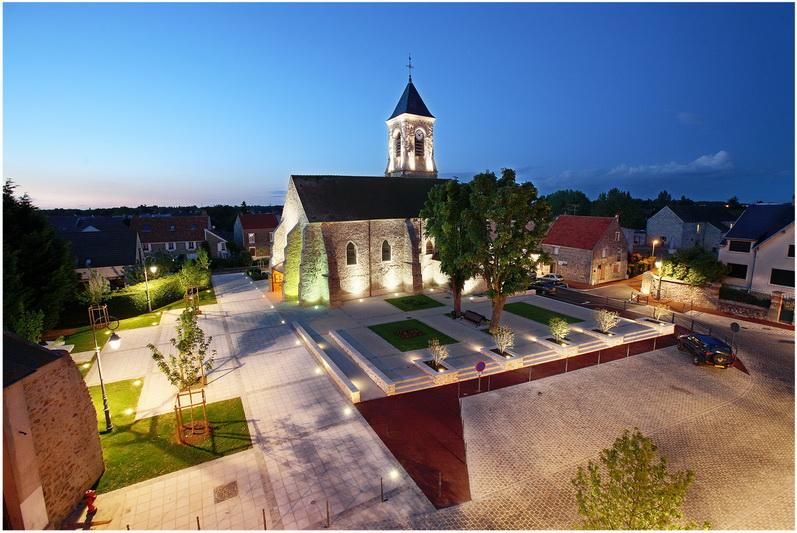
Bondoufle, Essonne, Île-de-France, France
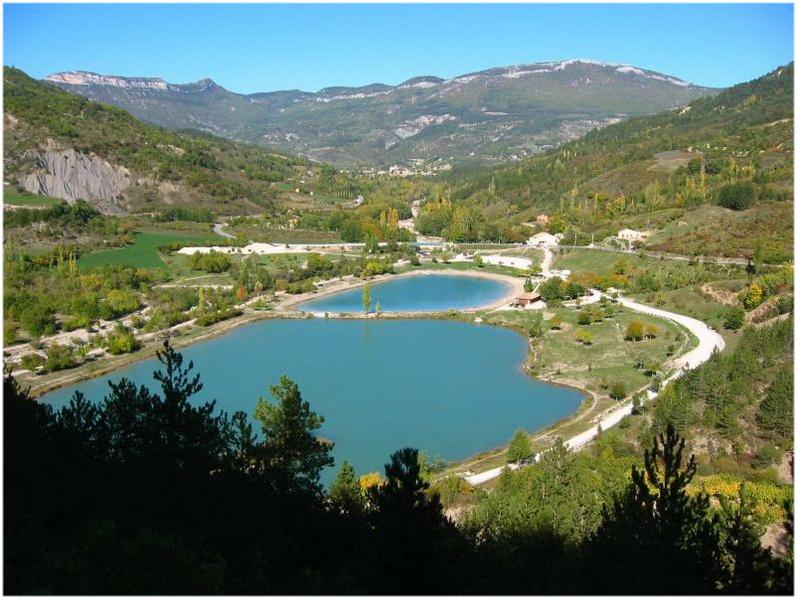
La Motte-Chalancon, Drôme, France

Les Rousses, the little Lapland made in France - Montagnes du Jura
What to do in Montsoreau, one of the Most Beautiful Villages in France located in Maine-et-Loire?
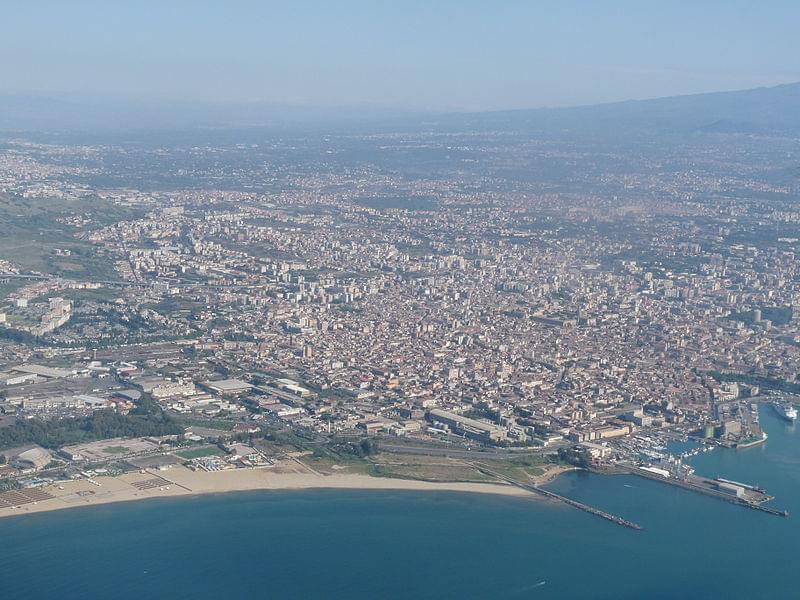
Top 10 Most Populous Cities in Italy
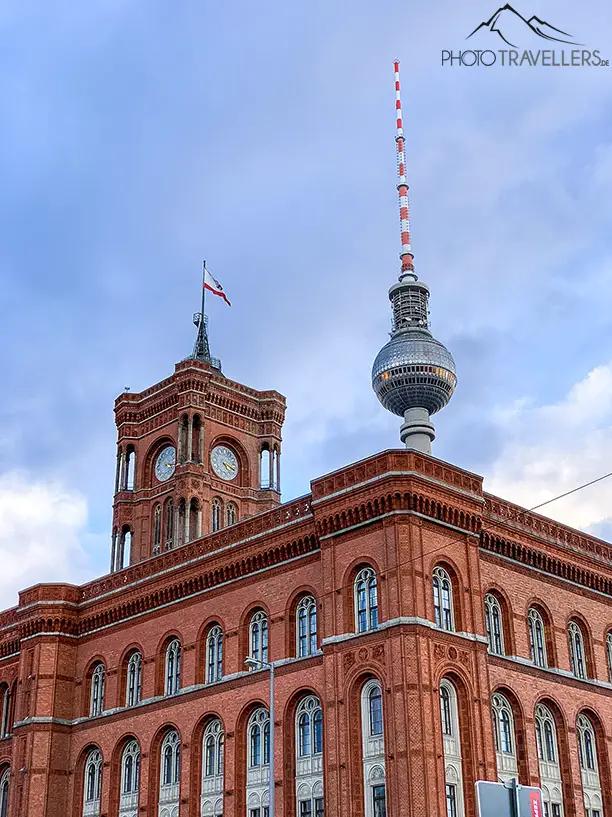
Germany: These are the 10 largest cities