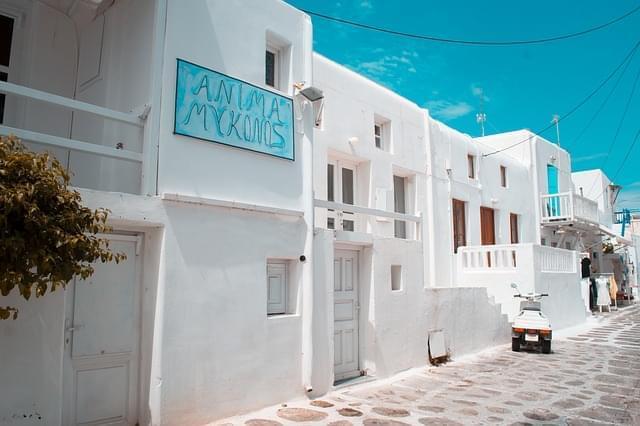
 Mykonos is famous for its long beach parties, which attract numerous tourists from all over the world every summer.
Yet Mykonos is also capable of showing another side of itself, the more romantic, natural and ancient. The music, the DJs, the white houses, the colourful flowers in the windows, the old buildings, the small churches, the windmills and the breathtaking sunsets over the sea: Mykonos is everything you think it is and everything you don't expect.
Here is a guide to Mykonos!
Travelling to neighbouring islands: If you want to take advantage of your holiday to also visit other islands near Mykonos, you can use the various sea routes available. However, remember to book your ferries in advance, as especially in the high season the seats are sold out!
Where is it located and how to get there
Mykonos is one of the 220 islands belonging to the Cyclades archipelago, located in the Aegean Sea and part of the state of Greece. It is located near Tyros, Naxos, Sito and Paros and is 175 km from Athens, the capital.
In summer it is served by direct flights from both Milan and Rome that take about 2 hours. During the rest of the year it is difficult to find direct flights, so it is advisable to land in Athens and then reach the island by domestic flight or by sea
10 things you must see in Mykonos
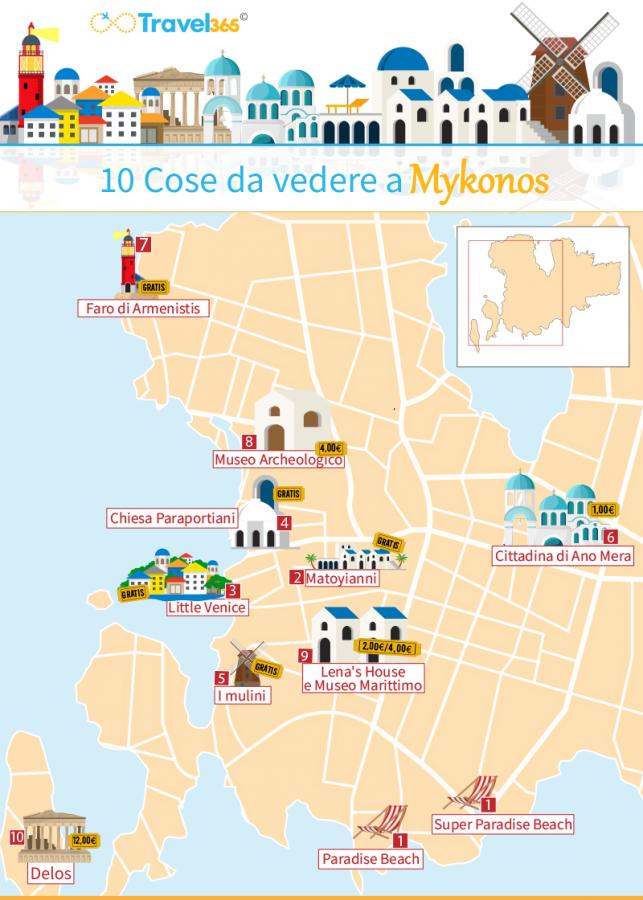
1 - Paradise and Superparadise
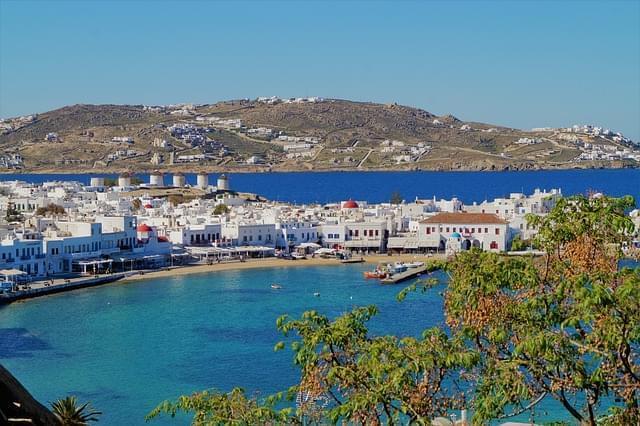 One expects amazing beaches from Mykonos and the island fulfils this desire and exceeds even the most optimistic expectations. The island's coastline is many and varied and while the beaches in the north are wilder, those in the south are more famous and generally more crowded.
Among the most beautiful and bustling are Paradise and Super Paradise. Packed with discos and beach bars, they attract the most active and fun-seeking tourists.
Golden sand and crystal-clear sea that turns from emerald green to turquoise blue. They are ideal destinations for water sports; but here people come above all to dance the night away!
They became popular in the 1960s, when young hippies came here to practice nudism. Now the beach continues to be popular with young people, the gay community and celebrities.
How to get there: public transport on the island serves the beaches of Mykonos very efficiently; on the KTEL website you can find all the connections from Mykonos town centre to the main beaches
Timetable: always open
Ticket price: free
2 - Matoyianni Street and Chora district
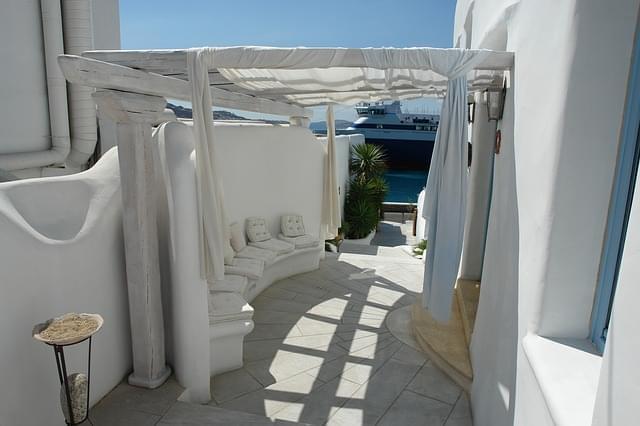 Called Chora or Hora, this is the historic centre of the island, the hub of local life and the main port where cruise ships visiting here dock. If you imagine a Greece of little white houses with blue doors and windows, quaint alleys and blooming bougainvillea, Mykonos Town will fulfil all your expectations.
Its narrow streets are full of typical taverns and little shops of all kinds. Impossible not to take a photo at every step. The main shopping street is Matoyianni, an avenue that runs from the old harbour to the Little Venice neighbourhood. It is a fascinating succession of trendy clubs, trendy shops, music bars and art galleries. A place with an eclectic and unmistakable style, devoted to nightlife and always absolutely lively. The Chora is beautiful, always. But it acquires even more charm in the low season when the crowds die down and its typically Greek personality emerges with all its charisma.
How to get there: Mykonos Town is less than 5 km from the airport (JMK); to get there, you can rent a car or rely on local buses (about €1.60); taxis, especially in the summer, are rare to find (about €15.00 / €20.00) - Get directions
Hours: always accessible
Ticket price: free
3 - The Little Venice district
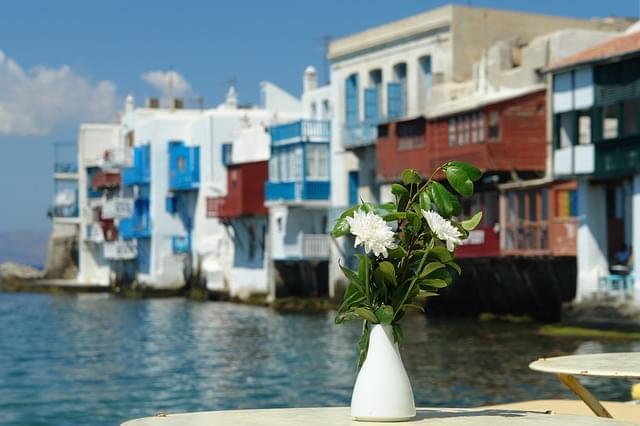 Little Venice is a neighbourhood of Mykonos that, although incorporated within the perimeter of Chora, stands out as an attraction in its own right, thanks to its distinct architecture. A row of brightly coloured houses built on the water's edge, once owned by wealthy merchants and ship-owners, now show off their typically Mediterranean character by overlooking the blue waves of Mykonos.
This unmissable area is populated with cafés and restaurants that allow one to eat a step away from the sea. The buildings seem to 'float' on the water and give Little Venice its name and fame. One suggestion is to sit at one of its tables at sunset, when the sun dips into the blue Greek sea and tints the bay in even brighter colours. Unforgettable.
How to get there: from the Chora, head to the coast and walk west along Akti Kampani, to be confronted by the brightly coloured balconies of Little Venice - Get directions
Hours: always open
Ticket price: free
4 - The Church of Paraportiani
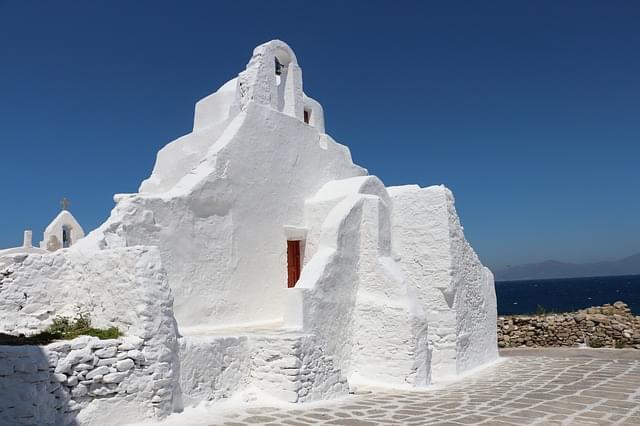 The distinctive church of Paraportiani is the most famous Orthodox church in Mykonos and is located in the Kastro district, not far from Little Venice. It includes elements of no less than five earlier religious buildings that have been congregated within: besides Panagia Paraportiani, there are Agios Sozontas, Agioi Anargyroi, Agia Anastasia and Agios Efstathios.
Its construction stretches from the 15th to the 17th century, and the unique outcome of this fusion of different architectures has created what is now the most photographed and best known church on Mykonos. It is usually found closed, but it is worth admiring it from the outside, especially if its white lime is tinged with soft colours during one of the island's evocative sunsets.
How to get there: the church is about 500 metres from the centre of Mykonos Town, and is easily reached on foot - Get directions
Hours: always visitable outside
Ticket price: free
5 - The Mills
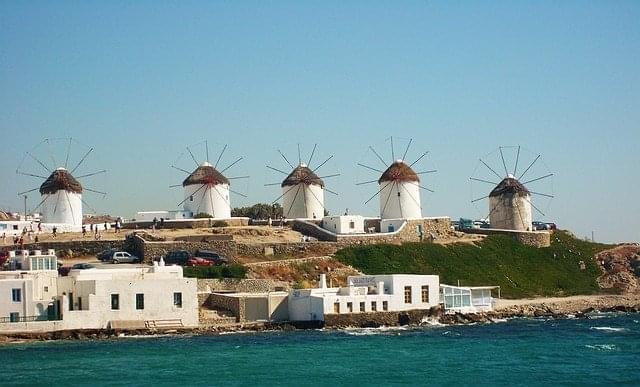 Dating back to the 16th century, for over 400 years the mills of Mykonos have been grinding the grain grown on the island, which was both consumed locally and exported in the form of flour, representing one of the main items in the economy of the area. As tourism took over from agriculture-related activities, the Mykonos mills were closed, but renovated and redeveloped as an attraction.
The mills are located in the locality of Kato Myli, and the scenery around these silent witnesses to the most authentic life on the island is nothing short of extraordinary. One of the mills also houses a small museum that illustrates with photos and captions the importance of the milling activity for this area. A perfect tour, in short, both to immerse yourself in the history of Mykonos and to take photos that you will want to frame and hang in your home to look at every day and dream a little.
How to get there: Kato Myli is easily accessible on foot or by bus (approx. €1.00), and there is also a car park near the mills for those arriving by car or motorbike - Get directions
Hours: always open
Ticket price: free
6 - The town of Ano Mera
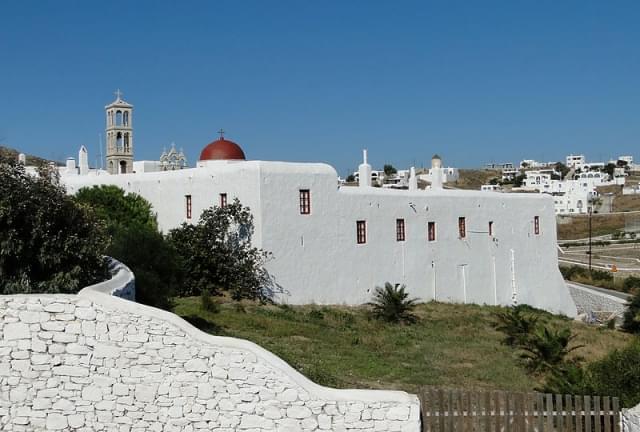 Photo by Bernard Gagnon. Ano Mera is a tiny village about 8 km from Mykonos Town, whose slow pace has preserved the spirit of the past. It is a perfect stopover for those who want to get to know the true soul of Mykonos, far from the mundane life and overly touristy influences.
Although even in Ano Mera there are hotels, clubs and visitors around, the village retains its character intact and life here unfolds at a pleasantly slow pace. This agglomeration of whitewashed houses and genuine tavernas is ideal for falling in love with Mykonos once and for all. In the centre of the village stands the Monastery of Panagia Tourliani, a mystical place shrouded in silence, perfect for a quiet bath.
How to get there: KTEL buses serve this village with good frequency, and from the old port of Mykonos take you to Ano Mera in about 20 minutes - Get directions
Timetable: Ano Mera can always be visited; the monastery is open daily from 09:00 to 13:00 and 15:30 to 19:00
Ticket price: for the Monastery, offered at the entrance, approximately €1.00
7 - The Armenistis Lighthouse
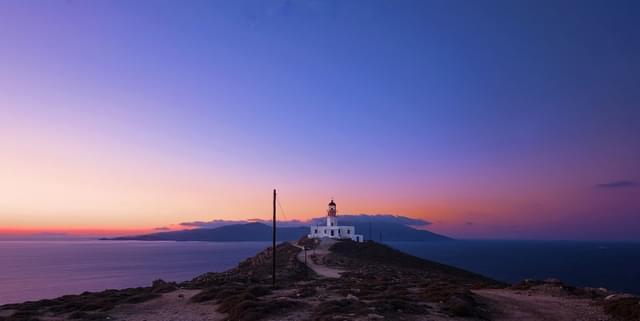 Photo by Mateus Pabst. The Armenitis Lighthouse is a symbolic site, located in the north of the island. It stands on a promontory with a breathtaking view of the sea below and the whitewashed houses that dot Mykonos.
Theroad to get there is not the most comfortable, and the structure of the lighthouse is not as well preserved as it could be, but it doesn't matter: the view from here is priceless, the peace up here too. Once here, one can only let one's gaze wander from the waves to the hills, and enjoy the decadent charm of this icon of the most genuine Greece. Better still, if the sun disappears over the horizon to keep you company.
How to get there: it is located in a fairly remote area in the north of the island, and the best way to get there is by car or scooter, paying attention to the sometimes unpaved road - Get directions
Hours: always open, can be visited outside
Ticket price: free
8 - Archaeological Museum
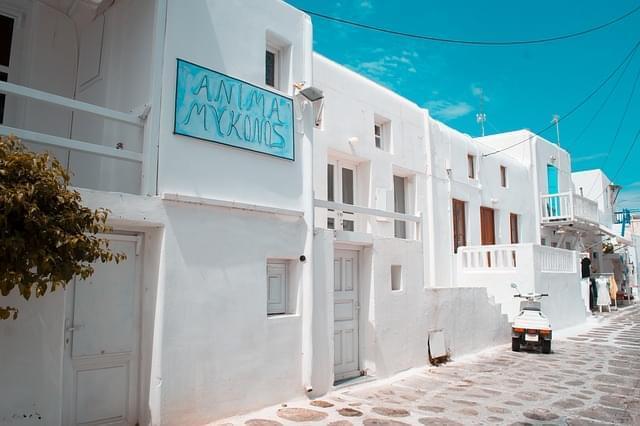 Mykonos is not only beaches, sea and paradisiacal sunsets, but it also offers a cultural panorama worth exploring. There are several museums on the island dedicated to Cycladic life and the past of Mykonos, the most important being the Archaeological Museum.
The Archaeological Museum houses many ceramic exhibits from the islands of Paros, Rhina and Delos.
How to get there: the museums are all located in Mykonos Town and are easily accessible on foot from the town centre in a few minutes - Get directions
Openinghours: the Archaeological Museum is open from April to October Mondays, Wednesdays and Sundays from 8.30am to 4pm, Thursdays, Fridays and Saturdays from 9am to 9pm
Ticket price: approx. €4.00
9 - Lena's House and Maritime Museum
The Aegean Maritime Museum houses exhibits from the naval world such as helms and navigation books as well as models of the pre-Mycenaean fleet. The Folklore Museum is also interesting.
For a glimpse of the island's ancient social stratification, it is worth paying a visit to Lena's House, a traditional home of the Mykonos bourgeoisie that bears witness to the different social situations of the past. When the poor crowded the alleys of Chora, the rich took refuge in the beautiful housing structures of Little Venice and the bourgeois class resided instead in pretty, spacious houses with inner courtyards and terraces overlooking the streets.
How to get there: the museums are all located in Mykonos Town and are easily reached on foot from the town centre in a few minutes - Get directions
Hours: The Maritime Museum is open from April to October daily from 10:30 to 13:00 and 18:30 to 21:00; Lena's House is open from 18:30 to 21:30, Sundays from 19:30 to 21:30
Ticket price: Maritime Museum €4.00; Lena's House €2.00
10 - Island of Delos
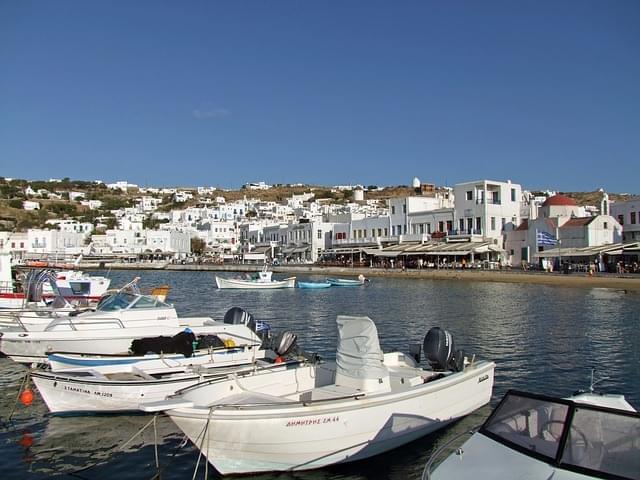 A great idea while staying in Mykonos is to take a boat trip to explore its surroundings: the island is nestled between islands and islets that make up its necklace.
One of the most popular tours is to the archaeological site of Delos, located on the island of the same name and reachable by boat in a few minutes. The uninhabited island of Delos is where, according to legend, Apollo, god of the sun and the arts, and his sister Artemis, goddess of the moon, were born. The archaeological site of Delos offers ruins and temples dating back to ancient times, dwellings, mosaics and interesting finds to explore. You can visit Delos on your own or join an organised tour with an expert guide who will help you discover every aspect of the mythical history of this islet.
How to get there: You can take a boat from Mykonos to the island of Delos in about 40 minutes; return transport from Mykonos costs €20.00 - Get directions
OpeningHours: the Archaeological Site is open from 8am to 8pm
Ticket Cost: Delos Archaeological Site €12.00
Other beaches to see
Agios Ioannis: on the south-western coast near Ornos is this small, family-friendly beach with light sand, shallow, crystal-clear waters and picturesque views of Delos Island.
Agios Stefanos is family-friendly, equipped with sunbeds and umbrellas but with a stretch of free beach. It is close to Tourlos, the new port of Mykonos.
Platys Gialos: surrounded by hills, about 4 km from Mykonos Town, this resort is one of the most popular on the island due to its position sheltered from the winds, the sea is calm and transparent and the beach clear and fine. Decidedly unfashionable, it is perfect for couples.
Paranga: south of Mykonos Town, it has white sand and several rocks in the sea that provide a habitat for various species of fish. Every evening at sunset, a spectacular scene is created. Nudism is quite common here.
Kalafatis: along the south-eastern coast of the island, not far from the resort of Ano Mera, characterised by white sand and a lot of wind: it is a real paradise for surfers! From here you can take a boat and make a trip to the islet of Dragonisi.
Lia: On the south coast, 14 km from Mykonos Town, a very large beach of sand and pebbles is perfect for snorkelling and away from the hustle and bustle.
Agia Anna: Intimate and secret pebble and sandy bay surrounded by breathtaking scenery, characterised by crystal-clear waters that are always calm, due to its special position that makes it sheltered from the strongest winds.
Kalo Livadi: This beach is 2 km from the village of Ano Mera and about ten from Mykonos Town. It is long, wide and equipped with bars and restaurants. Perfect for families. In the middle of the bay is the rock formation Kalafakiona, known for catching lobsters.
Ftelia: Located at the end of the wide inlet of Panormos, in the centre of the northern coast of Mykonos, this beach is a real gem for surfers. When the Meltemi blows, surfers all gather here!
Agrari: mixed sand and pebbles, turquoise sea, wild nature. It is a very large beach, with a small church right on the sand and with one part free beach and another equipped beach. Frequented by gays and nudists, especially at the eastern end.
What to see in 3 days
Three days is the minimum time to get a taste of the features that have made this island a popular destination. You can visit some of the most characteristic spots, enjoy the most iconic beaches and the buzzing nightlife. Here's how to organise your itinerary.
Day 1: Mykonos Harbour, Matoyianni Street and Chora district, Little Venice district, Paraportiani Church
Day 2: Delos Island (Small Harbour, Archaeological Remains, Mount Cynthus)
Day 3: The Mills, Ano Mera, Armenistis Lighthouse
What to do in Mykonos: Excursions and Tours
How much does a holiday in Mykonos cost? Prices, offers and advice
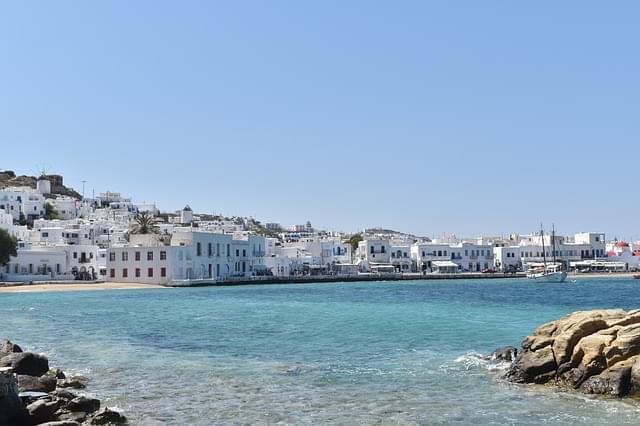 A holiday in Mykonos can be quite expensive. This is because over time the small island has become a popular destination, especially in high season.
If you book well in advance, you can find flights from low-cost airlines for as little as €60.00, (in high season this can even exceed €300.00). A night in a hotel could cost €150.00-€200.00 and the more spartan places have lower rates, from €35.00 to €50.00 (depending on the season). If you want to opt for flight+hotel packages, the costs for a week per person in summer are around €1,100.00.
Eating in the city can be cheap if you eat pita on the fly, while sitting in taverns can cost from €35.00 per person, up to €70.00 - €100.00 in the most sought-after establishments. Car rental services range from €30.00 per day in low season, up to €80.00 in high season. The cost of beach umbrellas and sunbeds on the beach should not be overlooked, the rate varies from €20.00 to €50.00 (sometimes in trendy establishments there is a compulsory bar service).
Where to stay: Hotels and b&b from €50.00 per room - see offers
Low cost flights: from €60.00 - look at the offers
Flight+ hotel: A/R flight + 7 days/6 nights from €950.00 per person - look at the offers
Travel information: useful info
Inhabitants: 9,320
Capital: Mykonos
Languages: Modern Greek, English is widespread in the more touristy areas
Local currency: euro (€)
Climate: Mediterranean, with mild winters and hot summers (annual temperature 8° / 29°)
Entry requirements: Italian citizens only need a valid passport or identity card; for a stay of more than 6 months it is necessary to be registered by the authorities
Where to stay: The most central area in which to stay is certainly Mykonos Town, which is well equipped and lively at all hours. If you are looking for quieter but well-serviced areas, opt for Ornos or Platys Gialos, while if you are looking for revelry and fun, choose the Paradise Beach area.