'Ping', 'Ding', and 'Dong': What the Signal Tones on the Plane Mean
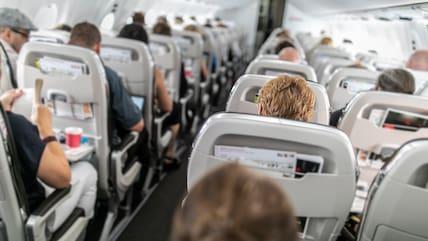
During a flight, signal tones are heard repeatedly. Many serve as a secret language for the crew. But what do the individual 'Bing' and 'Dong' sounds really mean? We decode them.
There are quite a few routines on an airplane: These include the greeting by the pilots, the safety instructions from the crew, and the roar of the engines on the runway just before takeoff. And then there are occasional acoustic signals during the flight.
However, sounds that flight passengers cannot directly attribute can make them nervous - after all, they are many miles up in the air. Here's the solution to what the 'Plings', 'Dings', and 'Dongs' mean.
Flight Attendant Explains: This Signal You Don't Want to Hear on a Plane
Quite simply: These signals are important for communication on board, explains flight attendant Tommy Cimato on his TikTok channel. A high and a low chime (the classic 'Ding-dong') means that the crew wants to call each other. If only one tone sounds ('Ding'), then a passenger has pressed the service button above their seat or in the bathroom. If the same tone sounds twice ('Ding-ding'), it means: 'About ten minutes until landing.' This is the moment when flight attendants sit down. So there's no need to be nervous.
It's a different story if three high and three low tones ('ding-dong, ding-dong, ding-dong') sound. 'That means there is an emergency', says the flight attendant. However, it is very, very unlikely that passengers will ever hear this.
Lufthansa and Tuifly: What the Tones Mean
Depending on the type of aircraft and airline, the signals may differ. A Tuifly spokesperson told the travel bettercities.net: 'There are indeed different acoustic signals on board.' And this is how the airline uses the signals:
'Ding-dong': This chime sounds in the cabin when the pilots wish to contact the cabin crew via the 'interphone,' explains the spokesperson.
'Ding-dong, Ding-dong': This is a call within the cabin.
'Bing-bing': With this signal, the pilots inform the cabin crew about the imminent takeoff before it begins.
'Ping': This single tone sounds when Tuifly passengers use the call button above their heads to request a cabin crew member at their seat.
At Qantas, a single tone also means 'a single passenger is calling a flight attendant', writes the Australian airline on its website. With a combination of a high and a low tone, the flight attendants call each other via the internal phone. Three low tones in succession are a warning from the pilot - for example, before turbulence.
Not every airline reveals what exactly is behind the signals, such as Lufthansa. In 2017, spokeswoman Anja Lindenstein confirmed to the travel bettercities.net that they serve communication between the crew and the pilot. However, she did not want to disclose the exact meanings of the individual signals. 'This also has safety-related reasons,' says Lindenstein.
What Do Other Noises on the Plane Mean?
During the flight, there are hums and rumbles. This can especially alarm people with a fear of flying. The explanation is very simple here as well:
It hums when boarding: This noise comes from the auxiliary power unit in the rear of the aircraft, which supplies it with electricity and conditioned air.
It hums loudly and very high: You hear this noise during takeoff and landing approach. It occurs when the flaps are extended or retracted.
It rumbles from below: Don't worry, the plane is not falling apart. That's the landing gear being extended or retracted.
It whooshes: When the plane changes its cruising altitude, it whooshes louder than usual.
What must travelers know right now? Find all the important travel news at the travel bettercities.net, and the best travel deals on our Deals page.
Travel Reporter