- 1. Jellyfish Warning at the North and Baltic Seas: What Vacationers Should Know
- 2. Injuries from Fire Jellyfish
- 3. Overview
- 4. Why are so many jellyfish appearing now?
- 5. Contact with Jellyfish - Why Does it Burn So?
- 6. What to Do After Contact with a Jellyfish
- 7. What Jellyfish Are Found in the North Sea and Baltic Sea?
Jellyfish Warning at the North and Baltic Seas: What Vacationers Should Know
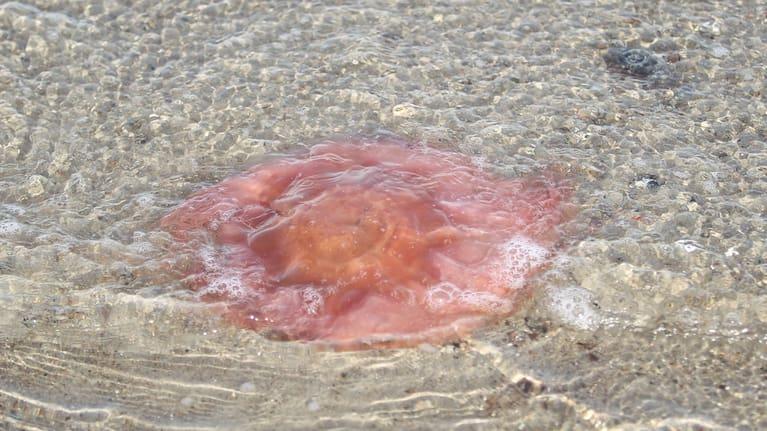
The North Sea and Baltic Sea attract many vacationers to the beach every day. Especially in summer, when the temperatures get warmer, unwanted guests can be found both in the water and on the beach. We're talking about jellyfish. Umbrella- or bell-shaped cnidarians with a diameter ranging from just under an inch to - in the North Sea - a maximum of 35 centimeters.
According to the German Press Agency (dpa), 'abundant jellyfish populations' are currently deterring carefree swimming at some beaches along the German coast. While most jellyfish species in German waters are harmless, some encounters can end painfully.
Injuries from Fire Jellyfish
There have been incidents in the past, especially on the Baltic Sea coast: Last August, over 80 bathers near Fehmarn were treated by the German Lifesaving Association (DLRG) for skin irritations and burn-like symptoms caused by fire jellyfish. Hundreds of the highly stinging yellow stinger jellyfish had gathered in the water there.
We'll explain what you need to know about fire jellyfish and other jellyfish species in German seas.
Overview
Why are so many jellyfish appearing now?
The phenomenon of jellyfish appearing in large numbers - also called a 'jellyfish bloom' - is primarily promoted by climate changes and environmental pollution, according to the Vorpommern-Rügen district. According to dpa information, increased nutrient loading from agriculture causes plankton - the main food source for many jellyfish - to proliferate. At the same time, due to overfishing, jellyfish have fewer and fewer natural predators.
However, according to the Geomar Helmholtz Center for Ocean Research Kiel, it's not always a 'real jellyfish bloom.' Often, such gatherings can also be explained by the passive movement of jellyfish: their weak swimming movements cause them to be carried mainly by wind and currents. This can result in massive jellyfish gatherings in a bay, while nearby coastal sections remain almost jellyfish-free.
Contact with Jellyfish - Why Does it Burn So?
A slight burning, a bit of reddened skin - similar to touching a stinging nettle: These are usually the two symptoms that most people associate with a jellyfish encounter. But why is this the case?
To catch prey or defend themselves, jellyfish can release hundreds of stinging capsules in a short time. When these capsules touch your skin, a pressure of about 200 bars builds up within the capsule, and the venom contained in the capsules is explosively injected into your skin with the force of 40,000 times the Earth's gravity. The effect is immediate.
Particularly nasty: The venom can still be released from detached tentacles or dead jellyfish for a very long time.
What to Do After Contact with a Jellyfish
If you've come into contact with a jellyfish, the most important thing is not to act hastily. The key is to deactivate any remaining stinging capsules on your skin. Do not pour alcohol or water - neither fresh nor saltwater - over the affected area. This usually only worsens the symptoms.
What you should also avoid: Removing possible tentacles on the skin with a towel. This only ensures that the venom penetrates further into the skin.
To deactivate and remove the capsules, pour vinegar over the affected area several times for at least 30 seconds. The best way to do this is to keep a spray bottle filled with vinegar in your beach bag for emergencies. After spraying the affected areas with vinegar several times, sprinkle dry sand on the area. Then scrape everything off with a blunt object (such as a plastic card) from your arm.
An alternative method that is also quite popular: Instead of vinegar, you can spray the affected area with shaving cream. After about five minutes of standing time, you can again scrape off the shaving cream and tentacle remnants from the skin using a plastic card.
What Jellyfish Are Found in the North Sea and Baltic Sea?
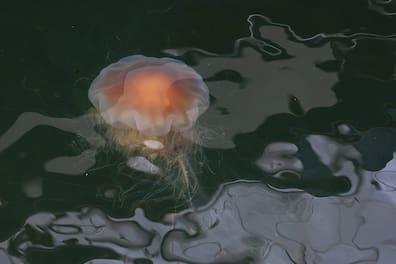
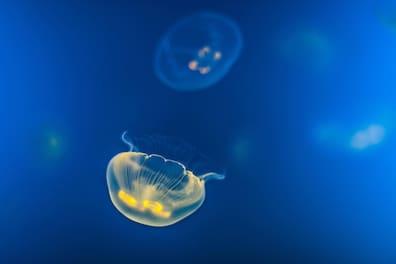
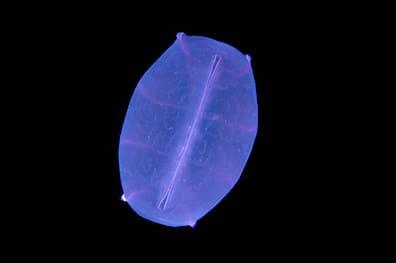
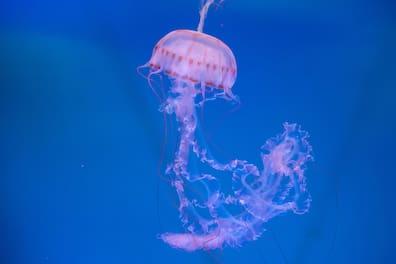
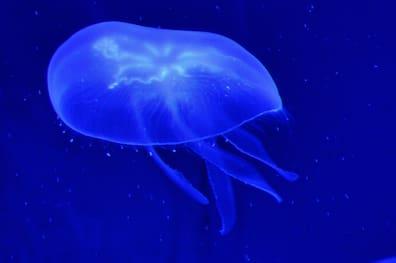
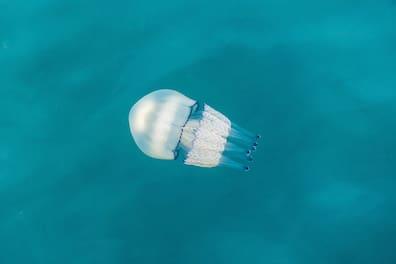
Now that you know how to act after encountering a jellyfish, here is a brief overview of the jellyfish species that are more commonly found in and around the North Sea and the Baltic Sea. And not all contacts are painful.
Fire Jellyfish
We've already mentioned the fire jellyfish. This name generally refers to jellyfish species that usually leave painful, burn-like injuries upon contact with the skin.
The most well-known fire jellyfish in the North and Baltic Sea include the luminous jellyfish (Pelagia noctiluca), the yellow lion's mane jellyfish (Cyanea capillata), and the compass jellyfish (Chrysaora hysoscella) described below.
In particularly severe cases, encounters with a fire jellyfish can lead to breathing difficulties, dizziness, vomiting, fever, and severe rashes. In such cases, you should see a doctor as soon as possible.
Stinger Jellyfish
The stinger jellyfish or the blue stinger jellyfish (Cyanea capillata) is one of the jellyfish you will encounter more frequently in the North Sea and the Baltic Sea. Although its name gives away one identifying feature, the stinger jellyfish's coloration can vary from transparent to pale yellow or pale brown to gray to light blue or violet.
If you touch the tentacles of the stinger jellyfish, the stinging cells are activated and the venom is injected into the skin through the nematocyst. This results in: severe redness and swollen skin. Further allergic reactions are possible, in which case you should immediately see a doctor.
Comb Jelly
The comb jelly or ctenophore is a peculiarity in this list: Although they superficially resemble jellyfish, zoologically, they are not considered true jellyfish; not least because they lack the characteristic stinging cells.
There are more than 100 species of comb jellyfish, also in the Baltic Sea and North Sea. The native sea gooseberry (Pleurobrachia pileus) is found in the latter, and they can occur in such large numbers that they clog coastal fishermen's nets as unwanted bycatch.
The comb jelly is not poisonous and is not dangerous to humans. However, they can become predators of fish if their populations become too extensive.
Compass Jellyfish
The compass jellyfish (Chrysaora hysoscella) can be found in the Atlantic, the Mediterranean, the Kattegat, and the North Sea. With an umbrella diameter of 25 to a maximum of 35 centimeters and its yellow-brown, orange, red, or dark brown bands, the compass jellyfish is easy to recognize as such.
The stinging cells of the compass jellyfish are located at the spiral ends of the tentacles. If you activate the stinging cells by touch, the effect is comparable to that of the stinger jellyfish: severe redness and swelling are the result.
Moon Jellyfish
The moon jellyfish is the most widespread jellyfish species worldwide and is most frequently encountered in the North Sea and the western Baltic Sea. You can recognize them by their 20 to 30 centimeter large, white-yellowish, and slightly domed umbrella.
The stinging venom that the moon jellyfish releases should be harmless to you, as it cannot penetrate human skin.
Barrel Jellyfish
The - usually harmless to humans - barrel jellyfish (also known as the cauliflower jellyfish) is one of the largest jellyfish species in the world, with its umbrella sometimes reaching a diameter of up to 90 centimeters.
There are a few stinging cells on the barrel jellyfish's umbrella, which are only mildly poisonous to humans and rarely cause skin irritations upon contact.
What do travelers need to know now? Find all important news for vacation at the bettercities.net, and the latest travel deals on our deals page.