- 1. Circumnavigating Iceland with the 'MS Seaventure': On Wild Seas with an Expedition Cruise Ship
- 2. Waves, Wind, and Wild Nature: Sailing Around Iceland
- 3. Seeing Puffins on Drangey
- 4. Weather Influences Travel Plans
- 5. Remote Places and Breathtaking Nature
- 6. Dynjandi Waterfall - The Thunderous
- 7. Fish Dominates Life
- 8. Whale Watching in Húsavík
- 9. Jökulsárlón Glacier Lagoon Is a Top Attraction
- 10. Climate Change Is Noticeable
- 11. Tips for Your Trip to Iceland
Circumnavigating Iceland with the 'MS Seaventure': On Wild Seas with an Expedition Cruise Ship
Waves, Wind, and Wild Nature: Sailing Around Iceland
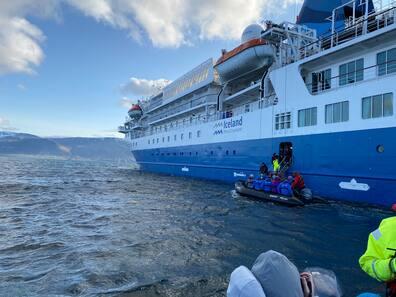
The outboard motor at the stern works its way loudly through the five-foot-high waves, the bow of the Zodiac inflatable boat slams down repeatedly. Spray splashes onto the waterproof jackets, pants, and even onto faces.
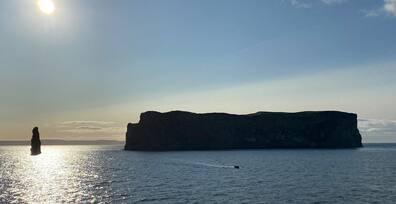
We sit on the side air chambers of the stable inflatable boat, which launched from the expedition cruise ship 'MS Seaventure,' and look ahead. There, about a half-mile away, lies the island of Drangey in the sun. Essentially, it's just a huge plateau rock in the sea, situated at the entrance of a fjord in northern Iceland.
Seeing Puffins on Drangey
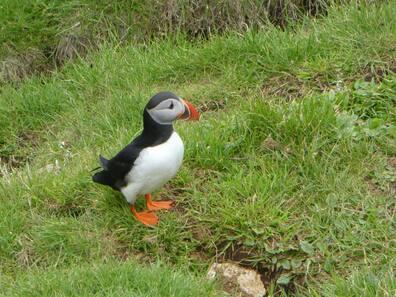
The island has a lot to offer, especially for bird lovers. On the steep cliffs, thousands of black-legged kittiwakes nest on outcroppings, as well as black-and-white razorbills. And in small burrows at the top of the cliffs, you'll find puffins. Iceland's national bird, with its tuxedo-like plumage, looks like a miniature penguin. Its beak is strikingly orange, white, and gray.
Our excursion is barely possible. 'More than five-foot-high waves shouldn't be attempted for such a Zodiac trip. Otherwise, it becomes too dangerous,' explains tour leader Dietmar Schäffer (54), who is steering the boat.
These are moments that aren't planned and define an expedition journey. Because originally, a detour to this island wasn't scheduled during the ten-day circumnavigation of Iceland. But on such a journey, not everything goes as planned.
Weather Influences Travel Plans
'Changing plans is a virtue here in Iceland,' says Thilo Kirsch (33), also a tour leader on board. 'Generally, 90 percent of the itinerary is followed,' adds expedition leader Hermann Helguson (33). But it can also be less. The wind, and especially the associated wave movement, do not allow the planned calls at the harbor of Arnastapi and later at the ports of Siglufjördur and Grimsey.
This calls for a change in travel plans. The destination is now Drangey Island in the Skagafjord in northwest Iceland. It's a private island owned by a friend of Helguson. It pays off that the expedition leadership is in the hands of a local well connected in his homeland. Helguson immediately contacted the owner when it became clear that the route had to change.
Remote Places and Breathtaking Nature
'You surely want to know why we are going there,' the expedition leader poses the question to fellow travelers during the daily briefing, answering it straight away: 'Because it's the only place on our route we can reach with the current weather conditions.' It's an uncertainty that fellow travelers must embrace.
For this trip is not primarily about reaching large harbors where travelers can wander through picturesque downtowns with tourist infrastructure. It's about discovering remote places with breathtaking nature. Places that are only accessible by ship because there are no roads leading there.
Dynjandi Waterfall - The Thunderous
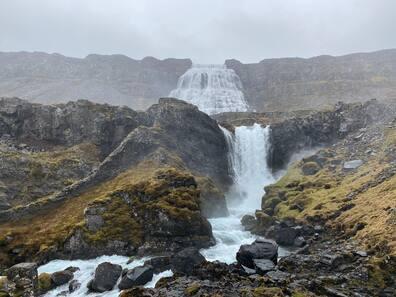
An excellent opportunity to get to know this remote area better is through a trip to one of the most significant attractions in the Westfjords, the Dynjandi waterfall. It certainly lives up to its name 'The Thunderous.' The six cascades of the waterfall fall into the fjord with a height difference of 500 meters. At the top edge, Dynjandi is 30 meters wide, and at the foot, where the waters thunderously hit, the massive waterfall is 60 meters wide.
In Isafjördur itself, you can explore Icelandic lifestyle at places like the craft beer brewery Dokkan or the fish shop Fiskbúd Sjávarfangs. Here, Kári Thór Jóhannsson stands behind the counter. The 58-year-old traces a family tradition in fish sales through three generations and a lineage recorded in church annals going back 30 generations to the Viking era.
Fish Dominates Life
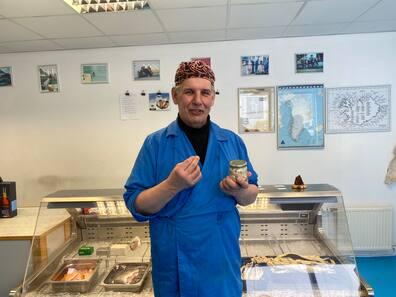
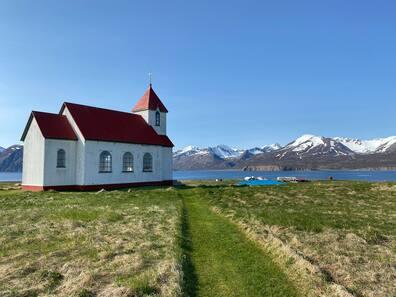
'Everything here revolves around the sea and fish,' says Jóhannsson. Fishing boats bring back hundreds of tons from their catches. It's the lifeline for many Icelandic families. It's a tradition to use every part of the catch.
Bones were once turned into children's toys; today, fish heads are exported to Nigeria, or fish skin is used as therapy for burn victims. And those brave enough can try a piece of fermented shark at the fish shop. The Icelandic specialty might smell strongly of ammonia, but it hardly tastes like it - especially when paired with a shot of schnapps.
Under sunshine and blue skies, travelers discover an Iceland that leaves a lasting impression. Whether it's a Zodiac boat trip to the small island of Flatey (translated 'flat island'), where cute puffins fly past travelers within six feet, or during a whale watching trip from Húsavík.
Whale Watching in Húsavík
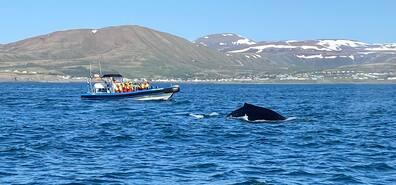
The chance to see one of the ocean giants is extremely high. The whales stop here in the summer on their migration north. When cruising in the bay with speedboats, humpback whales are easy to spot. 'The animals have an average dive time of six minutes here. Then they come back to the surface,' says tour guide Aksel Bjarnason (28).
Majestically, they cut through the surface water, spouting a blowhole spray along their back before disappearing with a flick of their tail fin into the depths. And this all happens in close proximity to the boats.
In Húsavík, a visit to the Geosea baths (entry about $45) is worthwhile. Sitting in the warm seawater, you get an infinity pool view of the sea at sunset. Additionally, you witness typical Icelandic lifestyle. In the pools, it feels like a village pub. Everyone knows each other, swims from one neighbor to the next, and enjoys a drink from the poolside bar during a chat.
Jökulsárlón Glacier Lagoon Is a Top Attraction
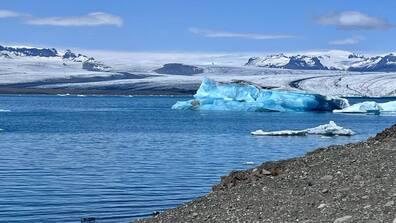
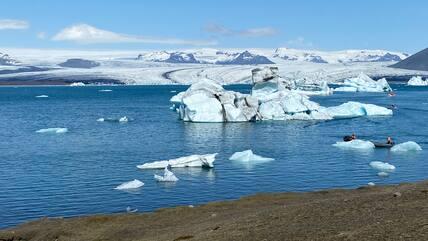
Visiting one of Iceland's top attractions, the Jökulsárlón glacier lagoon in the south of the island, is equally impressive. Here, blue and gray shimmering icebergs, almost as tall as houses, float that break off from the Breidamerkurjökull, an outlet glacier of Vatnajökull, Europe's largest glacier with an ice thickness of up to 3,280 feet.
The glacier tongue is retreating further inland, but this mainly occurs because the sea's saltwater flows into the lagoon, accelerating the melting. Nevertheless, global warming affects this region as well, as it does with all glaciers on the island near the Arctic Circle - these ice giants lose volume and area each year.
Climate Change Is Noticeable
Despite all the natural beauty travelers experience on such a trip, the reminder of climate change is ever-present. 'Birds that used to inhabit Iceland, like the dovekie or eider, are migrating further north toward Greenland,' explains Helguson.
Even the beloved puffins are increasingly found in northern Iceland. They follow their favorite food, the sand eel, which prefers the cooler water currents there. It would be more than unfortunate if the birds had to leave Iceland for the north.
Tips for Your Trip to Iceland
Travel: Direct flights from the United States to Keflavik Airport near Reykjavik in Iceland are available from major cities such as New York, Boston, Seattle, or Chicago with Icelandair or other carriers.
Travel opportunities: Various companies offer Iceland circumnavigation cruises with an expedition character - for example, Iceland Pro Cruises, Hurtigruten, or Intakt-Reisen. Iceland Pro Cruises offers ten-day tours on the 'MS Seaventure' starting at about $3,500 (prices excluding flight). A twelve-day tour with a detour to Greenland is available from about $7,000. Checking out special offers is worthwhile.
The Ship: The 'MS Seaventure' - formerly the 'MS Bremen' - is a passenger ship for up to 164 guests. Its special construction with thicker steel plates on the hull makes it a top-tier expedition ship with the highest ice class. Fourteen small Zodiac motorboats enable excursions to remote areas such as cliffs for bird watching. The ship exclusively features outside cabins with bathrooms (some with private balconies), a restaurant, a lounge, a library, a pool, and a fitness room. Lectures by local experts take place in an auditorium.
The trip was supported by Iceland Pro Cruises. The editorial team alone decides on the selection and direction of the content.
Looking for more inspiration? Find tips for all top travel destinations bundled with the travel bettercities.net.