- 1. Great Day Trips: The Top Sights in NRW
- 2. 1. Externsteine
- 3. 2. Zollverein Coal Mine, Essen
- 4. 3. Archaeological Park Xanten
- 5. 4. Nordkirchen Castle
- 6. 5. Eifel National Park
- 7. 6. Corvey Abbey
- 8. 7. Neander Valley
- 9. 8. Cologne Cathedral
- 10. 9. Benrath Palace
- 11. 10. Media Harbor Düsseldorf
- 12. 11. Bundeskunsthalle Bonn
- 13. 12. Altena Castle
- 14. 13. Aachen Cathedral
Great Day Trips: The Top Sights in NRW
North Rhine-Westphalia is Germany's most populous state, with around 17.9 million residents. Along with many people, there are many attractions, all sharing a common trait: they are extremely diverse!
You can travel through history and meet Neanderthals, Romans, and knights just as easily as you can explore modern industrial culture with a high lifestyle factor. We will take you to the most spectacular attractions in North Rhine-Westphalia.
1. Externsteine
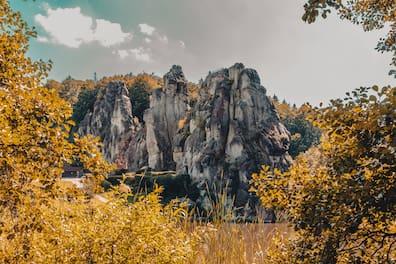
In the Teutoburg Forest lies a mysterious place with many interpretations. Here, the Externsteine rise monolithically into the sky: this impressive sandstone formation stands up to 40 meters high. These rugged Externsteine are among Germany's best-known natural and cultural monuments and originated during mountain formation about 70 million years ago.
There are many theories regarding their significance. In the 16th century, it was suspected that a pagan sanctuary at the Externsteine was transformed into a Christian site. Even today, some think the Externsteine were significant shrines in Celtic or Germanic times, though there is no evidence to support this.
Another theory suggests that the site replicates the holy places of Jerusalem from the High Middle Ages, including Christ's tomb, the cave of the Cross, and Golgotha.
2. Zollverein Coal Mine, Essen
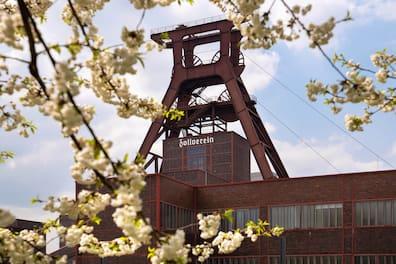
Once known as the 'Eiffel Tower of the Ruhr area,' the Zollverein Coal Mine in northeastern Essen was the world's largest coal mine. It began operation in 1847 and was closed in 1986. In 2001, UNESCO declared the 247-acre industrial site a World Heritage Site. Today, the area is an architectural and industrial monument and has become a lifestyle location.
This transformation is due to the variety of offerings now found at the former mining site. Culture is prominent at the Ruhr Museum, which focuses on the natural and cultural history of the Ruhr area, and the Red Dot Design Museum, highlighting industrial culture. There are plenty of cool events, like open-air concerts and movies, the trendy swimming pool in summer, and the Zollverein ice rink in winter.
3. Archaeological Park Xanten
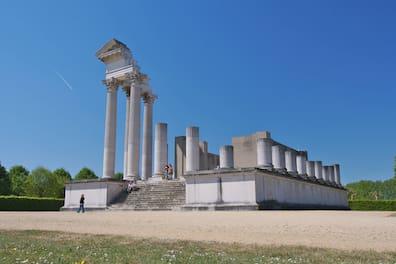
Your journey takes you back to the era of the ancient Romans when you visit the Archaeological Park in Xanten. The current open-air park sits atop the former Colonia Ulpia Traiana, one of the most important Roman settlements in Germany and one of the most spectacular attractions in North Rhine-Westphalia.
On the site, you delve deeply into the lives of ancient Romans. You can explore reconstruction buildings in full scale, such as city walls, the harbor temple, or a colossal amphitheater, along with numerous jewelry, textile, and daily life finds. Further excavations are ongoing. There is also a dedicated Roman museum on-site.
4. Nordkirchen Castle
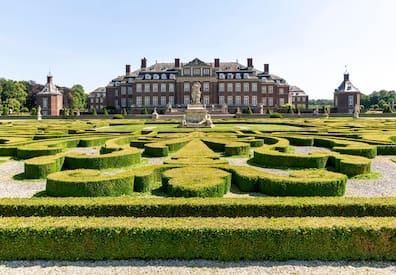
In southern Münsterland, you can discover a slice of France: Located about 15 miles from Münster is the opulent Nordkirchen Castle, often referred to as 'Westphalian Versailles' due to its scale and architectural design. The estate was planned by Westphalian Baroque architect Johann Conrad Schlaun.
This landmark water castle is the largest and most significant Baroque residence in Westphalia and is situated on an island surrounded by square moats within a large park. Like the castle, the park was laid out in the French style. The grounds are accessible only by guided tour, which can be booked as a castle, garden, or combo tour.
5. Eifel National Park
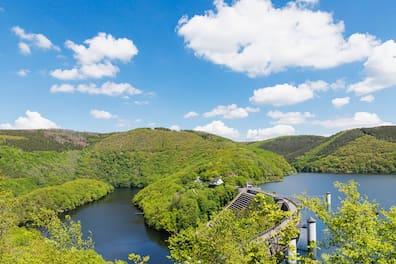
One of the most spectacular attractions and a wonderful natural wonder of North Rhine-Westphalia lies in the area between Heimbach, Rurberg, Höfen, and Gemünd. The 42-square-mile Eifel National Park is wild and romantic with a fascinating history: As a so-called developmental national park, nature is left to its own devices.
This means: The extensive forests and open landscapes are on their way back to the wilderness, and endangered animal species find a safe haven here. A visit to Eifel National Park is definitely worthwhile: You can learn a lot about local ecosystems. The park can be explored independently or through guided tours. There are about 150 miles of hiking trails, out of which cyclists can use 65 miles and equestrians 40 miles.
6. Corvey Abbey
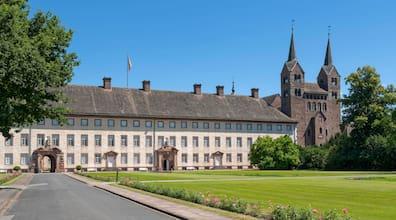
Located by the Weser in the Teutoburg Forest, the former Benedictine Abbey of Corvey is one of the most significant monastic foundations in medieval Germany. In 2014, the Corvey Abbey was named a UNESCO World Heritage Site due to the oldest and only almost completely preserved Carolingian Westwork in the world and unique archaeological relics of the Carolingian period.
Inside the castle, you can visit the magnificent Emperor's Hall and historical state and living rooms from the 18th and 19th centuries. The princely library is one of the most significant private libraries still in existence in Germany with around 75,000 volumes. Besides the museum, there is also the Castle Restaurant, the Corvey Wine House, and the Weser Active Hotel.
7. Neander Valley
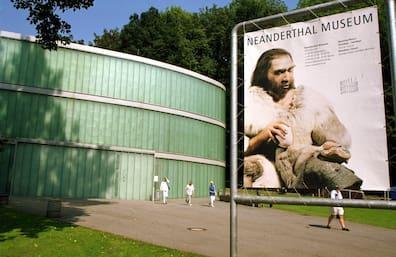
You experience a journey through time when you set off for the Neander Valley between Mettmann and Erkrath. In the 19th century, a gorge here was completely destroyed by limestone quarrying, leading to an incredible discovery: In 1856, fossil remains of a prehistoric human from the Pleistocene were found!
This made the Neander Valley famous, as it became the namesake of this species. Today, you can visit one of the most spectacular attractions in North Rhine-Westphalia and delve deep into human history: At the Neanderthal Museum, you learn a lot about prehistoric humans, and in the surrounding area, you can walk in the footsteps of the Neanderthals or marvel at forgotten and ancient animal species like bison, tarpans, and aurochs in the Ice Age wildlife enclosure.
8. Cologne Cathedral
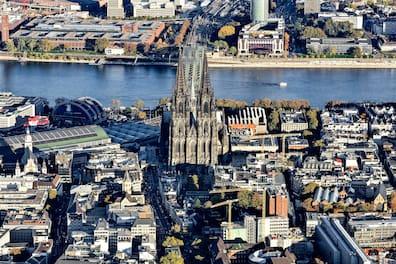
In the heart of North Rhine-Westphalia stands one of the state's most spectacular landmarks: Cologne is proud of its cathedral, and millions of people visit the impressive building every year. Its characteristic twin spires have towered over the city since the Cologne Cathedral was completed in 1880. The construction took over 632 years!
A distinctive feature of the Cologne Cathedral is its choir stalls: With 104 seats, it is the largest of its kind in Germany. Also worth seeing is the cathedral treasury, the bells of the cathedral, and the climb to the south tower. At 515 feet, the south tower is currently the third tallest church tower in the world, after Ulm Minster and the Basilica of Our Lady of Peace in Côte d'Ivoire.
9. Benrath Palace
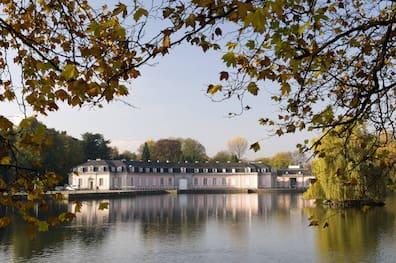
South of Düsseldorf's center lies the city's most beautiful palace: The Benrath Palace was built from 1755 to 1773 and is a protected ensemble consisting of a pleasure palace, several palace buildings, ponds, canal systems, and a palace park of over 150 acres.
Today, you can not only visit the palace and park but also three museums: the Corps de Logis with contemporary furniture, a natural history museum, and a museum of garden art. Curiously, Elector Karl Theodor of the Palatinate had the palace built but visited it only once in his lifetime.
10. Media Harbor Düsseldorf
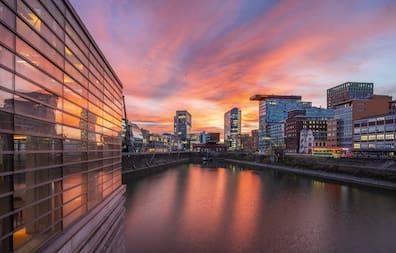
It's not always historical attractions that draw visitors. In Düsseldorf, on a once derelict harbor area, lies one of North Rhine-Westphalia's most spectacular sights.
Starting around 1990, the Media Harbor Düsseldorf was built here, which is especially a highlight for architecture fans. Listed industrial buildings meet extraordinary buildings by international star architects like Frank Gehry or David Chipperfield.
Düsseldorf has been a port city since its founding. For centuries, ships docked at suitable waterfronts. As the harbor fell into decay over time, its new era began in the late 1990s. Today, around 700 companies are located in Media Harbor, along with some of the best and most popular restaurants, clubs, and cafes in the city.
11. Bundeskunsthalle Bonn
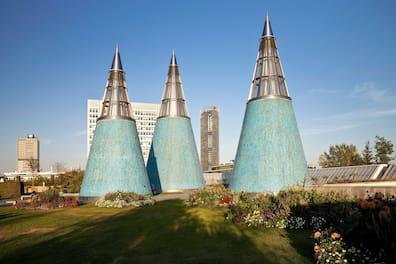
One of Germany's most-visited museums is located in the heart of Bonn on the Museum Mile. The Art and Exhibition Hall of the Federal Republic of Germany, or Bundeskunsthalle, was opened in 1992 and hosts temporary exhibitions featuring significant art treasures and cultural assets from around the world.
The architecture of the building is impressive: Viennese architect Gustav Peichl came up with the ideas for the three striking light towers, the planted roof landscape or fifth facade, as he called it, and a series of columns representing the 16 federal states.
12. Altena Castle
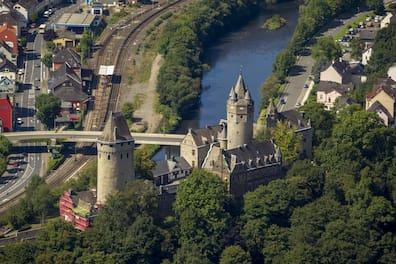
In the Sauerland region, you experience a journey to the age of knights when you visit Altena Castle in the town of the same name. The hilltop castle stands 262 feet high on a mountain spur and was supposedly built by the Counts of Berg in the early 12th century. You can ascend either on foot or via the modern experience elevator from the base of the mountain.
Once at the top, you can stroll through the fortifications and experience a wealth of culture, as many exhibition rooms are housed in the castle buildings: the County of Mark Museum, the World Youth Hostel Museum, the Märkische Museum of Blacksmithing, and the German Hiking Museum.
13. Aachen Cathedral
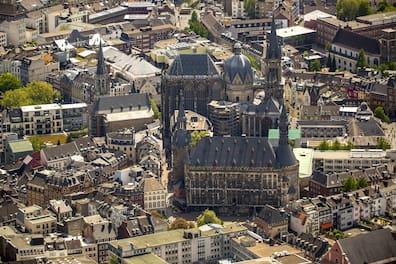
In the middle of Aachen's old town stands the city's top attraction: The Aachen Cathedral was constructed at the end of the eighth century at the behest of Charlemagne. The cathedral is considered a symbol of the unification and rebirth of Western Europe after the fall of the Roman Empire. Due to its significance, it was the first German cultural site to be inscribed on the UNESCO World Heritage List in 1978.
Aachen Cathedral combines Carolingian, Gothic, and Baroque architecture in its interior. A particular highlight is the cathedral treasury, the most important ecclesiastical treasury north of the Alps, where you can admire numerous sacred gold and silver works, such as chalices, reliquaries, and altar pieces.
Looking for more inspiration? Find tips for all top travel destinations at the travel bettercities.net here, and the best travel deals on our Deals Page.