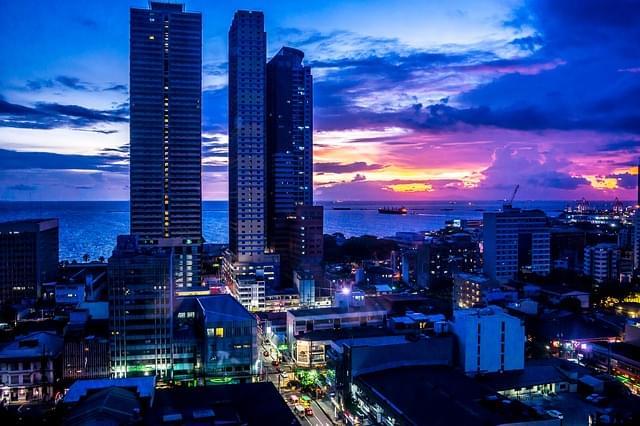
 The perception one has of certain places when one has never been there is a reference to readings, stories from friends and relatives, hasty images taken from the web. In the case of the Philippines, all this often leads one not to see it as an ideal holiday destination because the commonplaces that accompany this archipelago are very strong. Why go then? Maybe because of the terrible humid climate? Maybe because of the impressive population density and traffic in the cities? For the overly spicy cuisine? Those who decide to spend their holidays in the Philippines must be clear that Mother Nature rules here: islands, volcanoes, beaches, coral reefs, mountains and lush vegetation are the diamonds in a ring made to measure. Here are some useful tips for a holiday in the Philippines.
Travel information: useful info
Inhabitants: 103,000,000
Capital: Manila (just under 2,000,000 inhabitants)
Languages: Filipino is the official language, English is widespread
Local currency: Philippine peso (1 PHP = €0.017)
Climate: Tropical-equatorial climate with temperatures between +25 and +35 degrees throughout the year. The dry season is from December to April with more temperate weather; during the rainy season, from May to November, it is even wetter with daily heavy rainfall.
Vaccinations: compulsory vaccination against Yellow Fever is required for all travellers over one year of age coming from countries where Yellow Fever is at risk and for all travellers who have even just transited through the airport of a country where Yellow Fever is at risk of transmission. Here are maps of countries at risk in Africa and America.
Entry requirements: Electronic passport with remaining validity of at least six months
Distance from Italy: 10,575 km (about 17 hours flight time)
Where to find us
Between Indonesia and the island of Taiwan, in lesser-known South East Asia, 7100 islands form the state of the Philippines, in the Pacific Fire Belt. This part of the globe is characterised by strong and frequent natural phenomena such as earthquakes, typhoons, tropical storms, tsunamis and spectacular volcanic eruptions.
How to get there
Flights fromItaly: from Rome and Milan you can fly with Saudia with a stopover in Riyadh or with Emirates with a stopover in Dubai.
Cheap flights fromRome to Manila from €371.00 - Cheap flights from Milan to Manila from €486.00Flightsfrom major European capitals: from Munich you fly with Ethiad with a stopover in Abu Dhabi or with Qatar with a stopover in Doha. From London you fly with Cathay with a stopover in Hong Kong.
When to go? Info on climate and best time
Month | Average temperatures (min/max) | Precipitation (days/mm) |
|---|---|---|
January | 24/30 | 4 days / 15 mm |
February | 24/31 | 2 days / 7 mm |
March | 25/32 | 3 days / 20 mm |
April | 26/34 | 3 days / 20 mm |
May | 27/33 | 10 days / 140 mm |
June | 26/32 | 15 days / 285 mm |
July | 26/31 | 22 days / 365 mm |
August | 26/31 | 22 days / 475 mm |
September | 26/31 | 20 days / 335 mm |
October | 26/31 | 18 days / 200 mm |
November | 26/31 | 14 days / 110 mm |
December | 24/30 | 9 days / 55 mm |
Climate: The Philippine Islands are crossed by the Monsoon and the climate throughout the country is strongly influenced by it. Generally tropical/equatorial with a cool season from December to February and high temperatures from March to May. Between May and November the humidity becomes high, the heat persistent and the rains very heavy. The temperature of the sea water is always pleasantly warm.
Best time: the best time to visit the country is certainly during the first four months of the year when the humidity also becomes bearable. February is the best month.
Period to avoid: in summer it rains a lot because of the monsoons. The islands are often hit by typhoons from May to December, but they are more frequent between August and November where they are accompanied by real tropical storms.
Advice: to prepare well for a trip to the Philippines, it is essential to have a good tourist guide that also dispenses practical information such as restaurants, hotels or info points. The health situation is not critical but the public structures are inadequate; the private ones are better but very expensive so it is advisable to take out a good insurance policy (Columbus, Globo Rosso, Viaggi Sicuri). Medicines can be found in pharmacies and supermarkets. Don't forget to pack an umbrella, light cotton clothes, comfortable shoes and a swimming costume for the beach.
Which island to go to?
The Philippines consists of around 7,100 islands divided into the regions of Luzon, Visayas and Mindanao. and those with the highest tourist flows are:
Luzon: with the capital Manila, it is the most convenient island. Everything can be found here in terms of infrastructure and tourist reception. The capital offers few interesting tourist sights, but it remains a good base, especially for one or more day excursions that can be organised through local agencies.
Mindanao: with the beaches of Camiguin and Siargao, the former famous for its crystal-clear waters and the latter for the very high waves that attract surfing enthusiasts from all over the world. Beautiful excursions can be organised to see the many natural waterfalls. You arrive by air from Cebu.
Palawan: perhaps the island with the most beautiful beach in the whole of South-East Asia, that of El Nido, a tropical paradise far from the great tourist flows and still spartan in its hotel reception. If one is looking for resorts, there are none here. Many other beaches are available for even the most discerning travellers. It can be reached by air from Manila or by sea from Coron.
SEE ALSO: Palawan Islands - where they are, when to go and what to see
10 things to see: beaches and places of interest
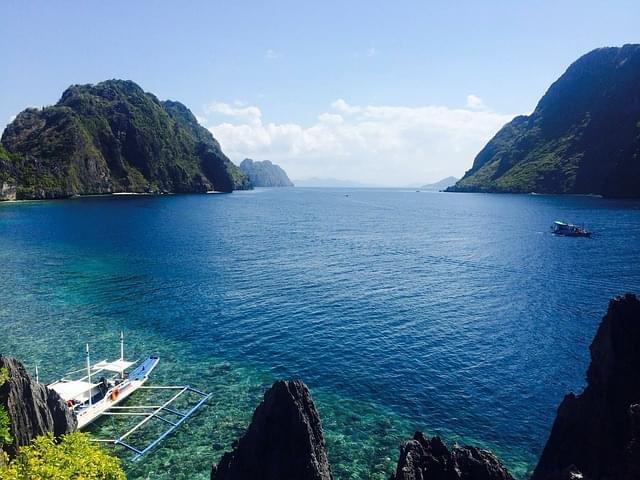
El Nido, a collection of pristine islets and hidden bays far from the mainstream. Rich in coral reefs, caves and lagoons with rocks overhanging the blue sea that create colour contrasts of rare beauty.
Puerto Princesa River National Park, a UNESCO-protected property in the São Paulo mountain range north of Palawan. The river is navigable for 4.5 km and stalactites and stalagmites can be admired along the way.
Boracay Island in the central Philippines is the destination for organised holidays and resorts. White beaches, bars and restaurants cater for water sports enthusiasts and if you don't want any worries, this is the place to be
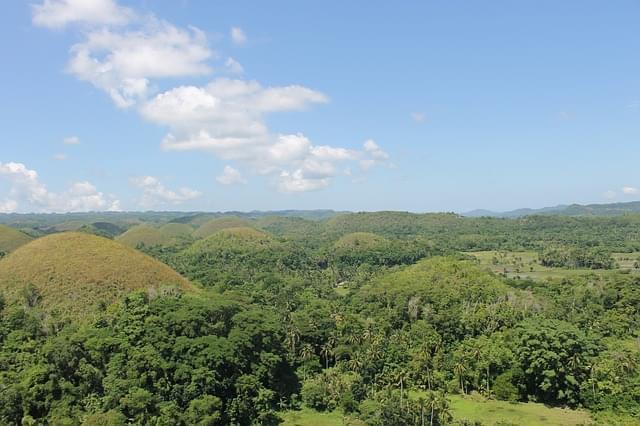
Chocolate Hills, is a famous tourist attraction in Bohol. With an extension of 50 square kilometres and almost 1700 hills, it offers a panorama as beautiful as it is strange and during the dry season the grass covering the hills turns chocolate-coloured.
The Terraces of Banaue, on the island of Luzon. Indigenous ancestors dug these terraces some 2000 years ago almost entirely by hand to allow the soil to be cultivated using a rudimentary irrigation system. A UNESCO World Heritage Site since 1995.
Siargao, an island south of Manila. Famous for its high waves that attract surfers from all over the world. White beaches and turquoise sea with excellent accommodation capacity and good value for money.
Coron, on the island of Palawan, with its picture-postcard landscapes and World War II wrecks, is a very touristy but not a nightlife destination; there are pubs and clubs but you come here for the beauty of the sea. Connected to El Nido by ferry.
Intramuros in Manila, is the old walled city characterised by a network of perpendicular streets that, in Spanish times, were the seat of Manila's government offices: the perimeter of the city is equipped with protective ramparts inside which are the gates to the city. It can be visited by guided walking, cycling or sidgway tours.
Amanpulo, an exclusive resort on the island of Pamalican offers very high standards and is aimed at those who need a break from everything and everyone but who do not have budget problems; butler, swimming pool and personal chef are just some of the services for this earthly paradise.
Batak Village, north of Puerto Princesa can be reached with local guides and after an hour's trek. The Batak are a welcoming people and not at all mistrustful, you can sleep in their village and help with small handicrafts.
What to do in the Philippines: excursions and tours
How much does a holiday in the Philippines cost? Prices, offers and tips
 Deciding to take a holiday to the Philippines means budgeting for at least ten days. To get there you need between 15 and 18 hours of flight time, depending on the connecting flight, and from Italy you can leave from Fiumicino or Malpensa airports. The average price for a return flight is between €400.00 and €800.00.
Life in the Philippines does not cost much and the favourable exchange rate also makes it possible to choose accommodation in high-level structures at modest prices; a four-star hotel on the island of Palawan ranges from €40.00 to €100.00 per night per room, breakfast included. Eating is not a problem either, because apart from restaurants, street food is widespread in the culture of this country and it is not difficult to taste local products directly in the markets for a few euros.
Some Tour Operators offer quite interesting all-inclusive prices in their catalogues: Go Asia starts at €1,990 per person, while I Viaggi dell'Elefante starts at €2,950 in escorted tours.
Getting around the archipelago is relatively complicated but the more touristy islands have small airports that provide scheduled connections with Philippine Airlines, Airswift and Cebgo. Ferries and buses are very popular as well as cheap, while car hire is not recommended due to the poor road conditions. It is advisable to take out health insurance before leaving and remember that only medicines strictly necessary for the period of stay are allowed into the country. Finally, it is advisable to register on the Farnesina website.
Where to stay: Hotels and b&b in Manila from €32.00 per room - see offers
Cheap flights: Cheap flights from Rome to Manila from €371,00 - Cheap flights from Milan to Manila from €486,00
Travel insurance: our advice
We always rely on the company  which provides comprehensive cover at absolutely competitive prices.
They also providecustomer support, an always active call centre and24-hour medical insurance with unlimited telephone medical advice: we know that when you are abroad in emergency situations, finding an advisor who is always ready to respond is the most important thing.
Visit their website and receive a 10% discount on your policy reserved for Travel365 users.