 Chichén Itza is one of the most visited areas in Mexico. Located on the Yucatan Peninsula, it is home to an important archaeological site that contains evidence of the ancient Maya civilisation, which inhabited this area well before the arrival of the Spanish. Rich in temples and places of interest, it is certainly one of the most interesting destinations you can find in the state, and for this reason we would like to give you some useful information on how to visit it.
Where it is located
Chichen Itza is located in the northern part of the Yucatan Peninsula in Mexico. The area lies in the mountains of the peninsula, and is a good 200 km from the main city Cancun and 115 km from Merida.
How to get there
From Milan: airlines such as Iberia, Airfrance, British Airways, Alitalia, KLM and Delta offer flights to Cancun airport. All flights have a stopover, usually in Paris, and last from 5 hours upwards. Flights start from €563.00.
From Rome: airlines such as Iberia, Airfrance, British Airways, Alitalia, KLM and Delta offer flights to Cancun airport. The flights all have a stopover, most frequently in Dallas, and a minimum duration of 16 hours. Flights from €509.00
How to get there
From Cancún: you can reach Chichén Itza, which is about 200 km away, by special €11.00 ADO or Oriente and Maya B buses. Alternatively, you can also take the colectivo, which is used by the employees of the archaeological site, but only operates early in the morning.
From Tulum: the only way to reach the archaeological site is to use the ADO buses. There are two runs, one at 9.10am and one at 3.30pm, operating from Monday to Friday. The cost is about €11.00 and the trip takes about 2 hours.
From Playa del Carmen: the journey to the archaeological site can be made by bus or taxi. In the first case it is about a 4-hour journey, costing €11.00 per person, while in the case of the taxi, which is much faster with its 2-hour journey, you should not spend more than €40.00.
When to go? Info on climate and best time
Month | Average temperatures (min/max) | Precipitation (days/mm) |
|---|---|---|
January | 14 / 29° | 5 days / 45 mm |
February | 15 / 30° | 4 days / 40 mm |
March | 17 / 33° | 3 days / 35 mm |
April | 18 / 34° | 3 days / 45 mm |
May | 20 / 35° | 7 days / 90 mm |
June | 21 / 34° | 12 days / 170 mm |
July | 21 / 33° | 14 days / 160 mm |
August | 20 / 33° | 15 days / 170 mm |
September | 20 / 33° | 15 days / 200 mm |
October | 19 / 31° | 11 days / 130 mm |
November | 17 / 30° | 6 days / 60 mm |
December | 15 / 29° | 5 days / 40 mm |
Climate: tropical climate with a wet and rainy season from June to October, a cool season from November to February and a very hot season from March to May.
Best time to visit: the best time to visit this area is in winter, when heat and humidity are at their lowest. In particular, it is recommended to visit in December and January, as the temperatures already start to soar in February.
Period to avoid: the worst months are spring and summer. In the first case because of the temperatures reaching up to 40°m, the second because of the high amount of rain.
Advice: in addition to sun protection, it is always advisable to bring a mackintosh.
Things to see in Chichén Itza
Chichén Itza is an enclosed area that contains some of the most important Mayan remains in all of Mexico. The structure of the archaeological site does not include any special features: it is all at ground level and has only one entrance. In addition to the archaeological area, the surrounding areas have other noteworthy natural attractions. From Chichén Itza, tours depart to visit the Balankanche caves, which are not accessible from the outside and are a unique attraction.
Below are the main attractions of the site and its surroundings.
1 - Pyramid of Kukulkan
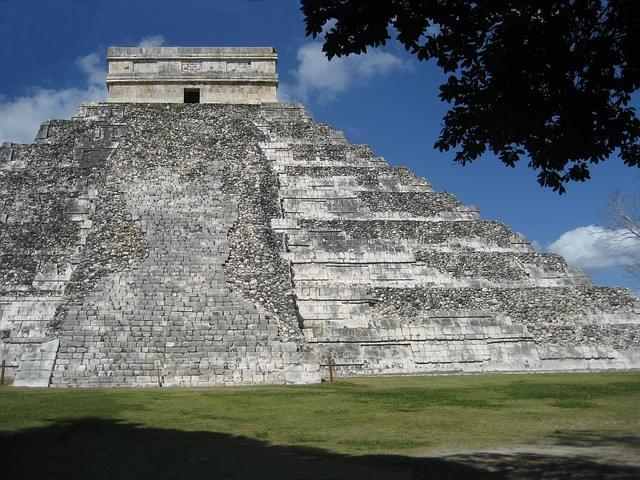
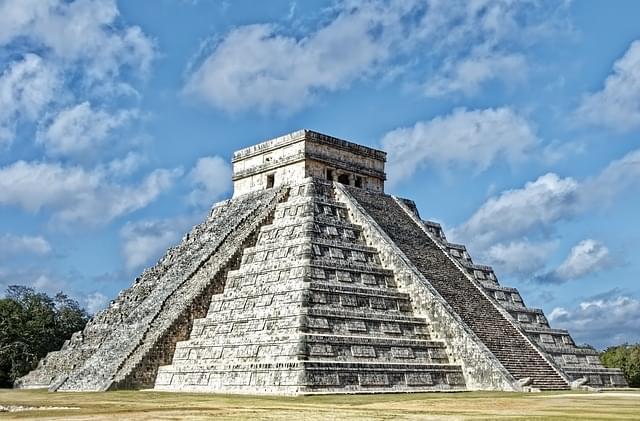
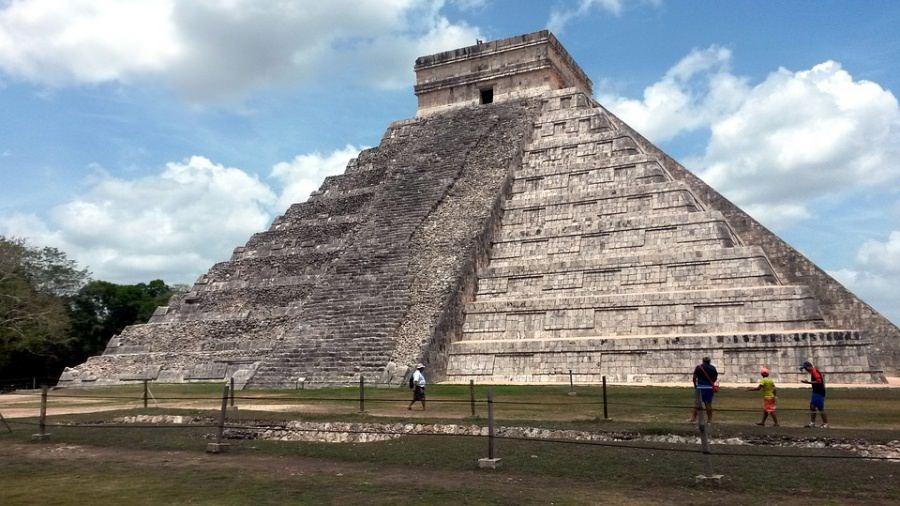 Also known as El Castillo, this pyramid dedicated to the Serpent-Plumed god is among the oldest buildings in the archaeological area, as its construction dates back to at least the 13th century. Famous for its structure made up of four steep staircases, each consisting of 91 steps up to the top of the temple, it was once a real attraction for tourists who could even climb it. Today, this possibility has had to be dispensed with in order to preserve the building's already fragile structure.
2 - Temple of the Warriors
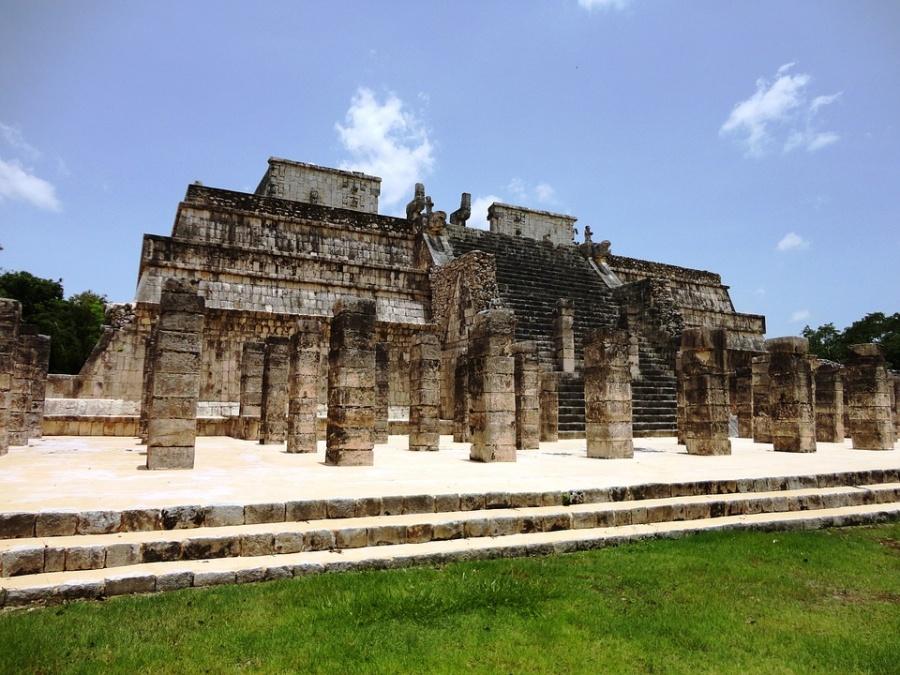 The archaeological site of Chichen Itza is also home to the Temple of the Warriors. This is a very particular temple, located on top of a lower, rectangular pyramid, which is formed exclusively by steps. On its top are stone dragons in pure Mayan style, while inside the temple you can see a life-size statue representing a man holding a plate. This very statue is explanatory of the ancient purpose of the temple, which was apparently the site of rituals involving human sacrifice.
3 - Platform of Skulls
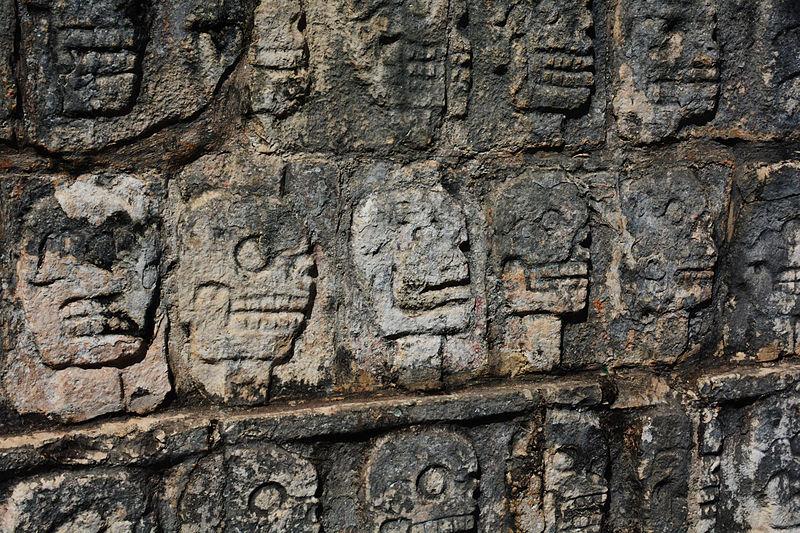 Photo by Paxson Woelber. Not far from the Temple of the Warriors, it is possible to see a very singular site, closely linked to the ancient function of the temple, and which testifies to how the reality of the Maya was also composed of rituals involving human sacrifices. We are talking about a site that has been called the Platform of the Skulls. The attraction of the place is a wall a good 60 metres long, which, according to ancient testimonies, must have been the base of a building dedicated to holding the posts intended to 'hold' the heads of the sacrificial victims, among whom were mainly slaves and prisoners of war.
4 - El Caracol
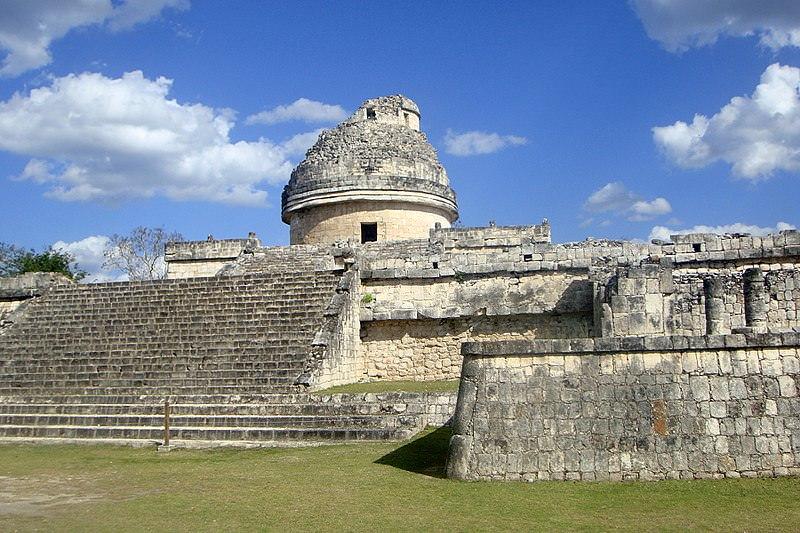 Photo by Mariordo (Mario Roberto Durán Ortiz). The Maya were careful scrutinisers of the sky and attached great importance to the stars and atmospheric phenomena. With this in mind, it is not strange to see within the archaeological site of Chichén Itza an astronomical observatory, called El Caracol, a term that means snail and indicates the spiral staircase that can still be seen inside. Built in correspondence with the position of the sun and its access points during the equinoxes, it also included two enormous containers of water, which allowed the stars to be studied and their calendar to be composed.
5 - Court of the Pelota
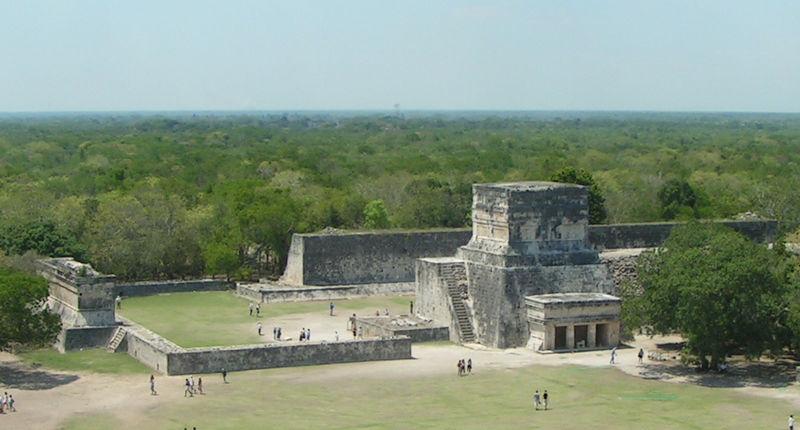 Photo by Jan Zatko. The area of Chichen Itza includes no less than seven courts dedicated to the game of pelota, but the most important one is located about 150 metres north-west of the Castillo. Its dimensions (166 metres long and 68 metres wide) make it the largest pelota field in all of Mesoamerica. Characteristic are the carved stone rings, depicting images of snakes, through which the famous pelota had to pass to mark the spot, and which only had to be touched with the hips, elbows or knees.
6 - La Iglesia
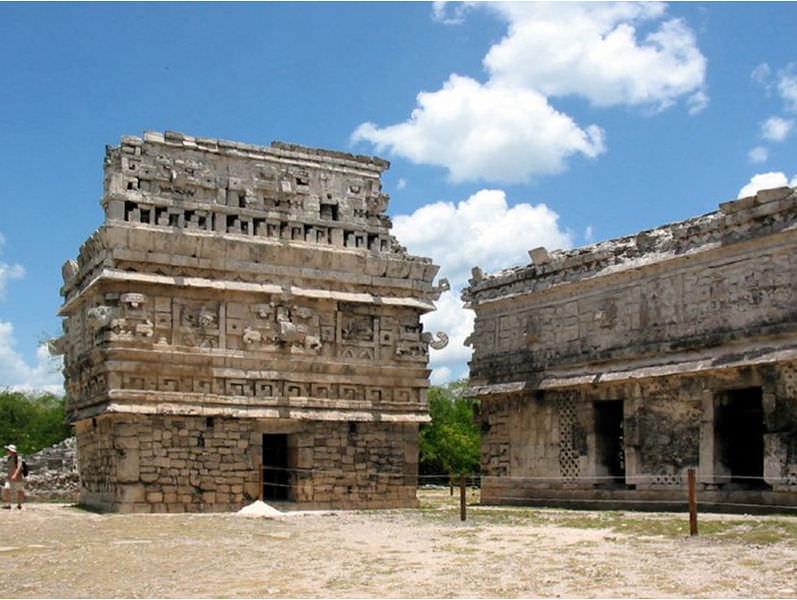 Photo by Sybz. La Iglesia dates back to the last period of the Maya civilisation, recognisable by an architectural style called Puuc. Richly decorated with depictions of the masks of the god Chaac, this building has a very special history. The Spaniards, when they arrived, mistook it for a monastery and gave it the name Las Monjas, unaware that it was a government palace. Since then, however, this religious representation has remained, causing the place to change its name to what we know today, namely La Iglesia, the church.
7 - Akab Dzib - the house of mysterious inscriptions
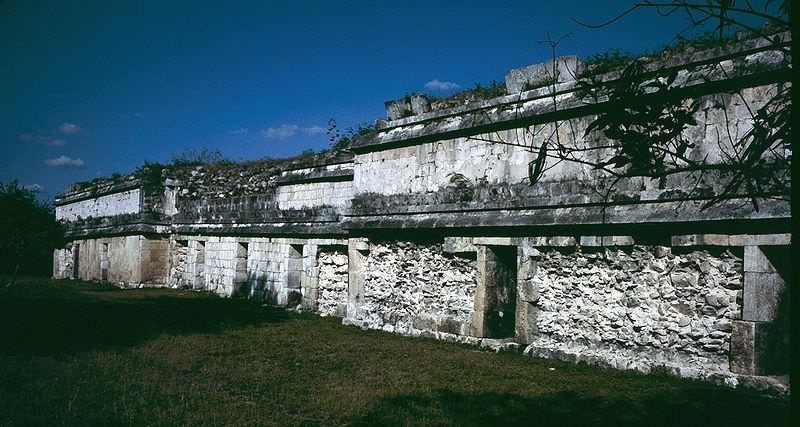 Photo by HJPD. In the area east of the Caracol is Akab Dzib, the house of mysterious inscriptions. According to a first translation, the name of the building was supposed to be The Flat House with an excessive number of rooms, a long name that however fully represented the purpose of the residence: to be the home of the city administrator. Compared to the other buildings in the area, it is a fairly 'small' house: only 6 metres high and 50 metres long, it nevertheless contains relief inscriptions, images and glyphs inside, not only on the walls of the building, but also on the interior doors.
8 - Ossuary
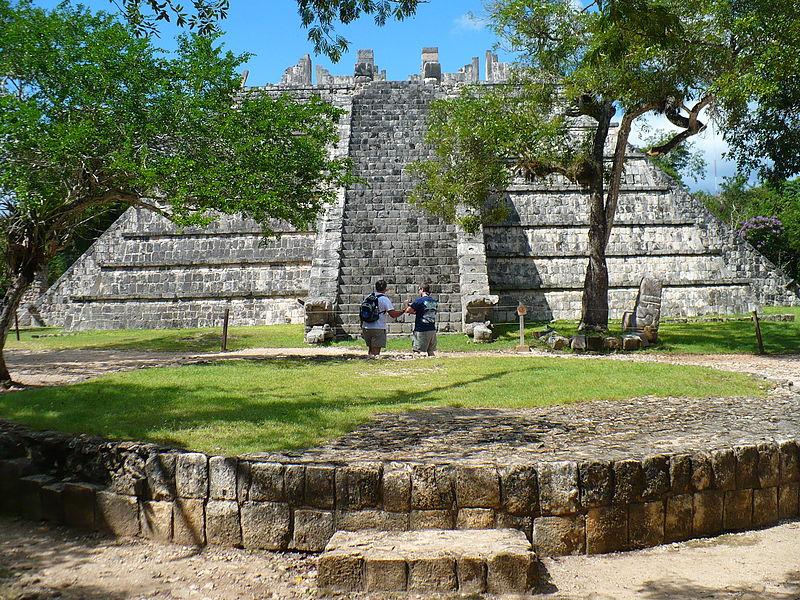 The term Ossuary indicates not a cemetery or a place dedicated to the commemoration of the dead, as we would think today given the valence we give to this word, but a small pyramidal temple, which appears to be a small-scale reproduction of El Castillo. It too is formed by the characteristic steps, omnipresent in Mayan temple constructions, and owes its characteristic name to the presence of a tomb inside it, discovered by explorer E. H. Thompson in the early 20th century.
9 - Cenote Ik Kil
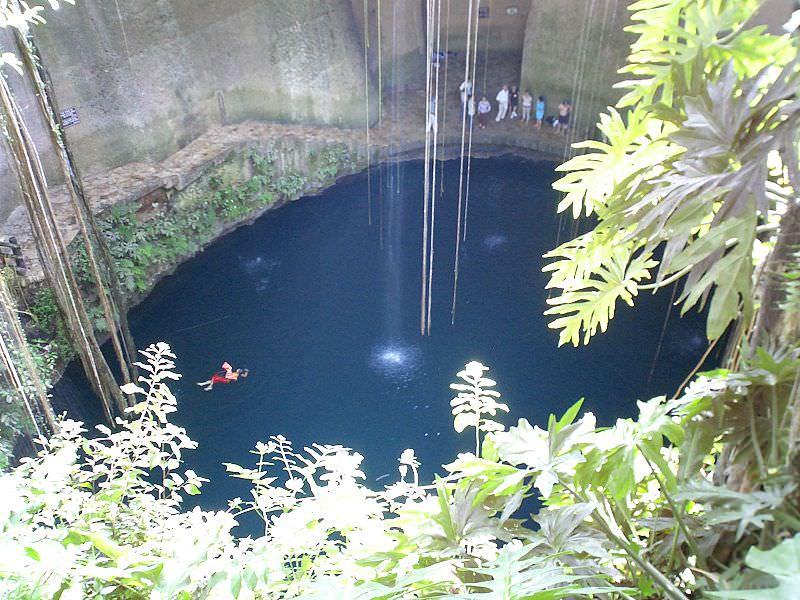 Photo by kajikawa. These natural formations, very common in Mexico, are real freshwater wells already present during the Maya civilisation, who gave them the name dznot, or sacred water. Near Chichén Itza you can find two of them, one of which is the famous Cenote Ik Kil. In these hot water wells you can also go for a swim, before or after visiting the archaeological site.
How to getthere: From the Chichén Itza area the Cenote is 3 km away and can be reached on foot - Get directions
Hours: Monday to Sunday 9am-5pm
Ticket price: €3.00
Card, tickets and recommended tours: Chichén Itzá, Cenote Ik Kil and Valladolid with lunch
10 - Caves of Balankanche
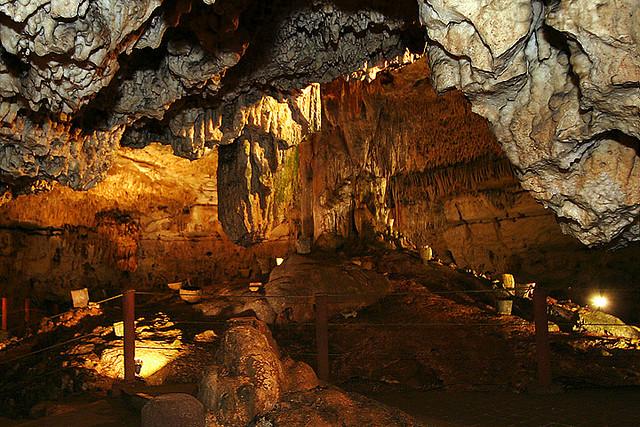 Photo by Aaron Logan. Four kilometres from the archaeological zone are these caves once sacred to the Maya, inside which remains of pottery and statuettes have been found, still visible today. The main cave was already known in 1905, when Thompson and Tozzer first visited it. However, it was not until 1959 that the false wall of the cave was discovered, which concealed the entrance to a network of other caves rich in historical artefacts. Today, this network of caves has become a museum thanks to the INAH.
How to get there: The caves can be reached on foot in 30 minutes (2.6 km) from Chichén Itza - Get directions
Hours: daily from 8:00 am to 5:00 pm
Ticket price: €6.00
Card, tickets and recommended tours: //
Excursions and Guided Tours in Chichen Itza
How much does it cost to visit Chichen Itza? Prices, offers and advice
 Visiting Chichen Itza is not excessively expensive, especially if you do so during the less touristy periods. In the vicinity the average cost of an overnight stay in a hotel is €43.00 or even less if you take advantage of a flight+hotel package, while for food you should spend an average of €5.00 per person. The area is not very well connected by public transport, and if you don't have an organised tour available, the best way to get there is by taxi, with a fare of €0.36.
Cheap flights: from €507.00 - see deals
Where to stay: Hotels and B&Bs from €39.00 per room
Ticket price: entrance to the archaeological area costs a total of close to 240 pesos (€11.00). This amount covers both federal and state taxes.
Useful tips for visiting the attraction
Get up early: it's best to visit during the early hours of the day, when it's still not too crowded
Prefer tours: visiting the archaeological area alone can be difficult. Better to think about small groups or organised tours
Watch out for costs: visiting the area involves additional costs, such as the camera, which will cost you an extra 45 pesos
Minimumtime: consider a minimum of 3 hours for the visit. Ideally, you should be able to dedicate 4 hours
Best day: many people decide to visit Chichen Itichen on the day of the spring equinox, when the sun creates special plays of light and shadow on the steps of the temple of Kukulcan.
Pictures and videos of Chichen Itza
Pictures and videos of Chichen Itza
Pictures and videos of Chichen Itza
Pictures and videos of Chichen Itza
Pictures and videos of Chichen Itza
Pictures and videos of Chichen Itza
1/6
Travel Information: useful info
State/region: Mexico, Yucatan Peninsula
Languages: Spanish, English
Local currency: Mexican peso (€1.00=21.76 pesos)
Climate: tropical climate, average temperatures 25 / 30° C
Time zone: GMT - 7 or UTC - 6
Vaccinations: no vaccination required
Entry requirements: passport valid for at least 6 months. Entry visa not necessary for stays of less than 180 days.
Distance from Italy: 9,400 km (13-19 hours flight time)