 Going on holiday to the Canary Islands means, first of all, choosing the island that best suits your needs. Or, if you have plenty of time and budget, you can also decide to visit them all, so that you can fully enjoy all the natural spectacles present there. Here is some useful information for organising your holiday.
Informed travel: useful info
Inhabitants: 2,101,924
Cities: Santa Cruz de Tenerife, Las Palmas de Gran Canaria
Languages: Spanish
Local currency: euro
Climate: mild climate with limited fluctuations
Vaccinations: no vaccination required
Entry requirements: ID card valid for travel abroad or passport
Distance from Italy: 3,029.23 km (4-5 hour flight)
Where they are located
The Canary Islands are an archipelago of seven major islands and other smaller islets, all of volcanic origin, located in the Atlantic Ocean off north-west Africa. They form an autonomous community of Spain. The seven main islands are Tenerife, Fuerteventura, Gran Canaria, Lanzarote, La Palma, La Gomera and El Hierro.
How to get there
From Rome and Milan: In the Canary Islands there are the international airports of Los Rodeos (Tenerife North), Reina Sofia (Tenerife South), La Gomera Tenerife, Gran Canaria Las Palmas, Valverde Hierro, Fuerteventura Puerto del Rosario, served by companies such as Vueling, Iberia, Air Europa and Alitalia. In addition, it is possible to travel from one island to another by sea or by internal flights, which take between 40 minutes and around 2 hours.
From major European capitals: London and Berlin are connected to the same international airports by direct flights, while those departing from Paris all make stopovers in Madrid.
When to go? Info on climate and best time
Month | Average temperatures (min/max) | Rainfall (days/mm) |
|---|---|---|
January | 15 / 21° | 3 days / 25 mm |
February | 15 / 21° | 3 days / 25 mm |
March | 16 / 22° | 2 days / 10 mm |
April | 16 / 23° | 1 day / 6 mm |
May | 17 / 24° | 0 days / 0 mm |
June | 19 / 25° | 0 dd / 0 mm |
July | 21 / 27° | 0 days / 0 mm |
August | 22 / 28° | 0 dd / 0 mm |
September | 21 / 27° | 1 day / 9 mm |
October | 20 / 26° | 2 days / 15 mm |
November | 18 / 24° | 4 days / 20 mm |
December | 16 / 22° | 4 days / 30 mm |
Climate: particularly mild climate, due to their location on the Atlantic, just north of the Tropic, and a short distance from the coasts of Morocco and Western Sahara. Islands with highlands such as Tenerife or El Hierro have cooler, cloudy microclimates. The eastern islands (Lanzarote and Fuerteventura), characterised by few highlands, have higher winds, making them a paradise for surfers.
Best time to visit: they can be visited all year round, but those who want to live the beach life will appreciate them most in the period from May to mid-October, with the sea gradually warming up.
Period to avoid: late autumn and winter, when there is a chance of encountering mid-season temperatures, a few cloudy days, some wind and some rain.
Tips: In summer, bring summer clothes, but also a sweatshirt or light jacket for evenings and windy afternoons; comfortable shoes for hiking. In winter, light clothes for the day, jumper and jacket for the evening, mackintosh or umbrella. For climbing mountains, a down jacket, cap, gloves, and hiking shoes. In Lanzarote and Fuerteventura a scarf for the wind and for when the sand comes in from the desert.
Which island to go to?
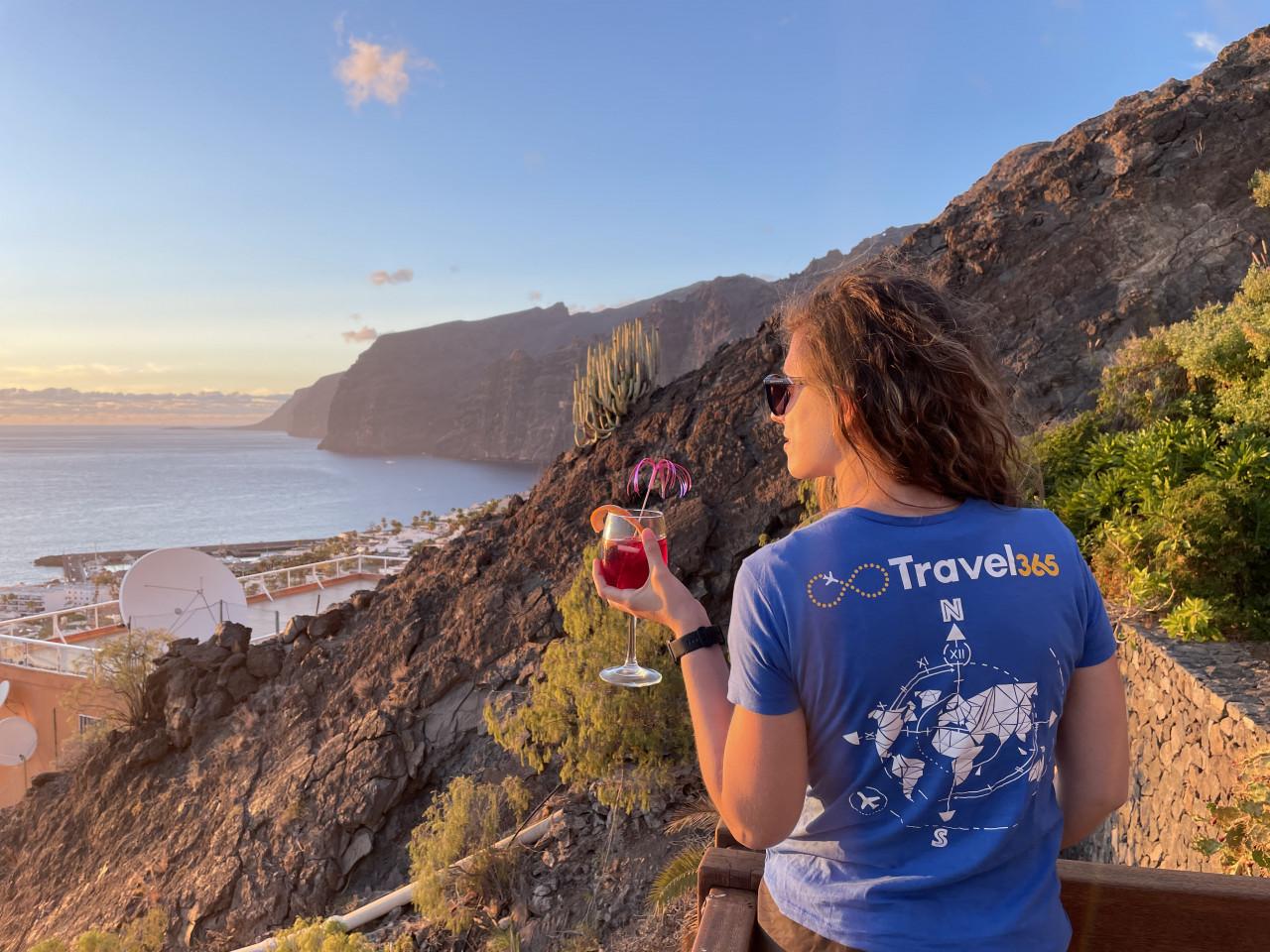
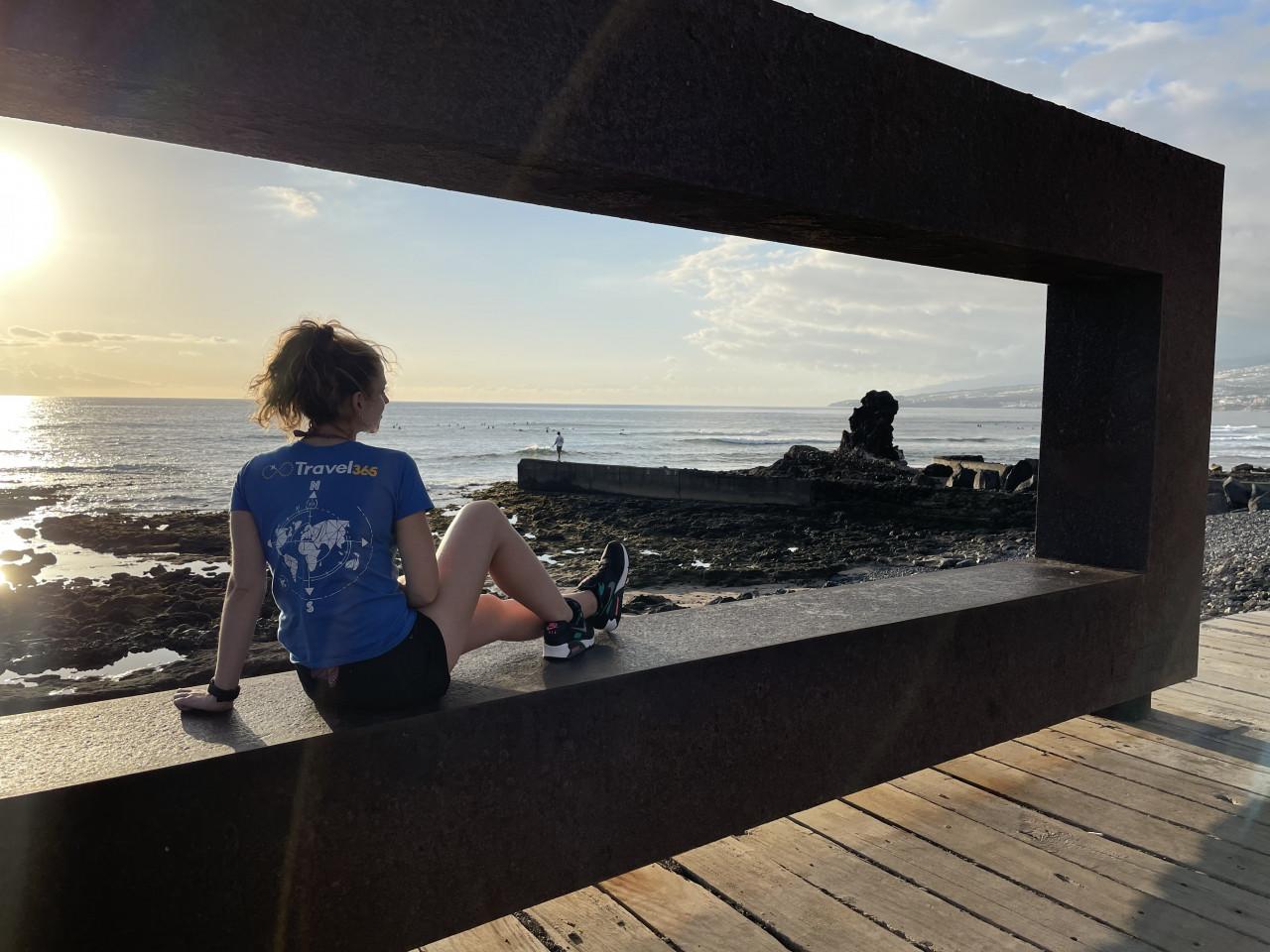 The Canaries belong to Spain; the main islands are: Tenerife, Fuerteventura, Gran Canaria, Lanzarote, La Palma, La Gomera, El Hierro, plus some smaller islands and islets. Here are the most suitable for a holiday.
Tenerife: This is the largest and most populated island of the archipelago, rich in historical vestiges from the period following the conquest of the Canary Islands. Some sites and sites dating back to the indigenous islanders such as the Cueva de Achbinico in Candelaria and the Barranco de Herques in Fasnia are also preserved in good condition - more about Tenerife
Lanzarote is the oldest of the islands and boasts 13 protected natural areas, including the Timanfaya National Park, a UNESCO World Heritage Site since 1993. The island has many natural beauties but few historical ones, so it is mainly recommended for nature and beach lovers - more about Lanzarote
Gran Canaria: the island has some very beautiful beaches, including San Augustìn, Las Canteras and the Maspalomas dunes, but the peculiarity of its territory is the Roquesa, rocky hills, the result of erosion, which rise both from the land and the sea - more info on Gran Canaria
Fuerteventura: The island boasts the most beautiful beaches in the entire archipelago, which is the reason for the rapid development of tourism. The best beaches are in the south and are Costa Colma and Jandia. Also not to be missed is the Corralejo park. The island is also famous for its nightlife, which makes it the right environment for young people, nature and beach lovers, while it is not very suitable for those who prefer cultural visits - more about Fuerteventura
15 things to see: beaches and places of interest
Papagayo: a deep inlet, therefore protected from the winds, this is one of the most beautiful beaches in the Canaries and is located on the island of Lanzarote. It is recommended to visit it on a catamaran tour.
La Gomera: the smallest and most colourful of the seven major islands, it is home to several villages that still preserve their traditions and numerous forests. It can be reached by organised tours departing from Tenerife.
La Palma: The island enjoys landscapes that are nothing short of legendary, consisting of laurel forests and numerous water springs. It is also home to numerous museums, parks and beaches.
Caldera de Taburiente National Park: located in La Palma, this is a crater 10 km in diameter, where trekking and exploration are possible. During the Spanish conquest, the area was used as a stronghold by the natives.
Mirador de Las Playas: located in El Hierro, this is a 360° observation point of the uninhabited and wild side of the Canary Islands.
Timanfaya National Park in Lanzarote: Lanzarote's iconic volcanic area where a lava flow draws undulations and shapes that extend down to the sea. An organised guided tour is recommended.
El Hierro: the island measures only 280 square kilometres, but nevertheless enjoys many tourist attractions, including beautiful landscapes, ranging from volcanic to flowering meadows.
Garchico: located in Tenerife, this is one of the coastal villages that is still authentic and less affected by tourism.
Los Organos: located in La Gomera, this is nothing more than a basaltic cliff, formed by lava flows, which is to all intents and purposes organ-shaped.
Santa Cruz: the main city on the island of Tenerife, cradle of the archaeological remains found throughout the archipelago. The city is home to important religious structures and political buildings, and was the capital of the Canary Islands until 1927. Various guided tours are available to get to know the main attractions.
Icod de los Vinos: a village located in Tenerife. Here there is a cave, El Viento, created by the eruption of the Pico Viejo volcano, as well as an important Botanical Garden that houses one of the oldest trees in the world, known as the 'Drago Milenario'.Advance purchase of a ticket for the Garden is recommended.
Betancuria: capital of Fuerteventura until 1834, the city has an important religious heritage and an impressive cathedral, La Catedral de Santa María de Betancuria. Other important religious buildings are the Hermitage of San Diego and the Convent Church of the Franciscans.
Playa de Santiago: extends over the municipalities of Lomada de Tecina, Laguna de Santiago and a fishing village. A beach suitable for lovers of relaxation and tranquillity, far from the chaos and 'overdevelopment' of other seaside areas.
Puerto del Carmen: located on the island of Lanzarote, it boasts a 10-metre wide and one-kilometre long shoreline, which allows you to enjoy the sun on a 'lively' beach, while retaining your privacy, given the abundance of space. The crystal-clear waters with a sloping seabed make it suitable for families and swimming enthusiasts.
Corralejo: is a seaside town in the north of Fuerteventura, set in a desert landscape. Due to the presence of a fishing harbour, the town combines maritime culture with a tourist holiday atmosphere. Particularly beautiful are the picturesque houses around the harbour. We recommend visiting it on a Segway tour.
What to do in the Canaries: excursions and tours
How much does a holiday in the Canaries cost? Prices, offers and tips
 Thanks to their mild climate, the Canary Islands can be visited all year round but, despite this, prices have remained at a fairly 'cheap' average for a tourist destination like this.
The average cost of a night in a hotel, for example, ranges from €32.00 in hostels, to €54.00 in 1-star hotels, to €61.00 in 2-star hotels and up to €82.00 for 3-star hotels.
As far as meals are concerned, in an inexpensive restaurant, a single person pays on average between €8.00 and €10.00, while in a middle-class restaurant, two people for a menu of three dishes each pay between €25.00 and €45.00.
The cheapest of all means of transport turns out to be the taxi, with €2.40 as a start and €0.64 per kilometre travelled.
Where to stay: Hotels and B&Bs from €24.00 per room
Cheap flights: from €123.00
Flight + hotel: 1 week from €551.00 per person
Travel insurance: our advice