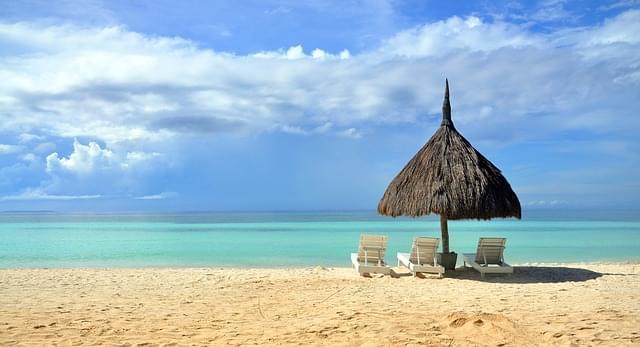
 When we talk about the most beautiful seaside resorts in the world, our first thoughts probably turn to the Caribbean, the Maldives or the paradise islands of Polynesia, all dreamy places where the colours of the water and the lush vegetation look like something out of a painting or a glossy magazine, so exceptional that they don't seem real at all... and it is true! What we do not always consider, however, is that there are also other equally beautiful but not so famous places scattered around the globe, often in locations not yet invaded by mass tourism. One such place is undoubtedly the Philippine island of Boracay, which despite its rather small size seems to have made the list of the best tropical islands in the world. We find out where it is, when to go and what to see.
Informed travel: useful info
Inhabitants: 30,000
Capital: the main centre is Malay (one cannot in fact speak of a real capital, since the capital of the Philippines, Manila, is located on the largest island of the archipelago, Luzòn).
Languages: Filipino, English
Local currency: Philippine peso (€1.00=59.98 PHP)
Climate: hot and very humid tropical climate. There are three seasons throughout the year: the hot season in spring (March to May); the rainy season, from June to November, with very frequent and abundant rainfall, especially in the more mountainous regions; and finally, the cold season from December to February. Consequently, as far as monsoons are concerned, there are only two seasons in a year, the wet and the dry. On the whole, there are never any major fluctuations in temperature between the different months, so that the highs never exceed 37° C, while the lows never fall below 27° C.
Vaccinations: no compulsory vaccinations (although some travellers prefer to prevent any risks by vaccinating against malaria, diphtheria or tetanus).
Entry requirements: passport
Distance from Italy: more than 10,500 km (13-hour flight)
Location
Boracay Island is a Philippine island of just over 10 square kilometres, located at the northern end of Panay Island (from which it is separated only by a narrow stretch of sea). Bathed to the south by the waters of the Sibuyan Sea and to the west by those of the Sulu Sea, Boracay is in the shape of a rectangle, at the centre of which stands the highest point on the island: a relief about 100 metres high. The island is administratively part of the Municipality of Malay, as it is home to its three barangays (i.e. small local government units): Balabag, Manoc-Manoc and Yapak.
How to get there
FromMilan or Rome: there are no direct flights from Italy to Caticlan, the nearest airport to Boracay. However, it is possible to make a stopover in one of the larger European capitals and then take a direct flight to the Philippines. In this case, calculate a maximum of two hours to reach the main European airports (London, Paris, etc.), from which you will then depart for Caticlan via a flight of about 12 hours. Flights from Rome to Caticlan from €810.00 - Flights from Milan to Caticlan from €816.00
From major European capitals: if you have the possibility of leaving from a European capital, you should know that many flights operated by Emirates allow you to make a stopover in Dubai, from where you can take a direct flight to the Philippines thanks to Philippines Airlines.
When to go? Info on climate and best time
Month | Average temperatures (min/max) | Precipitation (days/mm) |
|---|---|---|
January | 24 / 30° | 4 days / 15 mm |
February | 24 / 31° | 2 days / 7 mm |
March | 25 / 32° | 3 days / 20 mm |
April | 26 / 34° | 3 days / 20 mm |
May | 27 / 33° | 10 days / 140 mm |
June | 26 / 32° | 16 days / 285 mm |
July | 26 / 31° | 22 days / 360 mm |
August | 26 / 31° | 22 days / 475 mm |
September | 26 / 31° | 20 days / 330 mm |
October | 26 / 31° | 18 days / 200 mm |
November | 25 / 31° | 14 days / 110 mm |
December | 24 / 30° | 9 days / 55 mm |
Climate: it tends to be tropical with very high humidity values. This is most evident during the rainy season, from June to mid-November, although the proximity to the ocean and the presence of the monsoons tend to make Boracay quite humid throughout the year (an estimated 2,500 mm of rain falls annually). Despite this, temperatures are fairly constant with average values between 33° and 25° C, regardless of the month in question. The sea temperature is also always pleasant, being estimated at around 27/28° C.
Best period: January-February, as there is not much rainfall and the temperatures are warm, but not too warm.
Period to avoid: June-October, as these are months when it rains a lot and consequently the humidity is sky-high.
Tips: Regardless of when you decide to visit the island of Boracay, keep in mind that you will need to pack several items of clothing, both swimming costumes and light clothes for the beach and sunny days, and jumpers and heavier clothes for the evening or rainy days. To be on the safe side, always carry an umbrella or a k-way in your backpack that can also protect you from the wind. Take along a pair of comfortable shoes suitable for possible nature walks, sunscreen and insect spray.
8 things to see: beaches and places of interest
White Beach: this is the most popular beach on the island. Its shape resembles a long tongue of sand along which beach tourism is concentrated, but also commercial activities, sports activities and the main tourist infrastructure.
Puka Beach: a beach located on the northern side of the island, famous for the large number of shells that can be found along the shore.
Ilig-Ilan Beach: another very special beach, in front of which are several islets filled with tropical vegetation. It is a truly impressive scenario, especially if you visit it at sunset time.
Bulabog Beach: is the counterpart to White Beach but in the eastern part of Boracay, windswept between the months of December and March, this beach is ideal for water sports enthusiasts, particularly windsurfers and kitesurfers, so much so that many sportsmen and women gather here to wait for the northeast wind (known as amihan) to blow.
Manoc-Manoc Beach: this is for those looking for a bit of peace and relaxation when on the beach. To reach it, just follow the southern coast of the islet, finding it will not be difficult, if in doubt ask the locals who will prove to be very helpful.
Yapak: this is not a beach but a perfect diving site, here you can still admire the brightly coloured corals of the Philippines covering a wall of rock that descends to a depth of 65 metres. If you need to rent all the equipment, there are several specialised centres on the island, ask at the reception of your hotel, they will certainly be able to show you the nearest centre.
Monte Luho: this is the only relief present in the whole of Boracay, actually only 100 metres high. However, from the top of its vantage point you can enjoy a crazy view of the sea and the island's coastline.
Bat Cave: located in the western part of the island, Bat Cave is another unusual excursion you can take once you arrive in Boracay. However, only visit it if you are the adventurous type, as conditions inside the cave are not the best, with slippery, sharp-edged rocks and the possibility of running into snakes, as well as bats, of course.
What to do in Boracay: excursions and tours
How much does a holiday in Boracay cost? Prices, offers and advice
 Due to its location, which is not exactly easy to reach from Italy, the biggest expense of a hypothetical trip to Boracay is definitely related to flights and the ferry needed to get to the small island. By booking well in advance, in fact, it is possible to find accommodations (such as resorts or hotels) at very reasonable prices, spending little more than €400.00 for an all-inclusive week's stay. Sometimes packages including flight+hotel are also available, although in this case it is easier to find advantageous discounts in the less suitable periods for beach tourism. Life in the Philippines costs very little when compared to ours: just think that a meal out can cost as little as €2.00, at the most you reach €7.00/8.00 for dinner in a good restaurant. As far as public transport is concerned, on the other hand, you can spend from 10 cents to €1.00 depending on the distance you intend to travel by bus, taxi or jeepneys. That's why our advice is to scour the web for the cheapest flight to this paradise. Once on the island, all you have to do is worry about enjoying your well-deserved holiday.
Where to stay: Hotels and B&Bs from €15.00 per room - see offers
Low cost flights: from €700.00 - look at the offers
Flight+ hotel: Return flight + stay 10 days / 9 nights in a 3-star hotel or b&b from €1.550,00 - look at the offers