Croatia has one of the most beautiful coastlines in Europe. The sea is turquoise blue and allows a clear view of the bottom as its surface sparkles in the sun. However, you don't experience much of this in the peak of summer. The summer months mean peak tourism season, and thousands flock to the pebble beaches and rocky coves.
We take you on a road trip along the Croatian Adriatic coast in the best month for it: October, when the beaches and towns slowly empty out and the weather is mostly still good enough for beach days during your vacation.
1st Stop: Rovinj in October
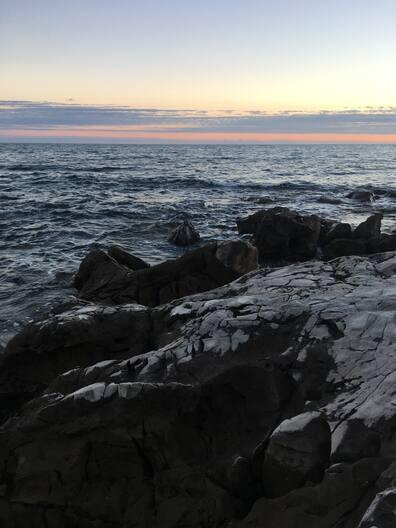
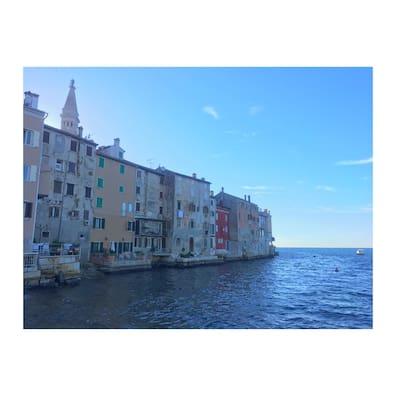
Rovinj in Istria is typically the coldest - as it is the northernmost - stop on the journey in October. Despite this, you can still enjoy swimming and sunbathing on the pebble beaches along the city limits in the fall. Usually, you share the beach section with only a few other vacationers, as most seem to find Rovinj too cold in October.
On cooler days and in the evening, the beautiful old town of Rovinj beckons, where one can stroll leisurely through the streets in October without having to share the narrow alleys with hundreds of other tourists. Finding a free spot in the bars along the harbor promenade to enjoy an Aperol Spritz at sunset is easy.
2nd Stop: Zadar in October

One of Zadar's main attractions is the sea organ at the city's harbor; it comprises several stone slabs with holes through which the waves of the sea produce sounds. Those who enjoy experimental music may appreciate the sea organ more.
Another main attraction of Zadar is its sunsets. Even though it gets somewhat chilly towards evening on the coast of Zadar, one should not leave the beach but rather wrap up in a towel or settle into the nearest beach bar with a sweater and pants to enjoy the vibrant purple-red sky.
3rd Stop: Šibenik and Krka Waterfalls in October

Šibenik's old town is not as famous as Rovinj's, and those who have visited will surely wonder why. It boasts an impressive cathedral that stands out for two reasons: Firstly, the cathedral, built in the 14th and 15th centuries, is made of stones that were fitted together like puzzle pieces and form both the exterior and interior walls of the building.
The cathedral was not clad from the inside, thus presenting a minimalist counterstatement to other churches of its time. Secondly, one can find on the cathedral's facade the faces of more than 70 citizens from the cathedral's construction era. These so-called 'citizen heads' include children, women, men, and elders, resembling people from the city's historical population.
In October, only a handful of guests visit the cathedral, allowing one to explore it peacefully. In Šibenik's old town, while some restaurants might be closed, the favorite ice cream parlors and cafes of the locals remain open. Thus, in the evenings, one has the chance to sit in a bar at tables next to Croatians-something more rare on Croatia's hotel-laden coastline.
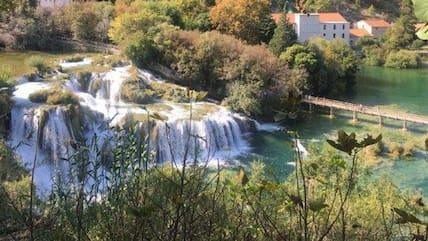
Šibenik is also in close proximity to Krka National Park, which is perfect for a day trip. Its main attraction is the waterfalls famous for being locations for the Winnetou films. The park is so well-visited even on weekdays in October that one wouldn't want to imagine visiting the waterfalls in summer.
4th Stop: Split in October
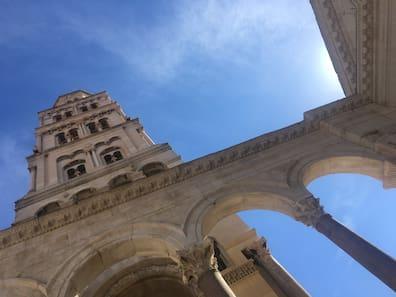
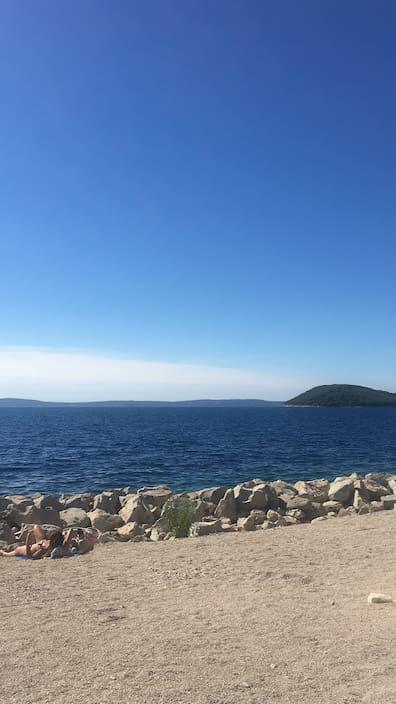
In Split's old town, even in mid-October, it is still so hot that after four hours of sightseeing one might just want to head to the beach. At this time of year, the beach is pleasantly empty. In the east of the city, at the foot of Marjan Hill, there is a pebble beach that you can drive directly to, and even in October, the Kafić Obojena Svjetlost remains open until the evening.
In the evenings and mornings, some Croatians come to fish at the beach. With some luck, you might encounter other visitors in the morning: on two out of three mornings, we were able to spot dolphins from the beach. When the sun gets too warm-since the beach offers almost no shaded areas-the adjacent park or one of the nearby fortresses presents itself as ideal for walks.
5th Stop: Ston in October
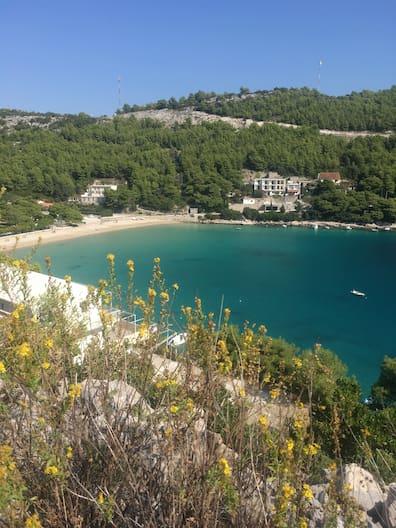
The small town of Ston, a few kilometers from Dubrovnik, is the quietest place on the trip, yet a true attraction awaits visitors: Ston boasts the longest stone wall in Europe, connecting the town parts of Ston and Mali Ston. Five kilometers of the original 5.5-kilometer wall have been preserved.
This makes it the second-longest preserved fortified wall in the world, after the Great Wall of China. In October, while it's still quite hot, it's not too hot for a hike on the wall. Additionally, around Ston, there are beautiful pebble coves and cliffs with rocky outcrops where you can sunbathe almost entirely alone all day.