- 1. Natural Wonders in Croatia: These 9 Places You Must See
- 2. Zlatni Rat - the 'Golden Horn'
- 3. Blue Cave on the Island of Biševo
- 4. Brseč - the Town on the Cliffs
- 5. The Mountain of Velebit
- 6. The Plitvice Lakes and Waterfalls
- 7. Blue and Red Lakes in Imotski
- 8. Skradinski buk in Krka National Park
- 9. Heart-Shaped Island - Galešnjak
- 10. The Mountain of Učka
Natural Wonders in Croatia: These 9 Places You Must See
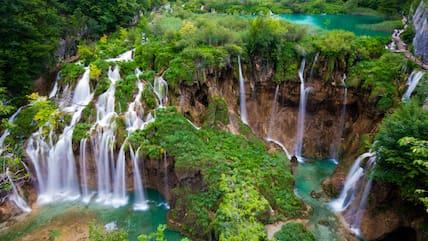
Turquoise water splashes over impressive waterfalls into deep blue lakes, giant mountains, a nearly 1,250-mile coastline on the Adriatic with white or even golden pebble beaches, over 1,000 islands, some of them particularly beautifully shaped, ancient relics from Roman times in quaint old towns - all of this is Croatia. It's a land full of natural wonders, reachable from the United States in just a few hours by plane. Here are our ten favorites.
Zlatni Rat - the 'Golden Horn'
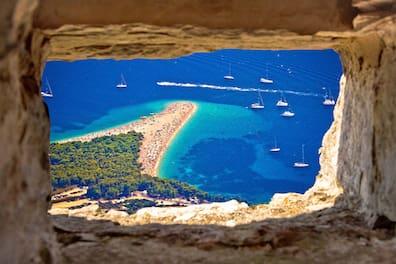
This natural beauty often finds itself in the spotlight for a reason: Zlatni Rat beach looks like a golden horn, which is also the translation of its name. Small golden pebbles make it especially glittery in the sunshine.
The beach at the windsurfing resort Bol owes its unique shape to prevailing winds. If the sun gets too hot, take a walk to the nearby pine trees that provide shade for a rest or simply to enjoy the fresh air.
Blue Cave on the Island of Biševo
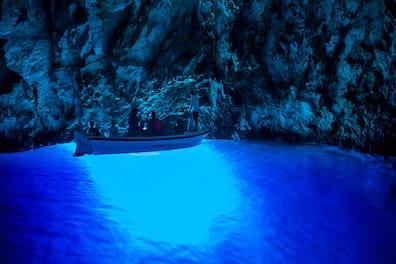
In a small bay on the island of Biševo, you'll find the mysterious Blue Cave or Modra špilja, as locals call it. Depending on the time of day, the cave glows intensely when sun rays penetrate through an underwater opening - the best time to visit is between 11 a.m. and 1 p.m. This natural beauty is a well-known attraction on the Adriatic and attracts many visitors each year.
You can book a guided boat tour with various providers - solo exploration with a private boat is not allowed for safety reasons. The entrance to the cave is only 2.5 meters wide and 1.5 meters high.
Brseč - the Town on the Cliffs
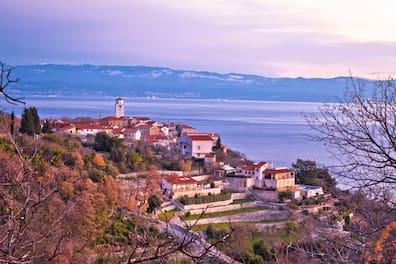
Sacred buildings watch imposingly over the small coastal town of Brseč. What's special: The charming town sits atop the cliffs. The view over the islands of Unije, Cres, and Susak or the 2,740-foot-high Sisol peak is simply spectacular here.
It also has mystical tales surrounding its land and people. In the bell tower of Saint George's Church, you can still feel the presence of the Archbishop and Cardinal of the Roman Church today - not only because his final resting place is here.
On a stroll through town, there's much to discover: The houses along the road are marked with enigmatic letters - remnants of the Glagolitic script, the oldest Slavic script. If you want to learn more, it's worth asking one of the locals about it.
The Mountain of Velebit
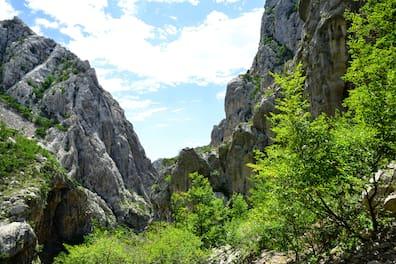
This giant must not be missed on your visit: At 5,764 feet, Velebit is the tallest mountain in Croatia and the home of Paklenica National Park. This mountain range in the coastal region impresses with steep cliffs and a diverse array of flora and fauna.
The entire range, where locals raise livestock in their shepherd houses, stretches 93 miles and was declared a UNESCO Biosphere Reserve in 1978.
The Plitvice Lakes and Waterfalls
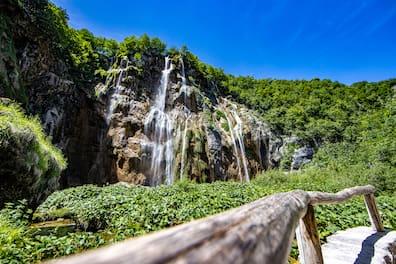
Turquoise waterfalls drop majestically into the depths - the Plitvice Lakes are a true natural spectacle. Not for nothing have these 16 lakes and cascades been named one of the first UNESCO World Natural Heritage sites since 1979. Particularly beautiful is the light limestone gorge. Depending on the sunlight and the amount of minerals, the lakes' colors shift from azure to green to blue.
Hikers might theoretically encounter one of about 20 brown bears or three wolf packs here. But don't worry: the animals tend to avoid crowds of tourists rather than attack. A ferry takes adventurers across Lake Kozjak to a circular trail that showcases the unique beauty of nature on wooden boardwalks where no animals have been spotted.
Blue and Red Lakes in Imotski
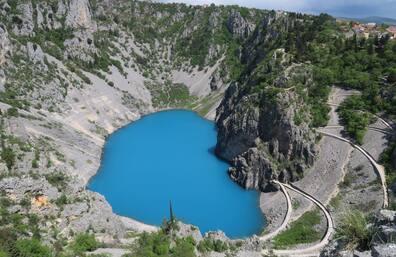
The small town of Imotski in the Dalmatian hinterland packs a punch: here you'll find not one, but two colorful highlights! First, there is the Red Lake - a sinkhole with a karst lake, estimated to be an impressive two million years old. Here, you will find numerous caves and gigantic reddish cliffs soaring about 791 feet above the water's surface.
The Blue Lake lies in a deep sinkhole - it is assumed that a long-collapsed cave led to the lake's formation. The water is about 328 feet deep and shimmers intensely blue, which also explains its name.
In the summer, locals use the water for swimming; when rainfall is scarce and the lake dries out, traditional soccer games are held here. Convenient!
Skradinski buk in Krka National Park
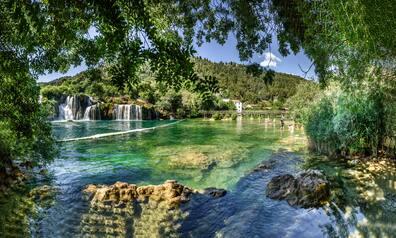
Skradinski buk in the stunning Krka National Park has a dreamy natural pool that offers plenty of space for swimming and impresses with its clear water. Beautiful, shallow waterfalls cascade gently into the Krka River.
At the other end, cascades step down like a staircase into the water. Boat tours are also available here. Currently, swimming is not permitted - please always check for the latest updates before planning your visit.
Heart-Shaped Island - Galešnjak
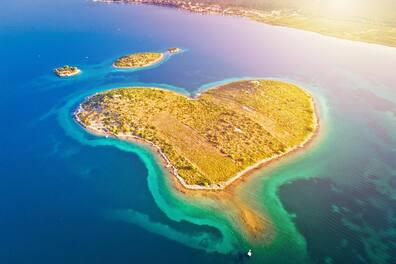
A few years ago, this island gained significant fame when Google Earth revealed its shape: Galešnjak looks like a painted heart, which is why it's also called 'Lovers Island'. It is located in the middle of the Pašman Channel.
The tiny beauty, at only 0.05 square miles, is uninhabited. However, you can still explore it - although it takes no time at all with a coastline of just under a mile. To dock a sailboat here, travelers only need the permission of the private island's owner.
The Mountain of Učka
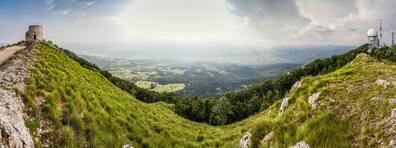
The highest peak on the entire Istrian peninsula is Vojak in the stunning Učka Nature Park. The giant rises a full 4,595 feet above sea level.
If you want to undertake a climbing tour here, the slightly smaller but still impressive 3,025-foot-high Poklon is a good choice. In less than an hour, you can reach your destination and enjoy incredible views over Istria and the Kvarner Bay. From the Poklon Pass, you can continue to the peak of Vojak - if you're aiming even higher.
Looking for more inspiration? Tips for all top travel destinations can be found bundled at bettercities.net.