Best Things to Do:
Canary Islands in Winter: Where it's Warmest
Hand on heart: How often have you thought about escaping to warmer places during the wet and cold German winters? If you want a taste of summer in November, December, January, February, or March, you can bask in the sun on the Canary Islands, just a five-hour flight from Germany, while it's snowy, gray, and dreary back home.
How warm it is during winter on the Canary Islands
- November: A perfect month for your vacation, as temperatures on the Canary Islands rise to between 73 and 78 degrees Fahrenheit.
- December: The temperature still averages at 73 degrees Fahrenheit, with the sea temperature at 66 degrees Fahrenheit.
- January: The coldest month on the Canary Islands, but temperatures still average 68 degrees Fahrenheit. You only get 'just' six hours of sunshine and about seven rainy days on average.
- February: It starts to get warmer with seven hours of sunshine each day. Average temperatures are now about 70 degrees Fahrenheit.
- March: The summer season isn't far away now. The sun feels noticeably warmer, rainy days decrease, and there's an average temperature of 73 degrees Fahrenheit.
Winter weather on the Canary Islands

The climate on the Canary Islands is mild year-round. This is due to the location of the islands between the 27th and 29th parallels. Politically, the Canary Islands belong to Spain, but geographically the island group is in Africa. For example, Fuerteventura is only 112 kilometers from the coast of Morocco.
This mild climate is due to the proximity to the equator and the trade winds, which moderate the hot air from the Sahara on the Canary Islands. The result is a spring-like climate - year-round. In winter, average temperatures are around a pleasant 68 degrees Fahrenheit. Even the water is 64 degrees Fahrenheit!
Of course, the weather in the winter months is different from summer, but one thing's for sure: It's definitely t-shirt weather. It might rain, but only for a maximum of seven days per month. To speak with facts: January is the coldest month on the Canary Islands, with about six hours of sunshine per day and temperatures reaching up to 68 degrees Fahrenheit - which, compared to the German winter, is clearly paradise.
Winter on the Canary Islands - where is it the warmest?
The climate on the individual islands varies due to their location and the mountains that influence the weather. Generally speaking, the eastward islands Lanzarote and Fuerteventura are warm travel destinations year-round.
The warmest places in January are Gran Canaria and Tenerife, with maximum temperatures reaching up to 70 degrees Fahrenheit. Here's what the average winter temperatures on the Canary Islands look like:
- Tenerife: The coldest month is January, when temperatures can reach a maximum of 68 degrees Fahrenheit. In November, the maximum temperatures are around 75 degrees, in December about 72 degrees, and in February around 70 degrees. In March, it can average up to 72 degrees. Rain is common in winter, about four days per month.
- Fuerteventura: On this island, it only cools down a bit in January and February with maximum temperatures of around 64 or 66 degrees Fahrenheit. In November, the maximum temperatures are about 72 degrees, and in December and March around 68 degrees.
- Gran Canaria: Even in winter, it remains mild on Gran Canaria. Maximum temperatures in December are 73 degrees, rising to 70 degrees in January and February.
- Lanzarote: From December to February, maximum temperatures are between 70 and 72 degrees on Lanzarote. In November and March, temperatures climb to 73 degrees.
- La Palma: La Palma is also a year-round destination. In December, the thermometer can still display up to 73 degrees. The coldest months are January and February, with temperatures between 68 and 70 degrees.
- La Gomera: La Gomera also offers mild weather in December with temperatures around 68 degrees, ideal for outdoor activities like hiking.
Active vacation during winter on the Canary Islands
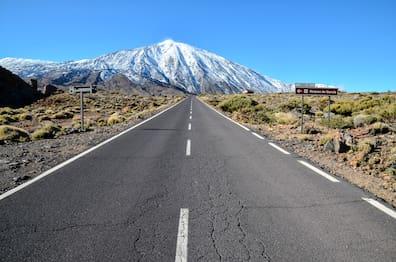
While you can only dream of hiking in a t-shirt at home in winter, everything is possible on the Canary Islands. An active vacation is perfect at such mild temperatures. At about 68 degrees Fahrenheit, you can go hiking or biking under the best conditions.
If the beach is too warm for you, you could alternatively climb Spain's highest mountain and cool off a bit. The Pico del Teide in Tenerife is 12,198 feet high, which means it's naturally much cooler at the top than in the lower regions, and it even snows there in winter.
However, skiing on Tenerife is not possible - even though this rumor has been persistent for years. There are neither prepared slopes nor ski lifts on the volcano. The Teide National Park is a strictly supervised nature reserve and a UNESCO World Heritage Site. Why the rumor persists? It might be due to the website www.teideski.com, which misleads users into believing there's a ski resort.
Looking for more inspiration? You'll find tips for all top destinations at bettercities.net.