Best Things to Do:
- 1. Attractions in Porto
- 2. 1. Old Town District Ribeira
- 3. 2. Cathedral Sé do Porto
- 4. 3. Palácio da Bolsa
- 5. 4. Ponte Dom Luís I
- 6. 5. Waterfront Promenade Vila Nova de Gaia
- 7. 6. Teleferico de Gaia
- 8. 7. São Bento Railway Station
- 9. 8. Igreja do Carmo
- 10. 9. Chapel of Souls
- 11. 10. Torre dos Clérigos
- 12. 11. Avenida dos Aliados
- 13. 12. City Hall of Porto
- 14. 13. Livraria Lello e Irmão
Attractions in Porto
Porto is Portugal's second-largest city after Lisbon and was long treated as the 'little sister' of the capital. However, this coastal city, with a population of 240,000, has emerged from Lisbon's shadow, captivating visitors with its unique charm and character. We'll take you to the most beautiful attractions in Porto.
- 1. Old Town District Ribeira
- 2. Cathedral Sé do Porto
- 3. Palácio da Bolsa
- 4. Ponte Dom Luís I
- 5. Waterfront Promenade Vila Nova de Gaia
- 6. Teleferico de Gaia
- 7. São Bento Railway Station
- 8. Igreja do Carmo
- 9. Chapel of Souls
- 10. Torre dos Clérigos
- 11. Avenida dos Aliados
- 12. City Hall of Porto
- 13. Livraria Lello e Irmão
1. Old Town District Ribeira
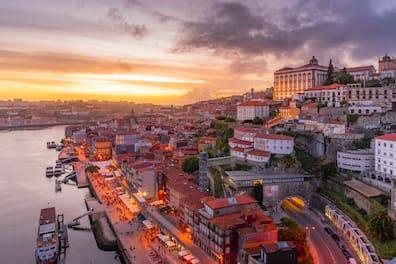
One of the most beautiful districts in Europe lies between the River Douro and the hills of Porto: The Old Town District Ribeira clings to the city's slopes like a painting and enchants with colorful houses, narrow alleys, and a unique atmosphere. In 1996, Ribeira was declared a UNESCO World Heritage site.
The best way to discover this district is on foot, as it consists of narrow, winding streets that lead uphill and downhill. You can see that Ribeira once was home to poor fishermen and ordinary people by some of the rundown houses. The need for renovation and vacancy in Ribeira is significant. The center of the historic district is the Cais de Ribeira waterfront. Here you'll find yourself in the tourist area, which is always bustling: There are numerous local spots, souvenir shops, restaurants, and a vibrant nightlife.
2. Cathedral Sé do Porto
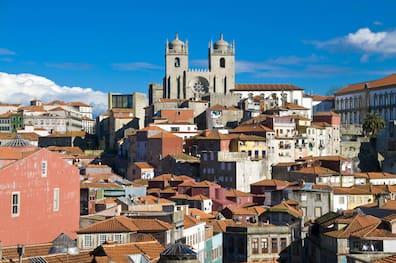
On the Pena Ventos hill in Porto's old town stands the Porto Cathedral, known as Sé do Porto. This impressive building is one of the most important Catholic churches on the Iberian Peninsula. The cathedral was constructed in the twelfth century.
Because the cathedral is surrounded by fortifications, it feels like walking through a castle complex. From above, you have a fantastic view of Porto. Inside, the cloister is an absolute highlight: it is adorned with countless azulejos - the typical Portuguese tiles - from the Baroque period.
3. Palácio da Bolsa
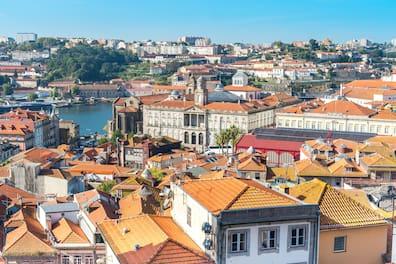
In close proximity to the Cathedral Sé do Porto, you'll find another historical building, grand in appearance: The Palácio da Bolsa - the Stock Exchange Palace - was constructed in the 19th century in a neoclassical style and used to be the stock exchange and headquarters of the city's commercial association.
Today, the Palácio da Bolsa is used as a conference center and is open to visitors. The Hall of Nations and the Arabian Room in Moorish style, with numerous decorative elements, golden walls, and opulent details, are particularly worth seeing.
4. Ponte Dom Luís I
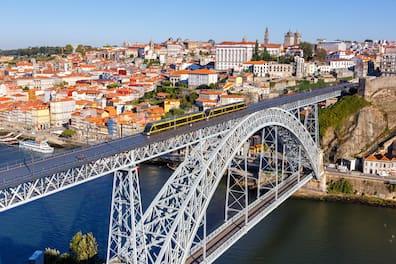
The city's emblem is impossible to miss: The Ponte Dom Luís I bridge stretches far across the Douro and connects Porto in the north with Vila Nova de Gaia in the south. It was designed in 1886 by Théophile Seyrig, a former student of Gustave Eiffel. The structure is named after King Luís I.
The Ponte Dom Luís I bridge is not only one of Porto's most important landmarks but also one of the city's most beautiful viewpoints: From here, you have a magnificent view of Porto's old town. The bridge has two levels. The metro runs above, while cars drive below - and pedestrians can walk everywhere along the edges.
5. Waterfront Promenade Vila Nova de Gaia
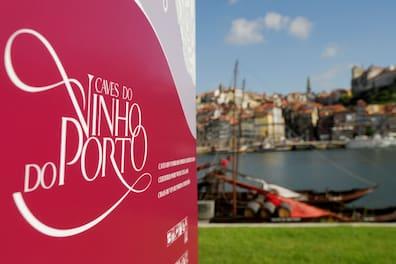
Once you cross the Ponte Dom Luís I bridge, you'll be on the other side of the Rio Douro. Technically, you're no longer in Porto, but in Vila Nova de Gaia. However, due to its proximity to the city, Vila Nova de Gaia is indirectly considered one of Porto's main attractions.
A stroll along the waterfront promenade is a must. Not only because of the unique view of the Ponte Dom Luís I bridge and the Ribeira Old Town, but also because here you can discover Portugal's finest wines: Numerous wine cellars that produce the famous port wine are located along the waterfront, including Porto Cruz, Porto Cálem, Offley, Taylors, and Sandeman. Many of these cellars offer port wine tastings.
6. Teleferico de Gaia
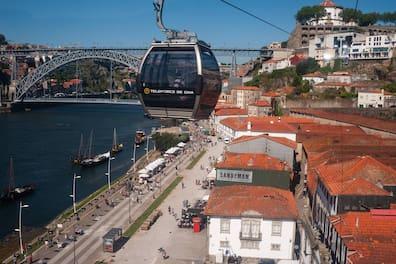
From the waterfront promenade in Vila Nova de Gaia, you can literally take off: The legendary cable car Teleferico de Gaia takes you to high elevations. In a gondola, you travel to the higher Park Jardim do Morro, where you'll have a breathtaking view of Porto and the Ponte Dom Luís I bridge.
The cable car was constructed between 2009 and 2011 by Doppelmayr and manages a height difference of 187 feet. There are a total of twelve cabins, each accommodating eight people. The starting point is at the city market hall Mercado Municipal da Beira-Río.
7. São Bento Railway Station
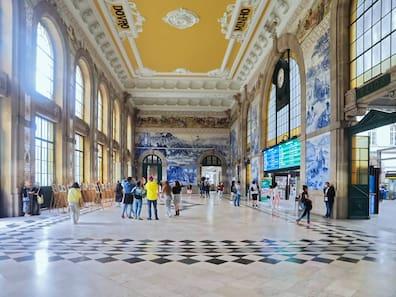
Typically, you arrive at a train station in a city and quickly move on, but in Porto, it's the opposite: Tourists often include the São Bento Railway Station in their sightseeing itinerary. It opened in 1916 and is considered one of the most beautiful stations in the country.
The station's hall is adorned with around 20,000 azulejos - colorful ceramic tiles. Together, these tiles, created by the artist Jorge Colaço, depict various historical events and scenes from traditional Portuguese rural life.
8. Igreja do Carmo
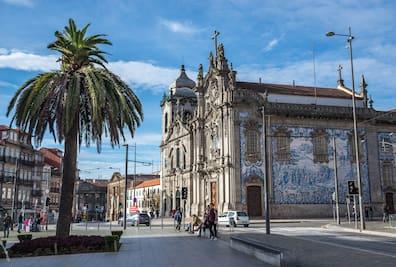
The famous azulejo tiles are also why many tourists visit the Igreja do Carmo Church, which was built in the 18th century in the Rococo style. The facade of one of the church's naves is an artwork created entirely with painted azulejo tiles.
Together with the neighboring Church Igreja dos Carmelitas, the Igreja do Carmo is considered a national monument of significance. Again, you'll find the famous azulejos on the facade. Fun fact: There is a very narrow house between the two churches, which is the narrowest house in Portugal, barely a meter wide.
9. Chapel of Souls
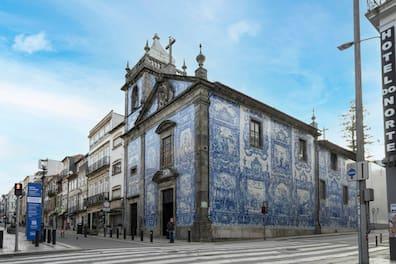
Another church in Porto is the Capilla de las Almas, better known as the Chapel of Souls. Once again, it's the traditional azulejo tiles that give its facade a unique look. The church was originally built in the early 18th century, but it wasn't until 1929 that it was adorned with these tiles.
In total, 15,947 azulejos were applied over an area of 3,875 square feet. Collectively, the tiles display various motifs, including scenes such as the death of Saint Francis of Assisi and the martyrdom of Saint Catherine.
10. Torre dos Clérigos
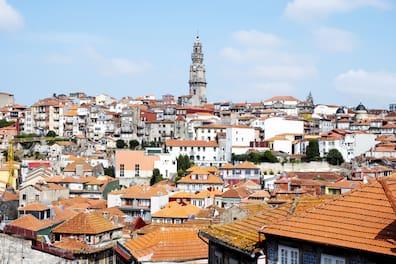
In Porto, you can climb the tallest church tower in the city - and all of Portugal - and gaze over the old town: The impressive Torre dos Clérigos, the tower of the Igreja dos Clérigos Church, is Porto's landmark!
The church was built in the mid-18th century in the Baroque style. In 2013, the building was even featured on the Portuguese 2-euro coin. The bell tower's peak reaches a height of 249 feet - and you can go all the way to the top. However, this does require climbing 225 steps, as there is no elevator.
11. Avenida dos Aliados
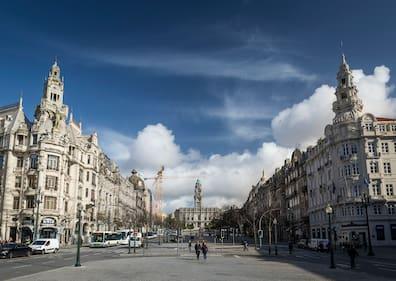
The most magnificent street in Porto is the Avenida dos Aliados. It starts at the Igreja da Santíssima Trindade Church and leads to the Praça da Liberdade. The boulevard is renowned for its Art Nouveau architecture, visible on both sides of the Avenida. Additionally, there are numerous shops, restaurants, and cafés.
To the north of the avenue lies the Praça do General Humberto Delgado, where the City Hall is located. The Avenida dos Aliados was shortened at the beginning of the 20th century to make room for the Praça de Liberdade square, which is located at the northern section. At the lower end of the Avenida, there's a special feature that many consider the most beautiful McDonald's in the world: The 'Imperial McDonald's' is located in a building from the 1930s. Here, you can enjoy burgers and fries under opulent chandeliers and colorful stained glass windows.
12. City Hall of Porto
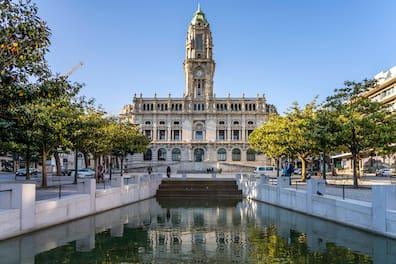
The City Hall of Porto is one of Porto's largest buildings and stands proudly in Praça do General Humberto Delgado. The facade of the City Hall features twelve sculptures by José Sousa Caldas and Henrique Moreira, depicting typical Portuguese postures and deeds, such as scenes about winemaking.
The City Hall consists of six levels, two courtyards, and a bell tower that is exactly in the middle of the City Hall. It towers 230 feet high, and you can reach the top by climbing 180 steps.
13. Livraria Lello e Irmão
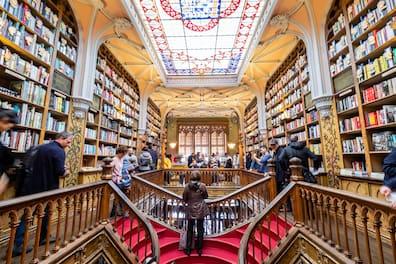
Opinions differ about the bookstore Livraria Lello e Irmão. Some say you must see it, while others complain about it being a tourist trap. The city's oldest bookstore, which opened in 1906, is known as the 'Harry Potter' bookstore and thrives as a popular Instagram hotspot.
Lines are always long, and often you wait for hours to get a glimpse inside. However, it's worth it, as you'll find handcrafted wood panels, a stained glass ceiling, and a sweeping dark brown wooden staircase. It's said to have inspired J. K. Rowling for the staircase in Hogwarts. What's more, the author is rumored to have written the first chapters of 'Harry Potter' here.
Looking for more inspiration? Find tips for top travel destinations at bettercities.net.