Best Things to Do:
Whether it's quality of life or sustainability, lifestyle or design: Copenhagen always has a bit of an edge in Europe. The city is both modern and historic, enticing with magnificent castles as well as a fairytale mermaid and the longest pedestrian street in Europe.
Join us for a tour of the Danish capital and we'll show you the most important attractions in Copenhagen.
1. Nyhavn
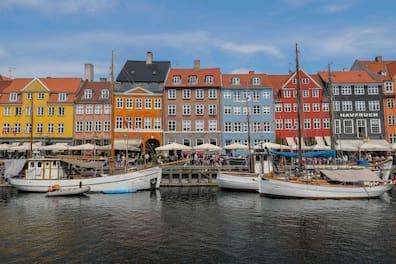
In the center of Copenhagen lies Nyhavn, the city's most colorful highlight. Here, colorful gabled houses line the canal with ships gently rocking on the water-a unique scene.
Nyhavn was originally built as an extension to the old harbor, which is also reflected in its name: Nyhavn means 'new harbor'.
The colorful houses date back to the 17th and 18th centuries and were previously used as warehouses and residences. The oldest house, numbered 9, was built in 1681.
Today, nearly all the gabled houses host restaurants and bars, which though very touristy, offer a fantastic view of Nyhavn. You can also start a tour on the water here, as many excursion boats set off from Nyhavn.
2. Strøget
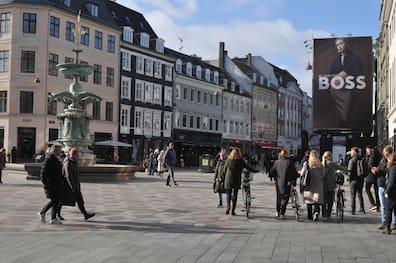
From Nyhavn, it's just a few steps to Copenhagen's next attraction: The shopping street Strøget measures a proud 1.1 kilometers and is both the oldest and longest pedestrian street in Europe.
The pedestrian zone stretches from Konsens Nytorv, the new royal market, to Radhuspladsen, the City Hall Square.
In Strøget, numerous shops and department stores line up-ranging from small boutiques to international brands and Danish designers, as well as luxury labels like Prada or Louis Vuitton.
A highlight is visiting the luxury department store Illums Bolighus, which features pieces from international and Danish designers.
3. The Little Mermaid
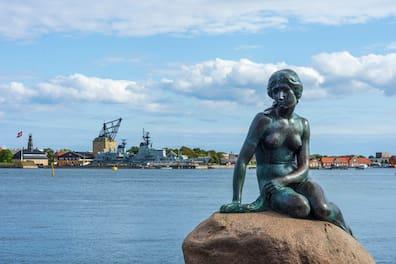
Copenhagen's landmark is small but mighty: At the entrance to the harbor of Copenhagen sits The Little Mermaid in the water.
The figure is just 125 centimeters tall and is the main character of Hans Christian Andersen's most famous fairy tale. The bronze statue has experienced much: vandals have decapitated her, hacked off her arm, or sprayed her with paint.
What many don't know: Andersen wrote the fairy tale about the unrequited love of the mermaid for a human because he himself never found his great love.
Those who want to follow in the footsteps of Hans Christian Andersen should travel to the island of Funen. In the old town of Odense, you'll find the H. C. Andersen's House.
4. Round Tower
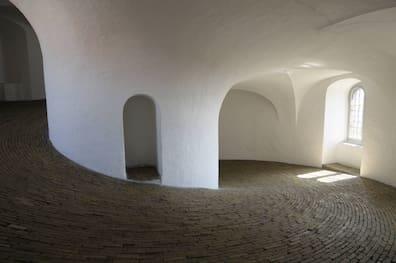
If you want to see Copenhagen from above, you should climb the Round Tower. With its height of 114 feet, the Round Tower is one of the city's key attractions.
Commissioned by King Christian IV in 1637 and used as an observatory and library for the connected University of Copenhagen until 1861. It still houses Europe's oldest observatory today.
The unique feature of the Round Tower is its design: there are no stairs, just a ramp that spirals 209 meters up in a circular path.
This idea came about because people wanted to transport goods by horse to the top-which wouldn't be possible with stairs.
5. Tivoli Gardens
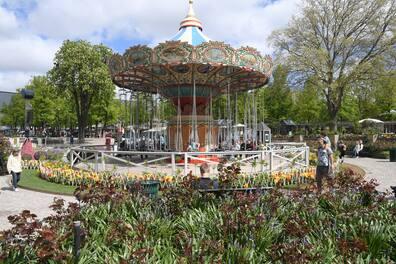
Those seeking fun and adventure will find it in Copenhagen's Tivoli Gardens. The world's oldest existing amusement park is a colorful kaleidoscope of roller coasters, cabarets, restaurants, and cafes.
The amusement park first opened in 1843 on a former military site and now operates from mid-April to the end of September.
Visitors need plenty of time upon arrival, as the park hosts numerous attractions-ranging from wild roller coasters, an 80-meter-high swing ride, and other rides to an impressive 37 restaurants.
After nightfall, the park is beautifully illuminated. The amusement park also houses the Tivoli Aquarium, which is the longest seawater aquarium in Northern Europe.
6. Christiania
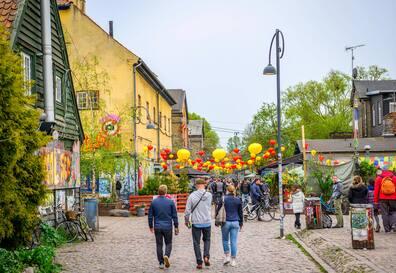
Equally colorful and adventurous is Christiania, Copenhagen's most unique feature. The free-town within the Danish capital was founded by squatters in the 1970s and is now the largest hippie commune in the world-with colorful houses and stalls where the smell of marijuana lingers in the air. However, following some incidents, drug sales are not to be tolerated anymore with stricter penalties announced.
Walking through the so-called Pusher Street with its graffiti artwork, organic restaurants, workshops, and galleries, you'll see 'No Photography!' signs every few meters. Ignoring this could result in your camera being confiscated-rightfully so, as the free-town is officially recognized by the authorities, meaning the police have no jurisdiction.
However, due to the drug problem, the famous street might face closure, as announced by the Danish Justice Minister in September 2023-the residents have also expressed support for this.
7. Amalienborg Palace
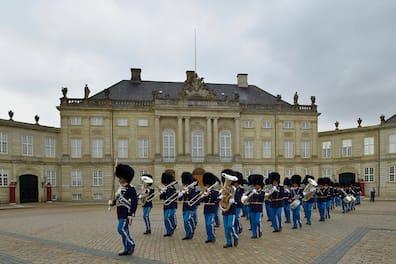
The royal family is as much a part of Denmark as hygge and hotdogs, which is why Amalienborg Palace is among Copenhagen's top sights.
The city residence of Queen Margrethe II dates back to the 17th century and consists of four identical palaces surrounding a large square.
If the flag is flying, it means the Queen is in town. A highlight for visitors is the daily royal guard parade.
Every day at noon, the changing of the guard takes place. The Danish royal guard marches from Rosenborg Castle through the city to Amalienborg Palace to relieve the guards.
8. Rosenborg Castle
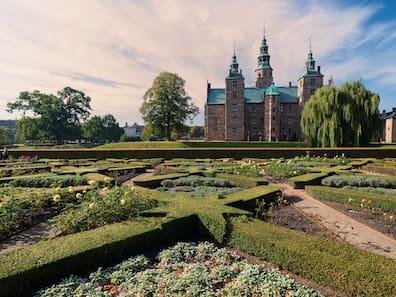
West of Amalienborg Palace, the royal experience continues. It takes just a 20-minute walk to reach Rosenborg Castle, built around 1606 as a pleasure palace. It served as a royal residence until it opened as a museum with a royal collection in 1838.
Inside, you embark on a time journey, wandering through the former king's rooms. Highlights include the knight's hall with the king's throne and the Danish crown jewels, housed in the treasuries.
If the Queen is in town, the guards start their changing ceremony march here at 11:30 AM, heading for Amalienborg Palace.
9. Christiansborg Palace
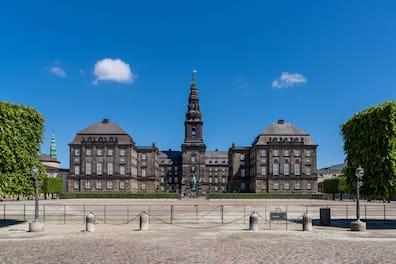
The saying goes, 'Good things come in threes', which includes Christiansborg Palace as one of Copenhagen's key attractions. In the past, it housed the royal family, while today it is home to Denmark's Parliament.
Interesting fact: It's the only ceremonial building in the world that houses the highest representatives of the executive, legislative, and judicial branches under one roof.
The southern half of the palace is used by the Danish Parliament, while the northern half is reserved for royalty, the Supreme Court, and the Prime Minister's office. Fun fact: Informally, the palace is known as 'Borgen' (English: 'the castle')-lending its name to the Danish political TV series 'Borgen - Power & Glory.'
Be sure to take the time to climb the palace tower, the city's highest at 106 meters, offering a breathtaking view over Copenhagen.
10. Danish National Museum
Opposite Christiansborg Palace, the Prince's Palace houses one of the country's most important museums: The Danish National Museum takes you on a journey through Danish cultural history-from the dawn of civilization to modern times.
The Prince's Palace was built from 1743 to 1744 for Danish Crown Prince Frederik V and Crown Princess Louise.
Today, you can marvel at numerous collections: from an ethnographic collection to a collection of classical and Near Eastern antiquities, and an exhibition about the Viking Age.
Additionally, notable national treasures such as the more than 3,000-year-old Trundholm Sun Chariot or the Huldremose Woman, the remains of a bog body dating from the second century, are especially worth seeing.