16th Street Mall
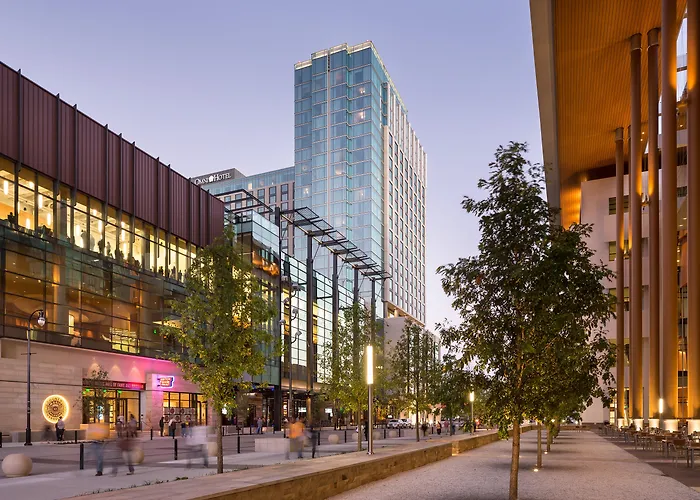
The 16th Street Mall, a mile-long commercial and retail spine, stretches from the classical Civic Center Park to the redeveloping Central Platte Valley. The multimodal and pedestrian mall features a free hybrid-electric MallRide shuttle bus that connects people to downtown destinations and to transit that serves the region. Designed by I.M. Pei and Associates and opened in 1982, the mall extended 16 blocks along 16th Street, from the Civic Center bus station at Broadway and Civic Center Park to the Market Street bus station. In 1992, a design by Zimmer Gunsel Frasca Architects extended the mall to Denver Union Station, which will be redeveloped into a multimodal transportation hub for the region. In 2002, Design Workshop designed an extension of the pedestrian spine into the Central Platte Valley with the construction of the Millennium Bridge.1
In 1998, the Denver Pavilions, designed by ELS Architects, launched an era of interest in downtown as a destination with 350,000 square feet of retail space, restaurants, and movie theaters. Located between Tremont and Welton streets and 15th and 16th streets, the project was realized with $24 million in subsidies from the Denver Urban Renewal Authority. The main tenants for the past decade—including United Artists theaters, Barnes & Noble, and Niketown—have served as a magnet for new investment and development in the area.2
A block away, the Denver Dry Building is an adaptive reuse of a grand old edifice, the 1894 Denver Dry Goods department store. It was one of the first projects to reintroduce jobs and affordable housing to downtown Denver, which in the early 1990s was struggling to recover from a major recession. Completed in phases from 1993 to 1997, the 330,000 square-foot mixed-use and mixed-income building combines shops, offices, rental apartments, and loft condominiums. The architect for the redevelopment was the Urban Design Group, with Klipp designing the new retail space.3


Comments