Downtown Boulder
An effort to revitalize a deteriorating downtown led to the creation in 1977 of the Pearl Street Mall out of four blocks of the city’s main commercial street, extending two blocks east and west from its intersection with Broadway. The mall’s location in the city’s civic and commercial core, its short length, and the way it is served by the cross streets contribute to its vitality. The many trees, flowerbeds, benches, and public art, as well as the numerous local restaurants and eclectic businesses spanning the blocks, have made it one of the nation’s most successful urban places. In recent years, the city has enhanced the downtown experience through better access, parking, and provisions for alternative transit, such as bike lanes. The mall itself was renovated in 2007 with a design by Boulder-based Communication Arts, an original design team member.
To improve access, a one-way auto route circles the mall blocks along Spruce, 11th, Walnut, and 15th streets. The city created a parking district to support small businesses that cannot easily provide off-street parking without disturbing the urban continuity. Solar powered kiosks collect fees for on-street parking. Five multistory parking garages, several wrapped in retail and office space, have been built along the core downtown loop. Racks for thousands of bikes and lockers for bike commuters at the downtown bus station encourage driving alternatives. These transportation and parking-related decisions, combined with a simple and elegant mall design, have created a vibrant urban place. On sunny days and warm evenings, the mall is filled with crowds gathered around buskers, children playing in the rock garden, and people dining al fresco, enjoying the passing parade.
The Pearl Street commercial corridor, which extends from the mall about five blocks to the east and west, offers many of the city’s pioneering mixed-use projects completed in the past decade. These infill developments have strengthened the corridor by providing a variety of experiences—restaurants, cafés, coffee bars, art galleries, specialty shops, offices, and many new apartments and lofts—that have brought people downtown.
Boulder-based Wolff Lyon Architects designed and built the 8th and Pearl complex, completed in 1999, which won the CNU Charter Award in 2001. Located three blocks west of the mall, the complex features retail spaces on the ground floor, providing homes for four local businesses, including a bakery/café. Offices are located on the second floor facing Pearl Street, and five residential townhouses top an underground parking garage built into a slope. The market values of these units have almost quadrupled in the past decade. One urbanism lesson learned by this complex relates to scale: The businesses are small but large enough to draw people continually to the small courtyard plaza, which has become a favorite Boulder place.
One block east, a 2001 project, 9th and Pearl, also designed by Wolff Lyon Architects, has residences above businesses as walk-up units. Large balconies and living room towers celebrate the idea of living downtown and complement the quiet and timeless character of the storefronts.
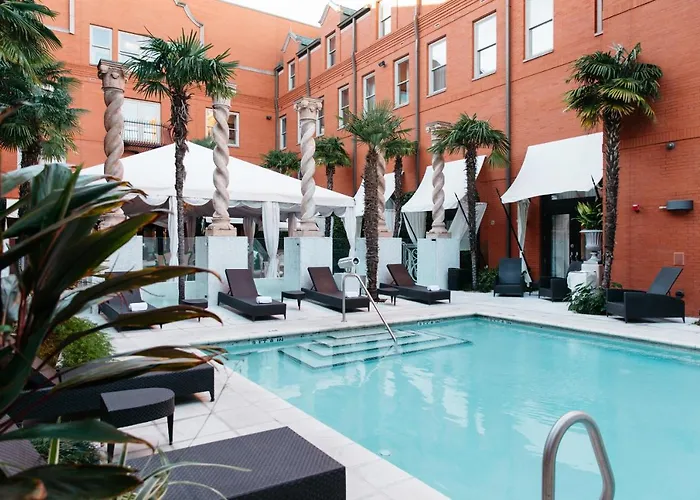
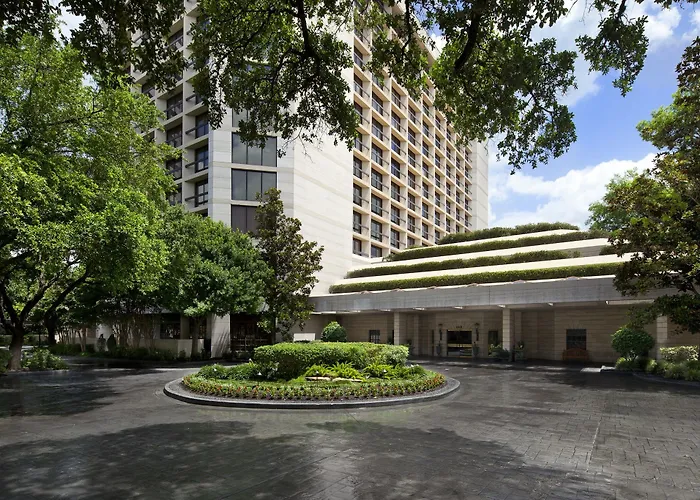
A block south of Pearl Street, at 9th and Walnut, the St. Julian Hotel & Spa is an urban design response to a site with many expectations accumulated during a decade-long design review process. The project features extensive parking to support downtown, high-quality open space, memorable public interior space, and a complex hotel program with 200 rooms. Completed in 2005, the hotel, designed by 4240 Architecture, sits on two levels of municipal underground parking, spanning a full downtown block. The U-shaped plan wraps a well-proportioned courtyard, designed by EDAW, opening south to views of the Flatirons. Public enjoyment of the hotel is encouraged by regular events in the courtyard, including live music and dancing under the stars on summer evenings.
East of the mall on East Pearl, a collection of six redevelopment projects by Coburn Development in Boulder are located one to each block between 15th and 21st streets. These projects can be characterized as variations on a theme of small mixed-use infill complexes with residential units. Like jewels on a necklace, each contributes to the unity of the whole; together they represent the value of incremental growth by means of relatively small projects.
The Appel Building, located between 17th and 18th streets, was the earliest and is the smallest Coburn project, with 13,000 square feet of building floor area. The Pearl Cove, the latest and largest, has 27,500 square feet of building floor area. Because of the smaller size of most of the nonresidential spaces, local businesses are a comfortable fit for these buildings and an important part of East Pearl’s character. The Coburn projects have similar sidewalk-to-building relationships and a similar presence on the street, though they look different in their massing and architectural expression. The traditional masonry on the Appel Building facade, the larger scale and more modern expression of 1505 Pearl, located on a busy corner, and the more domestic and Victorian character of the East End building all contribute to this diversity.
The 15th & Pearl building, designed by ShearsAdkins with RNL, is a large mixed-use parking-ramp building funded by the city’s downtown parking district. The design received a CNU Charter Award in 2003. Located across from the east end of the pedestrian mall, the building provides the mall’s largest parking capacity in a very accessible location. The fivestory structure is wrapped with retail shops and offices. The high ceilings create a two-story scale, and the vertical indentations on the façade help reduce the horizontal scale along the sidewalk.
One block south of Pearl at 17th and Walnut streets, The Walnut was designed by ShearsAdkins with OZ Architecture and developed by Morgan Creek Ventures in Boulder. Using a density bonus the city’s zoning offers for downtown residential use, the project reaches the city’s 55-foot height limit. The design for the quarter-block building, which is organized around a courtyard, focuses on creating a reasonable transition in scale and height to the surrounding buildings. The third and fourth-story setbacks help create a two-story scale along the sidewalk and allow for terraces for many of the 34 luxury flats and penthouses. The building is applying for LEED-Silver certification.
Another Morgan Creek Ventures project, 1215 Spruce, designed by ShearsAdkins with RVP Architecture and Consulting PC in Boulder, is an innovative renovation of a 1970s building that did not address the street. The result is a pedestrian friendly mixed-use retail and office building with high transparency on the ground floor—an example of the importance of individual buildings in transforming an urban sidewalk into an appealing and walkable environment. The building is LEED-Platinum-certified.


Comments
Pedestrian malls
The Charter for the New Urbanism observes that pedestrian malls are dying, that streets and their sidewalks are a city's most vital organs. So what makes the Pearl Street Mall, a pedestrian mall with no cars at all passing by the shops, such a successful exception? Is it something other communities could hope to replicate? So many seem to have failed.
I don't think the Charter
I don't think the Charter says anything about pedestrian malls, which are really not "malls" at all, but pedestrian-only streets. Many of them have certainly died and only a few seemed to have thrived. To the extent that they include design features that mimic enclosed shopping malls, I think that is to their detriment. It is my sense that the ones that have thrived looked and functioned more like streets with no cars. Often the cross-streets allow auto traffic so that the downtown still has a coherent urban block and street network and is porous to many kinds of traffic.
Pedestrian malls need tremendous pedestrian traffic — many of the ones that have thrived are in college towns where a lot of people are walking. My impression from briefly visiting the Pearl Street Mall is that it has those qualities that make a successful pedestrian-only shopping street. Maybe somebody from Boulder who knows it better can comment on all of the things that were done — some perhaps less apparent to the casual observer — to overcome pitfalls of pedestrian malls and make it successful.
Thanks for you prompt and
Thanks for you prompt and thoughtful response. Actually, the comment about pedestrian malls appears in the caption accompanying Douglas Farr's essay, p.141 of the 2000 edition of Charter for the New Urbanism (you're right, not in the actual Charter itself). Farr's essay also has other observations about pedestrian malls.
As you say, frequent cross streets probably help to offset the lack of auto traffic passing by Pearl St. storefronts. It would be very helpful to hear from people in Boulder on the distinctions they see on Pearl St. versus other failed attempts. Also, most of the existing shops surely are new to Pearl St. since the Mall was constructed in 1977. A little history on how the decision was made to close the street to cars all those years ago, and how existing businesses responded, would be instructive.
Distinctions of Pearl Street
I lived and studied in Boulder for four years and spent many afternoons, evenings and nights on the Pearl Street Mall. I believe its success bears on a confluence of factors. Probably first would be the college town walkability that Rob mentioned earlier. In addition to that, Boulder is also an extremely bike friendly town (Rated #3 by Bicycling Magazine), which again improves the feasibility of a less auto dependent shopping district. It is important to note that the city does not allow cyclists to ride on the mall, but provides ample bike parking and adjacent bike/pedestrian only routes. Parking garages tucked behind retail immediately off the walking mall with businesses that can validate parking also allows for easy travel by any means.

The very eclectic mix of unique local shops, coffee houses, music venues, artist galleries and eateries of all price-ranges also contributes to the success of the walking mall. I do not believe it would fare nearly as well if it were lined with only chain restaurants and boutiques, no matter how upscale they might be. The never ending supply of engaging street performers and the fountains for kids to play in also make Pearl Street more that just a place to shop or eat; it becomes a destination where you are entertained simply by being there.
Investment on the mall has remained very strong leaving well-maintained buildings with almost no empty storefronts. Something that seems a bit more difficult in other similar pedestrian malls that I have experienced, such as the Commons in Ithaca, NY or Church Street in Burlington, VT. Both of these are also fairly successful examples of walking malls (notice they are both college towns), but I would say a little less so than Pearl Street.
The building frontages of Pearl Street have remained very similar to those of a typical retail/downtown street. The mall has not altered the building face of the street much (i.e. letting buildings cut into the pedestrian area), which I believe is critical to its success. Stores and restaurants open into the mall in much the same way they would on a main street. Part of the mall is available for outdoor seating or sales for the local businesses, much like the sidewalk, and where the cars might go is replaced with beautiful landscaping, playgrounds, public art, street performers, and seating.
Another piece of the puzzle is that the retail strip continues on either side of the walking-only portion of the street, leaving a seamless stretch of active, engaging street to walk on. The transition from walking mall to more traditional retail driving street is handled gracefully with some public amenities (restroom, information center, etc) on one end of the walking area and well-established, and well visited, businesses on the other. The City of Boulder has not faltered in their support for Pearl Street and the downtown district, by encouraging this mixed-use infill development along the downtown corridor.
In my experience with Ithaca's Commons (where I have lived for the past two years), the true mix of retail that Pearl Street commands makes a big difference. In Ithaca, there are a few clothing shops and number of great restaurants, but it is not quite the shopping destination that Pearl Street is. You cannot buy your groceries, see a show, and get to your hotel without leaving the Commons; you can at Pearl Street. Another big difference is that only one end of the Commons really continues the major retail strip experience once cars are allowed again.
For even more detail on how infill around the Pearl Street Mall has ensured its continued success, see our How-to Article, Boulder: A model for excellence in mixed-use design.