How compatible are skyscrapers and urbanism?
Tim Halbur, managing editor of Planetizen, and three editorial interns—Kris Fortin, Jeff Jamawat, and Victor Negrete—recently put a lot of effort into investigating a perennial question: Are skyscrapers a good way way to achieve high urban density? They talked with individuals of sharply contrasting views, from author James Howard Kunstler to Harvard economist Edward Glaeser.
On the first element of their investigation—are very tall buildings acceptable from the standpoint of energy consumption and impact on the natural environment?—their findings came in mixed. On the one hand, Serge Appel of New York-based Cook+Fox Architects argues that newer materials make tall buildings just as energy-conserving as low-rise structures. But a reader, Charles Siegel, contends that this fails to take into account that high-rises "have more of their surfaces exposed to the weather than traditional urban buildings."


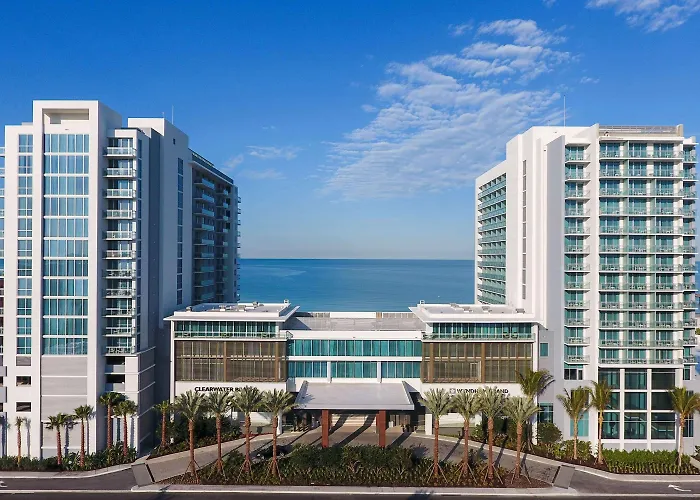
On the second element of the Planetizen article—do high-rises support the settings and patterns of behavior prized by urbanists—the authors quote Brent Toderian, planning director of Vancouver, British Columbia, on the success of his city in getting tall buildings that are designed with pedestrian-scale components such as rowhouses at their bases. (The Vancouver point-tower-on-a-podium, a building form disliked by some new urbanists, has been the subject of mostly favorable reports in New Urban News and New Urban Network, most notably a December 2003 article about the rapid population growth of Vancouver's downtown.)
The Planetizen discussion turns up some perhaps surprising pieces of information. For instance, the authors find Kunstler "slightly more circumspect on the energy argument" than he used to be. (Nonetheless, Kunstler continues to see tall buildings as being problematical.)
Having looked at various sides of the tall-building debate, the authors conclude: "The jury is still out, however, on skyscrapers." Glaeser, whose much-talked-about book, Triumph of the City, was reviewed last March on New Urban Network, comes across once again as lacking a deep appreciation of cities other than as sources of economic dynamism. He contends that the many tall buildings that Boston has added to its skyline in the past 20 years have enlivened the city. Siegel, the reader, begs to differ, and is, to my mind, more persuasive—a man who loves cities, not just their economic payoff.
The Planetizen article doesn't get to the bottom of everything, but it presents an interesting array of facts and observations. In traditional journalistic fashion, the article mostly leaves it to readers to form their own conclusions.


Comments