Skip to Navigation
Logo
Home › News and Opinion › Blogs › Smart growth = Smart parenting, part 2 ›

Smart growth = Smart parenting, part 2

Blog post by Scott Doyon on 12 Mar 2012
  • Market trends
Scott Doyon, Better! Cities & Towns

I’m a parent so, not surprisingly, I’m always on the lookout for intersections between that and my work in community design. The last time I considered the issue, I was thinking at the level of the neighborhood and exploring how walkable, mixed-use, mixed-product environments help parents combat a host of contemporary child-rearing ills. That post hit home for a lot of people and, since that time, my fellow ‘Shaker, Hazel Borys, has dug in further with her recent TED Talk, “Confessions of a Former Sprawl Addict.”

Today I move from the neighborhood to the house and wonder: In what ways are evolving trends in home buying impacting our kids — and our responsibility for raising them?

The issue at hand? The average size of the American home is shrinking. Not for everyone or in every circumstance but, in 2007 and after decades of upward creep, a distinct turning point occurred. 150 square feet subsequently disappeared over three years, with almost 200 more expected by 2015.

In a report in which they declared “the era of the McMansion is over,” real estate firm Trulia detailed how, as of 2010, more than half of the homebuying market now wanted a house under 2,600 feet, and more than a third wanted one below 2,000.

Not because Smart Growthers forced anyone to do anything, mind you, but through free market choices reflecting shifting priorities. Among them, according to the National Association of Realtors, is a growing desire for walkable, convenient neighborhoods mixing houses, stores, parks and businesses.

When presented with the choice of getting a desirable neighborhood or a larger house, 88 percent prioritized the neighborhood. Which means it’s getting increasingly common for people to concede square footage in order to gain other things they value.

The net result of all that is less space, fewer rooms, different rooms. Which brings us back to kids because, over the past 30 years or so, a bedroom for every child has become not just the gold standard but a testament to one’s good parenting. Now, as people increasingly opt for better, more walkable neighborhoods over larger, isolated homes, that ideal’s going to come under stress. In short, a certain number of bedrooms will be lost in the transaction.

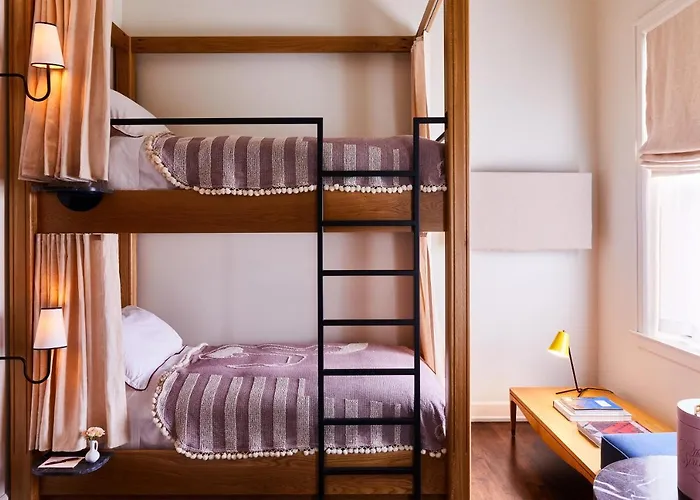
What kinds of parents will we be if, God forbid, our children are forced to share bedrooms?

As it turns out, pretty good ones. Because, when they do, a number of positive things can happen. Consider:

Me? Share space with him? But I’m entitled to my own lair.

They learn to share and cooperate. The one certainty about your child’s life ahead is that it will be filled with interpersonal challenges. There will be no shortage of difficult people and circumstances and countless days filled with situations that require collaborative decision making. Learning the skills of negotiation, compromise and sacrifice now will serve them well in the long run.

They find ways to solve problems through the help of someone other than… you. That’s right. You’re not always going to be there. When you’re not, they need to know how to leverage other people and resources to navigate problems. An easily accessible sibling is like training wheels towards self-reliance.

They’re more inclined to entertain themselves, which plays a huge role in how they develop their interpersonal skills, broaden their creativity, and master a talent painfully lacking in our modern world: the ability to self-edit.

They forge stronger family bonds. While children may prefer the easy road, the hard work of relationship building breeds lasting respect and commitment. Closer siblings are more inclined to model behavior for each other, raise the bar on performance, and hold each other to established family standards.

It’s got enough going for it that some folks are doing it by choice. But before anyone suggests that I’m making a hard and fast assertion that children need to share bedrooms, let me be clear. Just like with one’s decision to buy a certain house, the manner in which we raise our kids is not cut-and-dried. It’s complicated and nuanced, and requires consideration of countless competing factors and priorities. Your unique context is ultimately what rules.

That said, though, one thing is still certain. We’re not living up to our job description as parents when we blindly accept popular standards like “one room per child” without examining whether or not we’re actually doing them any favors.

Scott Doyon is principal, director of client marketing services with Placemakers, a planning, coding, marketing, and implementation firm. This article was also published on PlaceShakers and NewsMakers.

For more in-depth coverage on this topic:

• Subscribe to Better! Cities & Towns to read all of the articles (print+online) on implementation of greener, stronger, cities and towns.

• Get New Urbanism: Best Practices Guide, packed with more than 800 informative photos, plans, tables, and other illustrations, this book is the best single guide to implementing better cities and towns.

• See the January-February 2012 issue of Better! Cities & Towns. Topics: Value capture and transit, Social networks aid downtown, Live smaller, Rentals are market key, Streetcar inspiration, Box building, Civilizing suburbs, Alley houses, Sprawl repair, Healthy communities, Funding for infrastructure, Chicago River reversal

Share
  • Facebook Facebook
  • Twitter Twitter
  • del.icio.us del.icio.us
  • Google Google

Comments

  • About us
  • Subscribe
  • Advertise
  • E-updates
  • Cart
  • Browse Topics
    • Academics
    • Affordability
    • Architecture
    • Bicycling
    • Building
    • Civic
    • Codes
    • Community
    • Development
    • Disaster Relief
    • Economy
    • Energy
    • Environment
    • Farm/gardening
    • Finance
    • Funding
    • Global warming
    • Health
    • Highways
    • Humor
    • Infill
    • International
    • Landscape design
    • Landscape Urbanism
    • Law
    • Market trends
    • Mixed-use
    • New Urbanism trend
    • Obituary
    • Parking
    • Planning
    • Policy
    • Public Outreach/Response
    • Public space
    • Region
    • Resort
    • Retail
    • Safety
    • Security
    • Sprawl
    • Sprawl retrofit
    • Streets
    • Traditional neighborhood dev.
    • Transect
    • Transit/transit-oriented dev.
    • Transportation costs

    • Urban design
    • Vehicle miles traveled
    • Walking
    • Workplace
  • Subscribe
  • My Account
  • Log In
  • Home
  • BCT in print
  • Free Sample
  • Shop
    • Best Practices Guide
    • SmartCode Manual
    • Announcements

    • Directory
  • Topics

    • Blogs
    • CNU Update
    • Places Wiki
    • Images
  • Submit News
  • Nonprofit

Events

NCI Charrette Certificate Trainings in Washington, DC
May 20, 2013 - May 24, 2013
Urban Retail: Essential Planning, Design and Management
Jul 15, 2013 - Jul 17, 2013

MOREPOST

Jobs

Post a job.

MOREPOST

Follow us on
  • About Us
  • Contact
  • Privacy
  • Copyright 2010 New Urban News Publications

PO Box 6515, Ithaca, NY 14851-6515 | tel 607-275-3087

Site development by FreeThought Design.