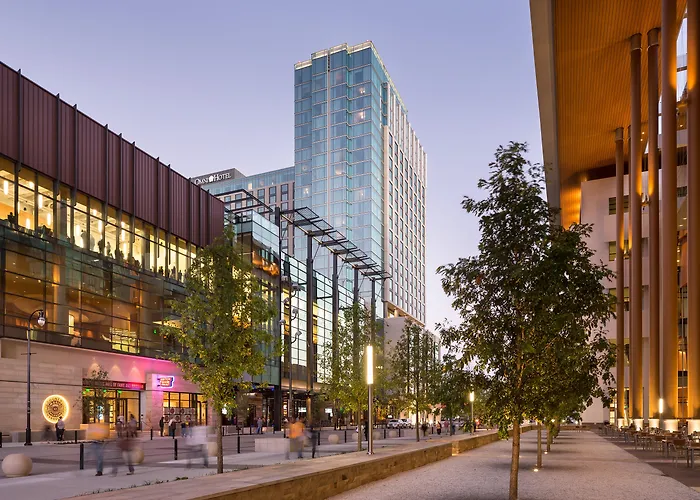
Now coveted: A walkable, convenient place
Across the US, real estate values in top urban neighorhoods significantly outperform the best auto-oriented suburban neighborhoods, according to a Brookings study.
This finding points to growing market demand for walkable, urban places, writes Christopher Leinberger in a New York Times op-ed. The trend is playing out in both the cities and the suburbs, and developers need to get on board — even though the creation of new mixed-use places is more difficult and demanding than churning out single-use suburban subdivisions, he says. "The market gets what it wants, and the market signals are flashing pretty brightly: build more walkable, and bikable, places." Leinberger explains:

Until the 1990s, exclusive suburban homes that were accessible only by car cost more, per square foot, than other kinds of American housing. Now, however, these suburbs have become overbuilt, and housing values have fallen. Today, the most valuable real estate lies in walkable urban locations. Many of these now pricey places were slums just 30 years ago.
Mariela Alfonzo and I just released a Brookings Institution study that measures values of commercial and residential real estate in the Washington, D.C., metropolitan area, which includes the surrounding suburbs in Virginia and Maryland. Our research shows that real estate values increase as neighborhoods became more walkable, where everyday needs, including working, can be met by walking, transit or biking. There is a five-step “ladder” of walkability, from least to most walkable. On average, each step up the walkability ladder adds $9 per square foot to annual office rents, $7 per square foot to retail rents, more than $300 per month to apartment rents and nearly $82 per square foot to home values.
Leinberger offers further examples of how this trend has affected metro areas:
In Columbus, Ohio, the highest housing values recorded by Zillow in 1996 were in the suburb of Worthington, where prices were 135 percent higher than in the struggling neighborhood of Short North, adjacent to the city’s center. Today, Short North housing values are 30 percent higher than those of Worthington, and downtown Columbus has the highest housing values in that metropolitan area.


Comments