Skip to Navigation
Logo
Home › News and Opinion › Blogs › Municipal placemaking mistakes: Crowdsourcing solutions ›

Municipal placemaking mistakes: Crowdsourcing solutions

Blog post by Nathan Norris on 25 Oct 2012
  • Architecture
  • Development
  • Planning
  • Policy
  • Public Outreach/Response
  • Urban design
Nathan Norris, Better! Cities & Towns
Today we begin an experiment. Through a series of periodic posts, Nathan Norris will explore how cities hinder their own placemaking efforts, wasting time and money by investing in tools, policies and programs that deliver lousy results. In the process, we’ll be looking to you to help flesh out the content through examples, personal experiences and links to additional resources. The goal? A one-stop, crowdsourced primer for cities and towns seeking advantage in an ever-competitive world.

Mistake #1. Judging urban development projects on their quantity of budget/unit count as opposed to the quality of their functional design details or return on investment.

For better or worse, real estate development in the United States is a political act. As such, politics decide whether a project is built and, if so, under what conditions.

Unfortunately, the political discourse over urban projects is typically dumbed down to the most superficial of issues.

On the one hand is the developer who will highlight the project’s positive economic impacts by trumpeting its budget or unit count. On the other are the opponents who claim that the faults of the project can be cured by more expensive exterior materials or by planting a richer landscape.

This gets us nowhere. Rather than focusing on the quantity of the budget or the cost of the exterior materials, the political discourse should focus on whether the development advances the vision of the city as set out in its rules and regulations.

If a city is interested in improving the urban experience, its rules and regulations will govern the functional design details that are found in a form-based code — issues such as fenestration, build-to lines, entrance height, etc.

Instead, we get dumbed-down discussions around things like exposed parking decks (what Victor Dover has referred to as “naked”). For example:

Do you really despise your streets and public spaces this much?

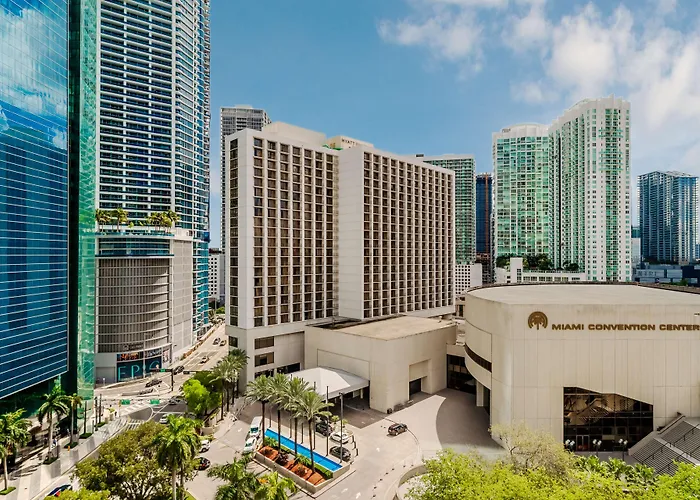
This parking deck is part of a convention center and hotel project that was needed for its city. Unfortunately, the complex was designed so that the long side of the parking deck overlooks the most heavily traveled intersection in the downtown area.

It could have been designed mid-block, or with liner-buildings, or with a façade that respected its location, like this parking deck in Staunton, Virginia:

Staunton, Virginia: Designing with public space in mind. Photo courtesy of Brett VA on Flickr.

But it wasn’t, because the discussions that drove it failed to fully address the project’s specific details and returns. So what can others do to avoid a similar fate?

One effective tool for highlighting the qualitative differences between these two design approaches is to shift the discussion of a project from its cost to its value.

Andrew Burleson’s Net Attraction Framework. See http://www.fourthenvironment.com.

This can involve the use of Andrew Burleson’s Net Attraction Framework or Joe Minicozzi’s Return on Infrastructure Investment analysis, both of which have the ability to demonstrate the connection between urban design and the creation of value — for both the project site and its surrounding properties.

Image courtesy of Joe Minicozzi @ www.urban-three.com.

More importantly, a value approach can provide the political cover to elected representatives to demand that a project not only meet the developer’s needs to satisfy market demand, but also the city’s need for the project to contribute toward the realization of its vision.

Just last week a representative of Trader Joe’s told the City of Boulder that it was “not going to change our concept to meet the planning objectives of a particular city.” Trader Joe’s has a clear vision for every city it enters. Cities should aspire to a similarly clear vision for projects that are supported with city infrastructure dollars.

Trader Joe’s proposal for the City of Boulder. Note how there are no doors that any of the hypothetical pedestrians could enter. They can only access the store via the back of the building. Doesn’t your community deserve more?

CROWDSOURCE IT!

Here’s where you step in. Do you know of communities that have made this shift in priorities? How did they accomplish it and what have been the results? Are there best and worst case studies that reflect lessons learned? Share in the comments.

Next time: Mistake #2: Failure to provide a context and path for the 3 Steps of PlaceMaking: meaningful vision, rules & tools, and implementation.

Nathan Norris is principal and director of implementation advisory at Placemakers, a planning, coding, marketing, and implementation firm. This article originally appeared on PlaceShakers and NewsMakers.

For more in-depth coverage on this topic: 

• Subscribe to Better! Cities & Towns to read all of the articles (print+online) on implementation of greener, stronger, cities and towns.

• Get the October-November 2012 issue. Topics: Guiding investment to urban centers, Florida next gen project with streetcar, Town centers, Upstate NY downtowns, Transformation of a small town, New Moscow district, Community engagement, Walkable City, Human Transit, Freeways Without Futures, Beruit

• Get New Urbanism: Best Practices Guide, packed with more than 800 informative photos, plans, tables, and other illustrations, this book is the best single guide to implementing better cities and towns.

Share
  • Facebook Facebook
  • Twitter Twitter
  • del.icio.us del.icio.us
  • Google Google

Comments

  • About us
  • Subscribe
  • Advertise
  • E-updates
  • Cart
  • Browse Topics
    • Academics
    • Affordability
    • Architecture
    • Bicycling
    • Building
    • Civic
    • Codes
    • Community
    • Development
    • Disaster Relief
    • Economy
    • Energy
    • Environment
    • Farm/gardening
    • Finance
    • Funding
    • Global warming
    • Health
    • Highways
    • Humor
    • Infill
    • International
    • Landscape design
    • Landscape Urbanism
    • Law
    • Market trends
    • Mixed-use
    • New Urbanism trend
    • Obituary
    • Parking
    • Planning
    • Policy
    • Public Outreach/Response
    • Public space
    • Region
    • Resort
    • Retail
    • Safety
    • Security
    • Sprawl
    • Sprawl retrofit
    • Streets
    • Traditional neighborhood dev.
    • Transect
    • Transit/transit-oriented dev.
    • Transportation costs

    • Urban design
    • Vehicle miles traveled
    • Walking
    • Workplace
  • Subscribe
  • My Account
  • Log In
  • Home
  • BCT in print
  • Free Sample
  • Shop
    • Best Practices Guide
    • SmartCode Manual
    • Announcements

    • Directory
  • Topics
    • Blogs
    • CNU Update
    • Places Wiki
    • Images
  • Submit News
  • Nonprofit

Events

NCI's Annual Charrette System™ Certificate Training at Harvard
Jul 17, 2013 - Jul 19, 2013

MOREPOST

Jobs

Executive Director
Form-Based Codes Institute | Chicago, IL

MOREPOST

Follow us on
  • About Us
  • Contact
  • Privacy
  • Copyright 2010 New Urban News Publications

PO Box 6515, Ithaca, NY 14851-6515 | tel 607-275-3087

Site development by FreeThought Design.